

The Armenian Weekly
January 2010 Magazine
The inheritance of my generation of Armenians is the legacy of our parents and grandparents who survived the genocide, especially the atrocities committed by the Kurds. Even after almost a century, talking to the post-genocide Armenians about the Kurds generates anger, hatred, belittlement, and at best indifference. However, today’s realities mandate a cool, close look at these people who share land with us in southeastern Turkey, which we call Western Armenia and they call Northern Kurdistan. So are they our friends or foes, or both?
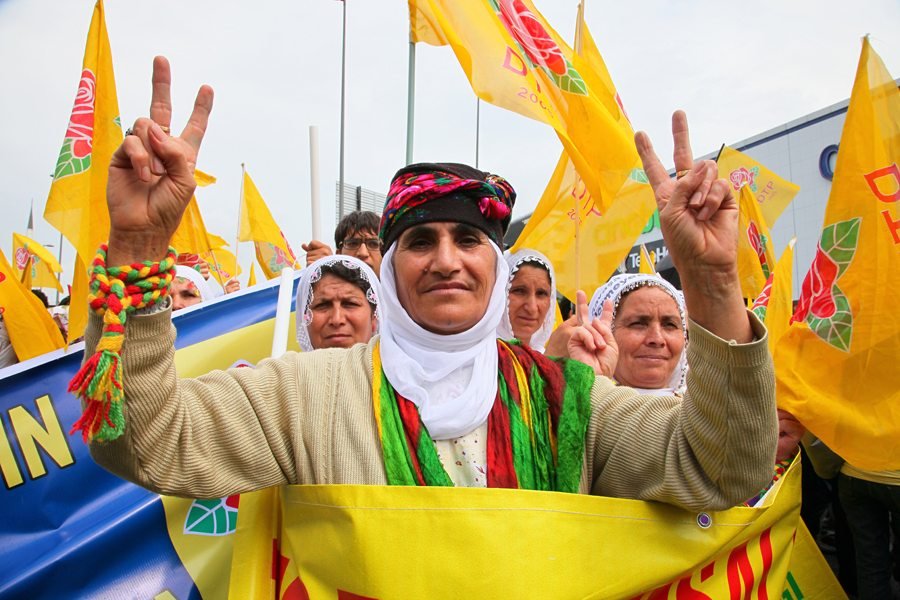
The stories passed on to us speak of the criminal, at least hostile, acts perpetrated against Armenians throughout the centuries, especially in the late 19th century by Kurdish tribes leading to the Great Genocide of 1915.
Who are these people who have historically influenced our way of life, threatened our existence, and continue to shape our future?
Ethnic jokes and anecdotes portray the Kurd as an ignorant group of nomads, who are Muslims (just barely so, according to the Turks, who consider the Kurds Muslim only when compared to the giavour (the infidel): Giavoura bakarak Kurd Musluman).
Historic accounts document their profile as tribes who, for the last five centuries, have survived in Anatolia through extortion, robbery, individual killings, mass killings, rape, kidnapping, and in general, by collaborating with the Ottoman authorities to oppress the Armenian nation and the other Christian minorities.
So, who are the Kurds? What is their genealogical origin? Where did they come from?
All that really matters not! What matters is that they have lived with us for 4,000 years and have sometimes been our friends, often our foes, not to say enemies. Our histories have intermingled; we have allied ourselves with the Ottomans against them, they have done the same against us, and at times we have joined forces with them against the Ottoman government. An example: the 1845 armed uprising of Prince Badrkhan, in a coalition with the Armenians, against the Sultan. Prince Badrkhan believed that “The Armenians and the Kurds are Arians, belonging to the same race. One tribe accepted Islam and the other remained Christian.” He even allowed intermarriage, though it is doubtful that any Armenian man married a Kurdish girl.
I met his great grandson Saif Badrkhan, who lives in California. He’s a highly educated decent human being who even gave a brief speech in one of the April 24 gatherings in LA condemning the genocide. He arranged for me to deliver speeches in Kurdish American conferences in California and Maryland. I did! The meetings were crowded by people, whose appearance and existence alone changed my view of the Kurds. Perhaps it is not an exaggeration to say that whomever I met had a Ph.D. or master’s degree in some scientific or business field. Polite mannerisms reflected civility during the official speeches, and during dinners and social hours. Ladies, graceful in their charm and traditional Kurdish gowns, mingled with men and danced shoulder to shoulder.
I was given a seat in the front row. There was an empty chair to my left; I thought it might have been planted there deliberately, because Kurds, all from Turkey, came to shake my hand, and sit on that chair to share thoughts and “secrets” with the “representative of the Armenian people,” which I was not, nor claimed to be. A few of them posed a rhetorical question: “Why are the Kurds Muslims? What have we gained by being Muslims?” At least a dozen or so told me—on the promise of anonymity—that their grandmother is Armenian. I was not shocked. A few years later I heard the Kurdish explanation of kidnapping our girls, which I will discuss later.
The theme of these meetings was inarguably political and inarguably nationalistic and designed to advance the cause of a “United, Free Kurdistan.” It was an eye opener! For, the issue was not limited to Iraqi Kurdistan, the liberation of the Kurds from the atrocities of Saddam Hussein, but to Pan Kurdism and the establishment of a united, free, and sovereign Kurdistan expanding from the Araratian planes in present-day Turkey to Kirkuk and Mandali, deep into Iraq. Needless to say, it includes the six Armenian vilayets, the jewel of which was Van.
I said my word, loud and clear, from the podium, the gist of which was: Yes, we have the same cause. Yes, we have a common enemy. Yes, there should be an alliance between us. But each group has its own interests and rights, for which they must struggle. There should be no dispute between our two nations. We are partners in destiny. Our rights were spelled out, in detail, in the provisions of the Sevres Treaty, which was then refined and mapped by U.S. President Woodrow Wilson. It is to our advantage, and to the detriment of Turkey, to stick to this map and the provisions in the Sevres Treaty.
I got standing ovations all three times, but not necessarily as an endorsement of my expressed ideas. They were, I believe, happy for my having exposed Turkey for what it is: an occupier, an oppressor of other nations, and a violator of human rights.
In one of the meetings, I met Nijyar H. Shemdin (Agha) the son of Hajji Shemdin Agha of Zakho, Iraq. My uncle, Dr. Krikor Astarjian, was one of Shemdin Agha’s close friends and his family’s physician. Through the Agha, and other Aghas whom he canvassed, he was instrumental in tipping the League of Nation’s plebiscite held in the early 1920’s in favor of Iraq. In this plebiscite, the Kurds of Mosul voted not to join Kemal Ataturk’s Turkey, thus joining the newly formed Kingdom of Iraq. We both were happy to find each other and recall the memories of yesteryear.
Events guided me to participate in the festivities of the first anniversary of the incorporation of the Kurdish Parliament in Exile, which was incorporated in the Hague, and which established itself physically in Brussels. Ten European countries had recognized it and/or lent their support to this democratic institution. The parliament was established by Turkey’s Kurdish exiled parliamentarians. They had fled Turkey when other Turkish “deputan” were stripped of their parliamentary immunity and arrested—like Leyla Zana—for supporting the “Kurdish Cause.”
The organizers had elected Yasar (Yashar) Kaya as president of the parliament. I had met him in one of the Kurdish meetings in California, where he also had delivered a speech calling for Kurdish unity. He, together with Zubeyir Aydar, the chair of the Executive Committee (originally representing Siirt in the Turkish Parliament) came to welcome the representative of the Tashnag Party (which I was not). They took me to dinner in an Italian restaurant. I let them initiate the conversation. They apologized for Kurdish tribes’ criminal acts against the Armenians. They said, “These killers were of certain tribes who are doing to us what they did to you: They are killing us, raping our women in front of assembled villagers, they are burning our villages and hamlets, and they are deporting the civilians into internal exile. The difference is that they did not send them to Der Zor. You had the Hamidiya Alaylari, and we have these criminals, the Korujus. They are on Turkish government’s payroll.”
They further developed the conversation to talk about Kurdish kidnapping of our children. They said, “We don’t dispute that, but look at it from our view: We knew that those kids would face a certain death in the desert of Der Zor, so we saved their lives. And we always told them they are Armenians.” They did not say that they converted them to Islam.
They went into the litany of the genocide, expressing profound sympathy to the survivors and their offspring. I listened and listened to this sincere mea culpa, until it became repetitious, at which time I told them what I told the parliament in a televised speech the following day. The gist of my speech was simple: I am not here to demand sympathy or demand apology from the Kurds. I am here to affirm the Armenian nation’s right to some of the land you are living on, and to our adherence to the provisions of the Sevres Treaty. Our relationship with the Kurdish nation is not based on ideology, but on land rights and demands in Western Armenia. Both the Kurdish and Belgian televisions televised the proceedings.
Our relationship with the Kurds is a complex one: (1) We are allies by necessity: The enemy of my enemy is my friend. (2) They look up to us, yet we look down upon them. And we are wrong. The Kurds have advanced in every imaginable field beyond anyone’s imagination, certainly beyond mine. (3) Whether we like it or not, they are our neighbors. We better understand them. (4) Other than Western Armenia, there is, for them, the issue of “Red Kurdistan,” that is, Lachin, Kelbajar, and Fizuli. For us, the case is closed.
So, are the Kurds our friends or foe? Probably both. A smart approach to this seemingly impossible situation will make them, in my opinion, our friends much more than our foes.
(One caveat: Though I kept our leadership fully informed, I had no endorsement nor any kind of support from them. In this endeavor, I was not representing anyone but myself. Others may have had a different impression.)

Dr. Henry Astarjian
Latest posts by Dr. Henry Astarjian (see all)
- Astarjian: A Quadruple Historic Bypass - February 2, 2015
- Astarjian: Hypocrisy or Ineptitude? - September 28, 2013
- Armeno-Kurdish Relations: Love Fest or Divorce Settlement Meetings? - August 19, 2012
Kurds have never been Armenians’ enemies. The Turkish Governments in Ottoman times as well as in Republican times were and remain Armenians’ and Armenia’s as well as Kurds’ foe and enemy. Turkish Governments would trying their best to make Armenians and Kurds enemies. All men with kind mind – including kind Armenians and kind Kurds – need more light in Anatolia.
If as the article says, the Kurds have been around for 4000 years then it must be that Armenians and Kurds lived together in the nation that ruled eastern Anatolia some 2500 – 3000 years ago, namely Urartu. A strong and prosperous nation, Urartu was even able to hold its own against one of the most powerful empires of that time, Assyria. Perhaps it’s time to consider Urartu as a model for current relations between Kurds and Armenians, that is, a federation of sorts in eastern Anatolia with Armenians making up most of the northern regions and Kurds the southern regions (could even cover parts of oil rich northern Iraq). Armenia and Kurdistan cold exist as states within the federal jurisdiction of Urartu. The people could come and go as they like between the states. Can you imagine what Armenian technology combined with Kurdish manpower could do? Instead of fighting each other over limited resources Armenians and Kurds could work together to not only secure a prosperous future but heal a torn past.
To Samvel Jeshmaridian, PhD and his “Kurds have never been Armenians’ enemies” and the balance of his incomprehensible English, go read the five volumes of Zartonk (in Armenian), the historical novel by Malkhas, and you may … you will, change your mind. We have no friends, my dear doctor. And to Dr. Astarjian and his “whomever I met had a Ph.D. or master’s degree,” just go to the hill-country of Armenia, my dear doctor, and talk with Kurdish sheppards … try to, that is. Enough patronizing, enough cunning, enough … talking reason. No one should be permitted to “shape our future.”
Many thanks Dr. Jeshmaridian.
My Armenian friends should remember one thing when Kurds come to mind.
Who were the educated elite in the Ottoman empire? Armenians of course.
Whereas my people, being “tribal” in nature and had poorly educated masses, were easily influenced by the Ottoman government and the Young Turks to join the wanton killings of defenseless and poor Armenian elderly, women and children.
I cannot find words to apologize to my Armenian friends. This is so painful for me, hate my grandfathers generation to death and still cannot believe the atrocities committed in the name of the young Turk government. I wished I could go back 95 years and stopped my own people from joining these Genocide.
I don’t know what to say to you but apologize. This is a horrendous shame for my people. Unfortunately some still are easily influenced by the Turkish governments phony promises that never materialized.
As for the 6 villayets, as far as I am concerned, they belong to Armenia, there absolutely is no reason as to why it should not go to its rightful owner, having said that, the government of Turkey WILL start Kurd against Armenian games. We better stay awake and read every single word coming out of the mouth of their government.
I do, however have one concern, and that’s your “extremely low population numbers” which I am afraid will work against your interests. I don’t understand why Armenians keep leaving Armenia in huge numbers. Why don’t you stay and multiply?
If, hypotthetically speaking, Turkey vacates all of Western Armenia, how would Armenia take care of a huge chunk of land which has a few hundred Armenians and a overwhelming Turkish majority? This “low population numbers” of your people bothers me a lot. If it is not taken care of immediately and soon, very soon…I’m afraid the Turkish resident guest population can and will/might vote for re-integration into Turkey proper.
IT is high time that Armenians start listening to the Kurds. They hold the ace card when it comes to events in eastern Anatolia. In this, no one in the diaspora, that I know of, has picked up the torch left by Hrant Dink. Armenians claim lands but they don’t even take the time to familiarize themselves with those actually living on those lands. I am not naive enough to believe that all Kurds actually see Armenians as allies, but we would do well to devlop a closer and more strategic approach to the Kurds and issues where the two peoples have a commonality of interests.
Kurds & Armenians are the Arian “aborigines” in the area. The ancient Greek historian Xenophon in his book “Anavasis” whilst describing the return of the Greek army through Asia minor in the 4th centurey BC clearly mentions about the “Kardoukhous” or “Kourdoukhs” as a race living in a mountainous area before the Greek army entered the Armenian plateau.
The Kurds have to accept however that they have “settled” most of Western Armenia and the two nations, I believe should find a compromising solution that will lead them into coexisting peacefully
Its a shame that you write something like this about the Kurds. I understand why. If you where to write it about turks (1) you would have no audience and (2) you would get no dialogue from the other side because (3) they denie the existance of a genocide against armenians. It is a shame that a well respected intellectual such as yourself to go so low as to blame the genocide on the Kurds. Remember it is the Ottoman caliphate and “its army” that are responsible. Today there are 60 000 “kurds” known as village guards working for the turkish army. are you to tell me that there is a civil war between the Kurds. ofcourse not there are men in this world that will do anything for money.
http://www.kurdishrepublic.com
In 1908, Abdul Hamid II was overthrown during the Young Turk Revolution, which launched the Second Constitutional Era of the Ottoman Empire. Armenians gained more seats in the 1908 parliament, but the reforms fell short of the greater autonomy that the ARF had hoped for. The Adana massacre in 1909 also created antipathy between Armenians and Turks, and the ARF cut relations with the Young Turks in 1912.
Just as some indicidual Turks hid and protected Armenians, so did some Kurds. It should also be remembered that some Kurdish chiefs refused to harm Armenians. Also, 300,000 Kurds died by forced relocation 1915-1925
Delshad
I am a Kurd, and a proud Kurd at that. You and I know that the Turks USED us to achieve their objectives, yes or no? My grandfather told me how he killed innocent and defenseless Armenians, we were part of this Genocidal Turks objectives, WE FELL FOR THAT TRAP, and look what happened to us, now they are bombing and have already killed 30,000 innocent Kurds. I still have to see one Armenian soldier in Kurdistan, what’s more, our Yezidi brothers are well taken care of and are thriving in the Republic of Armenia. Most Armenians symphatize with us, we either stand together or fall together. If you put your lot with the Genocidal Turk, then go ahead, we have had 1000s of traitors in our history. Before we were converted to the Islamic religion, we were/are, just like the Armenians, Indo-european peoples, worshipping exactly the same “gods” as the Armenians did. We fell for the Turkish trick, only because the Tuirks promised us freedon and because of our Muslim religion.
You tell me if the Turk has given us our freedom? We can’t teach our languages in our schools, we don’t have autonomy, we have nothing, plus the Turk calls us “Mountain Turks” a derogatory name for a proud old people like us. They are the Mountain Turks, they are violent and bloodthirsty. On the other hand, our Yezidi Kurds enjoy 100% freedom in Armenia. I was in Armenia in 2007. Visited Yezidi villages and schools….LO AND BEHOLD, they are FREE to learn our Kurdish language, have Kurdish language newspapers, serve in the army and are not descriminated because they are Kurds(there is a high level Yezidi officer corps in the Armenian army). You decide who is hurting us: The Turk? or the Armenian? If you see one Armenian soldier bombing Kurdish women and children, I will commit suicide..there are none. Look around in and around Diyarbekir, and you will see HALF of the Turkish army stationed there, ahhh they are there to protect us, right? The reason the bulk of the Turkish army is stationed there is not because we are beautiful people, have big hazel beautiful eyes, or our women are of exceptional beauty…my friend the ONLY reason for them to be in Kurdish populated areas is because they want to S U B J U G A T E us, put us down, surround us like animals. Don’t let our religion get in the way of our friendship with the Armenians. Most Armenians symphatize with our daily struggles, yeah we had our differences, we fought, we killed, but hey, I am tired of Turkish lies lies lies lies and more lies. The only time I will believe a Turk again, is when they give our dignity and our freedom for an independant Kurdistan, otherwise we are foolishly continueing their dirty job, and all the time they are enslaving us.
We are an honorable and proud people. we talk and walk the truth. Yes, we were tricked into believing the Turk and falling for their dirty schemes. Yes, our parliament accepted our complicity in the Genocide, and for Gods sakes, we will be friends, whether we like it or not. You want your Kurdish people disappear from Turkish Kurdistan? then by all means let the Turk Turkify us all. But if you think that it is high time for us Kurds to scream WITH ONE CLEAR AND HIGH VOICE for FREEDOM, then please come back to our poor but proud Kurdistan and help us achieve our dreams. We are in such a screwed situation now, that the whole world are laughing at us. 30 million Kurds, 20 in occupied Kurdistan in Turkey, and we have absolutely N O B – L L S facing the Turks. We need to learn from the Armenians. Did you know that in 1918, after 99.99% of their population was decimated by the Genocide, they stood up, and with a mere 1,000-2,000 poorly trained and armed soldiers, repelled and beat the 300,000 Turkish regular army led by Gen Karabekir in three battles? How about us? 20 million strong, but have not produced one soldier to fight our enslavers. If you want, we can raise an army of 5 million tomorrow, but we are so traumatized by the Turks, that we won’t even raise a finger, and at the same time complain about Turkish suppression.
We are not the same Kurds that Turks want us to be, uneducated and tribal. The first thing that I will do if one day I become a leader of the Kurds, is dismantle our tribes and unite all Kurds. No more divisions in our people, those who try to divide us will face swift justice.
You either stand up and ask for your dignity and pride like a proud Kurd, or you become a turncoat and serve our masters in Ankara. The choice is yours my brother.
ENOUGH ALREADY!!!!
LONG LIVE FREE AND INDEPENDANT KURDISTAN
ARMENIANS ARE NOT OUR ENEMY, THE TURK IS. PERIOD.
Delshad
Mr. Astarjians article was all TRUE. There was nothing derogatory written about our people.
He merely was trying to educate us about the Turk, who until today, calls us derogatory names.
It is a mystery to me why us Kurds tremble in front of a Turk. Who are they? Gods? Our masters?
They simply have traumatized us into submission, and the events are engrained in our brains, and therefore we have become the laughing stock for the Turks.
Mr Astarjian was simply exposing the what Turks really think of us. Isn’t 30,000 dead innocent Kurds enough? Should we sacrifise 2 million more? When is it for us to stand up and ask for our DIGNITY? You tell me when? Will you be happy to see a foreign flag(Turkish blood flag) on your home? We will Not be cowed again into submission. Come on, let’s save the honor of our people Now, before they assimilate us. Assimilation is going on a furious pace. Already 3 million Kurds consider themselves Turks. Why call ourselves Kurds, if we continuously fall for the Turkish tricks and games. Why don’t we forget our proud history, and all of us become Turk?
Centuries of serfdom has made all Kurds blind. I want to see my Kurdish people join hands with this small but courageous people, the Armenians and drive off the newcomer Turkish hordes from our lands. If 900 Armenian freedom fighters drove off 23,000 Azeris, 5,000 Afghan Taliban and a hodgepodge of weird and violent mercenaries from Artsakh, then why can’t we do the same? You know why? Because we enjoy our serfdom, whereas the Armenian always strived for freedom.
There is my answer to you my Kurdish compatriot.
We will forever be the slaves of the Turks, sad but true, unless you help us stand up and cry for freedom.
I’ve been greatly encouraged to read the comments from both Armenians and Kurds on this issue – that is our unity in common causes of mutual interest to both our peoples.
A few years back I had the opportunity to visit the Old Country, the place where we Armenians from the Disapora have our origins. My family was from Hussineg, as small town in the Kharpert province. My grandfather Avedis lost his mother and father, younger brother and younger sister there, during the Armenian Genocide. I can still remember my mother when her feet touched the ground in Hussineg. She cried tears of memories, from her father – a Genocide survivor, from her grandparents and lost uncle and aunt that she never knew. My mom and I were able to find the house my granfather had lived in as a boy. A sweet elderly Zaza Kurd woman was living there. She and my mother, although of very different dress and custom, had an immediate bond, as if they shared a common path. I can still remember her parting words to us, “I’m sorry that we are in your house.”
That trip to the Old Country made me realize that we Armenians and Kurds have so very much more in common than we have differences. Together we have a chance to make our ancient land a better place that we both can share.
Thank you Dr. Deranian for the kind words.
Kurds in general are sincere about their intentions for the future.
But 1000 years of enslavement and serfdom under the Turks, made most of us forget our history and people. I tell you Dr. Deranian, that there are millions of Kurds who think and act like Turks, WHY? Because we lost our identity, our culture, our dignity. We started to become Turkish, a few million Kurds are lost forever. Next is our religion, Islam, I am a Muslim and love my religion, having said that, Turks have used Islam as a cover to strangle all Kurds into submission. Most Kurds easily will believe a word coming from the mouth of a single Turk, then coming from the mouths of 1.5 million Armenians. You may ask, “But why?” My answer to you is plain and simple:
Centuries of serving our lords and masters in Ankara and Istanbul, has weakened our souls, made us blind, made us unable to diffrentiate between enemy and foe. So great is the Turkish influence on our daily lives, that some Kurds have forgotten their Indo-European ancestry, and have started to believe that us Kurds are really the lost “mountain Turks.” Some of us are s traumatized and enslaved that we will raise our guns and continue killing Armenians. And all the time, the real enemy, is hiding behind the walls and laughing out loud.
Fortunately, Education and the sense of pride in our long and proud history, is making our young Kurdish people see the TRUTH. I did, I once abhored and hated the Armenians, I was young and brainwashed by my Turkish lords. But then, quite by accident I found that our Kurdish people was also traumatized and killed by the Turk. First we lost between 3-4 million Kurds to the Turks, we call it, GENOCIDE BY ASSIMILATION, TURKIFIED. Next I saw bombs flying over our heads and killing 30,000 people, all Kurdish.
I also believe that all Kurds here on this forums want to learn and be informed. I believe that my compatriots Delshad and Kurdish Nationalist are good Kurds who will/are doing their duty for our people. We have 30 million Kurds worlwide, but almost 85% are confused about their ethnicity because for thousands of years we were enslaved and still are in Turkey today. I hope my Kurdish people will wake up from their dreams and ask the Turk for dignity and freedom. That is all.
It’s good to read your words Ferhat. Your passion to reclaim Kurdish history reall comes through and reminds me of the famous Kurd, Saladin. Quoting from Wikepedia, “His family was of Kurdish background and ancestry, and had originated from the city of Dvin, in medieval Armenia.” A clear example I think of how Armenians and Kurds are connected along common paths.
True story: Years ago, probably in the 1950’s, a well-known Armenian American in the US military was stationed in Turkey. In his exploarations, he was sitting around a campfire with Kurds. I believe they did not know he was of Armenian ancestry. They told him how in the old days they used to “slit the throats of Armenians.”
Nevertheless, Dr. Astarjian has broached, as he has in the past, a necessary topic: Kurds.
Armenians need to learn more about Kurds – both their leaders and intellectuals as well as the Kurds “on the ground” in Turkey and elsewhere. From my readings about Turks (for example, McDowall’s book), Kurds have been very tribal and will betray not only each other but will also switch sides (for Turks or against them, for Persians or against them) at the drop of a hat.
One question that has always been in my mind is, in the final analysis, all other things being equal, would Kurds – if one can general about them – side with their fellow Muslims (the Turks) against Armenians — or would Kurds side with Armenians against Turks ? Put another way, are Kurds more natural allies of the Turks or of Armenians?
Dr. Deranian, if we only were united like the Armenians, we would have had our republic long time ago, maybe in 1920s. But, unfortunately for us Kurds, we are divided in such a dangerous way, that our enemies use us to fight amongst ourselves. Kurds have killed more brother Kurds on behalf of Ataturks and Saddams. It just boggles my mind as to why????????
Why cannot we be united like the Armenians, the Jews or the Turks. Once again our “tribalism” is killing us and denying us our lost independance. And the Turkish government has used our weaknesses fully to its advantage.
You read what my Kurdish brother Delshad wrote about 60,000 Kurds, I call them dogs, slaves, serfs…working for the enemy to subjugate non other than their own Kurdish people. Why would I sell my people for a few Turkish Liras? I never understood my people. We complain 24 hours a day and since 2000 B.C. that “us Kurds have no friends,” and it is right. We simply DON’T have any friends. But we are to blame, because we never stood up for freedom, 20 million Kurds concentrated in South East Turkey, and we cannot muster a few hundred fighters, and then I look at Artsakh, and how a small Armenian people stood up, and with a force no larger than 900-1000 threw 23,000 Azeri soldiers, 5,000 Taliban terrorists and thousands more of weird looking, bloodthirsty murderer mercenaries. Now you see why I am upset at my people. We complain, but tremble the first Turkish tank we encounter, and run away. Our self esteem is way too low, our opression under the Turks turned us into obedient servants for this Genocidal Turkish regime. We cry for heroes, but have none. We cry for freedom, but not single Kurd wants to stand up and fight. I am in total disbelief why my own people complains but takes no action at all. We have “republics” on the web nets..only. We become proud for our “republic of Kurdistan” website which makes us look like complete fools.
WHY NOT HAVE THE REAL, FREE AND INDEPENDANT REPUBLIC OF KURDISTAN? WHY NOT?
We are doomed to be Turkified in 20-50 years time. We have no future. All all the blame is squarely on our shoulders. It is sad that our young Kurds have no interest whatsoever for the future of our race. We rather serve our oppressors and be Turkified, then raise our voices like one man and scream with one voice:”Give us our freedom.”
Good point Drtad.
What you wrote is so right.
Turks use us and Kudos to them, I honestly salute them for being able to play us Kurds against other Kurds. Trust me, Kurds will foolishly side with the Genocidal Turk, even though Turks have done us more harm and have enslaved us and surround us with an army numbering 300,ooo, almost half of the Turkish army is stationed around us. Maybe we are so cute and beautiful, and they love us and are trying to protect us. That’s why we are trying to educate our people. Herding cows and goats for our masters in Ankara has kept us down and under. Kurdish intellectuals are fighting an uphill battle to bring education to every single Kurdish village. It is a hard job. he Turks have done a SUPER job putting us down and basically stealing our souls and imprisoning our minds.
Please tell all Armenians, and Turks of high morals to visit Kurdish websites and make connections with our young. They need to hear about FREEDOM. Freedom to have our own country, freedom to teach our own language at schools, freedom to have Kurdish language TVs and Radio stations. But the most important thing: FREEDOM TO DECIDE OUR OWN FUTURE and SEPERATION FROM TURKEY. We are Not Turks, we never were, we will never become one, unless we sit and enjoy our serfdom.
I read in a newspaper the other day that the Kurds are a mixture of Turkic people who intermixed with IndoEuropean people. Who are the Armenians, a tribe of ??? that followed a God called Khaldini,(sp?) and later intermixed with IndoEuropean people.
I also thought the Armenians came from somewhere in Greece. If so, they then intermarried with IndoEuropeans? In any event, they are a very exotic and interesting people.
Another thing, ancient Greece was the cradle of civilization and democracy; one article in Haaretz, noted how the ancient civilizations were democratic; today, so many are authoritarian. Cyrus the Great, an Armenian and a democratic leader, was considered to be a messiah and saviour to the Jewish people because he helped them rebuild the Temple in Jerusalem. He was known to be good to all the people he conquered. So I would not be surprised if the Armenians came from Greece originally. However, the origins of the Turks and Kurds is probably in Asia and I think they are intermixed. I think the Armenians are closer to the Greeks historically and culturally. Although today so many people are intermixed, including my family, that the racial lines don’t exist any more.
Genocide Denial:
Well, according to Greek historians, Kurds and Armenians alongside the Iranians have been inhabiting the lands between current day Turkey and Iran. Linguistically, yes, Armenians are very close to the Greeks, also some Greek historians were surprised to see Armenian soldiers using almost identical swords, body armor and forming phalanxes during wars. Current day historians believe that the Armenians came from Greece, migrated East, reached the Armenian highlands and intermixed with the local populace.
Whereas us and the Iranians are culturally and linguistically, if I may add, are close. Greek general Xenophon clearly mentioned the Kurds and the Armenians by name when retreating from Persia.
As for the Turks, historically their ancestral lands were in Central Asian deserts. They are newcomers to our part of the world.
As for your false comment that Kurds are a mixture of Turks(?). First of all, Kurds are Indo-Europeans, alongside the Armenians and the Iranians, the original inhabitants of the Iranian-Armenian plateau. Nothing Turkish was mentioned by historians until Mehmet Fatih and his predessessors came down Central Asian deserts and entered the Armenian highlands through Northern Caucasus and Iran. But if you ask me if the “current” Kurds are mixed with Turks, well, unfortunately, and with sadness and grief in our hearts, my answer is Yes. Current day Kurds are mixed with Iranians, Armenians and Turks.
Linguistically, we borrowed words from each other, but Kurdish language is almost 90% Iranian.
Our tragedy will be when Turks will overwhelm us byy assimilating us with them. That day is close. very close, unless we stop them in their tracks. There will not be a single Kurd left in Turkey, if Kurds continue sleeping while being culturally and linguistically assimilated. For us Kurds, it is a matter of life and death. We either will collectively decide to become Turks, Or we will decide to fight this Islamic leaning Turkish government and secede. We have, mind you, already lost between 2-4 million Kurds not in a physical Genocide, but in Genocide of assimilation. We are losing the battle to survive as a seperate people. We are fighting a monumental battle to wake up Kurdish nationalism and save our people. Millions are lost to the Turks, we will fight our last battle to survive, and all the time we will have hope in our hearts, survival in our thoughts, peace in our hearts.
Turkey is fast becoming Islamized, in the fanatical sense, government members are almost all former Afghan Islamist symphatizers, and are overwhelmingly anti-Israel and anti-Jewish. Does anyone remember how Erdogan, on world TV screens, made Israel look like a criminal state? I felt sorry for the old man Perez, he almost cried. Later I heard that Perez vowed not to allow any Turk to belittle Jews…such are Turks, no matter what, they will stab you in your back. Israel helps, trains and sends Turkey money and food, and for what? Strategic alliance? How long will Israel be humiliated on the hands of this turkish government? How long will Turks carry signs that says: “No dogs, Jews and Armenians allowed?”
Turks have done such a fabulous job misleading Israel, I heard from a jewish physician friend of mine, who sadly proclaimed that the only country that has the power to infiltrate all levels of Israeli government and intelligence, is Turkey. They have infiltrated Israeli government so deep, that it will take Israel 50 years to remove all the moles planted in their government.
You see, Turks think that we are uneducated, stupid, goat herders. We were, we were unable to free ourselves from our former masters. They used us to do their dirty jobs. They are using us today for their own purposes.
We never learned from the Armenians that” to die as a free man was more honorable than be a living slave. ” Looking back, wow, this small people, and against all odds, alone, forsaken, betrayed time and again by all, demanded freedom, yes they paid a high price for that single elementary human demand, to be free, but now they have a small republic. Whereas us Kurds, 20 million strong in Turkey alone, having accepted that Turks become our absolute masters and us their slaves, have nothing. We have a Free Kurdish republic, but its on a website. This is a joke, a complete and sad joke. And anyone who goes on our websites, will read anything but “freedom for Kurds.” If we don’t move now, we are doomed to lose whatever we have.
God almighty we are fighting a monumental uphill battle, we will soon disappear if we stay quiet any longer. Your assessment that we are a mixture of Turks has finally becoming a reality. We are a doomed people. Our end is near.
May God have mercy on my Kurdish people.
Iranians aren’t real Indo-Europeans, plus Kurdish is not Iranian language.
The word Semitic was invented by Jewish scholars. The Armenian, Assyrian, Canaan, Greek, Arabs and other so called Semitics are from Africa. They conquered the land of Airyanem Vaejah in the land connections between Red Sea and Mediterranean Sea. The process took thousand of years before they reached Mesopotamia.
The Kurds are from Mede people they are the descendent of Matiene (Mede and Pars) from the Airyanem Vaejah nations, they are original people of the region. They are the original inhabitant of Eurasia, Mesopotamia and part of Asia lived nomad lives before settling in the region. They lived side by side with Armenian people for thousand of years before Turkish arrival.
They fought each other on and off but they used to be civilized never finished each others. They are opposite of Turks whom they came from Altaic culture of violence like their counter part Mongolian relative.
I just found out 2500 years old written Kurdish language, proving our civilizations for eleven thousand years history in my coming book soon.
I believe the people in the region can build an Economic Union similar to the EU to live in peace with each other. We Kurds, Armenian hurt each others many time. It is time to get united to stop Turkish aggressions. We united against Assyrian Empire aggressions before. They used to kill people like Turks are doing today.
We are sorry for the Armenian genocide. Yes we are guilty because Kurdish tribe’s man uneducated people, helped Ottoman Empire under the Islamic doctrine (Jeihad), when the Turk eliminated 1.5 million Armenian people.
We need to get united for survival. There is enough of wealth in the region for survival.
Assyrians are Semitic. Chaldeans and Armenians are Info-European, although different from the “Iranian branch”. The Chaldeans actually sided with the Medes (Kurds) and the Persians under Cyrus to defeat the Assyrians (Cyrus even gave his daughter to the Babylonian Chaldean King after they defeated the Assyrians). As for the Armenians, they are one of the indigenous people of the area as well. The division of Eastern and Western Armenia also began because of the Iranian and Otyoman influences. Look up the Safavid Empires occupation of Armenia. Regardless, Xenophon wrote about the Persians, Corduene and Armenians living in the area long before Arabs and Turks migrated there
Armenia has keep Russia hundred of years on his side against to Turks. Still can not achive what they want. Now get the Kurds, not enough get the Arabs but, nobody teach you that,
“One Turk is equivalent to you all” or your Kurdish friend will teach you that.
Kurds and Armenians are brothers, the Kurdish people have never.. and I say never.. In no historical book or in any university denied the Armenian Genocide. And they all admit the truth about their history.
Jesus taught us to forgive and love our neighbours and the Kurds… they are our neighbours.
Kurdistan is a reality! Armenia is with you!
Hamma, we are a doomed race. Turks are assimilating us fater than the speed of sound. We need to stand up like one man and scream for liberty. Xenophon wrote about our ancesters, that they were so independant minded, that when Cyrus the great sent an army of 120,000 to subjugate us, not one soldier returned alive. But look at us now…scared, cowed and silent. We have become good obedient slaves for the Turks. We need to start to see who our enemy is. The Armenian? of course not. I have to see one Armenian soldier in Kurdistan bombing us. It was, is and always be the Genocial Turk our number one enemy. They are committing a heinous Genocide against our people, the Genocide of assimilation.
Here we go again. Of the 26 comments to the ill-timed Astarjian article, to this minute 7 are by Ferhat Delshad covering some 246 lines (may be he is writing another letter), 3 are from other Kurds for 30 lines, 2 are from other non-Armenians covering 15 lines, and there are only 76 lines by 10 Armenians. Ferhat keeps writing non-stop, pushing his agenda of free publicity. And he has the audacity to make uninformed comments about the origin of Armenians (as is Hamma Mirwaisi who writes in broken English “The Armenian, Assyrian, Canaan, Greek, Arabs and other so called Semitics are from Africa.” Rerally?). Ferhat has very skillfully pulled the wool over our eyes by turning the discussion to the Genocide, shedding crocodile tears, and he is turning Astarjian’s naivete into a forum to push the Kurdish cause. More power to Kurds and my admiration for him; he is a good Kurd talking about a noble cause. But not at our expense, fellows. Let him, and the good doctor Deranian, and the good doctor Jeshmaridian, and others who might be impressed by Ferhat’s Goebeltzian methodology, let those folks go read Zartonk, the historical novel by Malkhas, all five volumes of it, to know a bit more about Kurds. It is written in Armenian, and I doubt it very much if Astarjian, or Deranian, or Jeshmaridian can read Armenian (if they could, they would not have made conciliatory comments). Maybe someone will translate a few lines for them. To be fair to Ferhat, though, the only true statement he has nade, albeit unwittingly, is where he says even if Turkey would hypothetically return all Armenian territories, at the rate Armenians are moving out of Armenia how would we populate the area. I cannot find the exact quote (he has written so much!) but, sadly, this is a true statement. Hey, Editor at Armenian Weekly, wake up, Kurds decimated us just as routinely as Turks did; you shouldn’t permit Ferhat take up so much space. What do they say about ducks quacking?
Now that Ferhat and Hamma Mirwaisi and “Kurdish Nationalist” and JDA and other Kurdish readers are making such sweet comments about their Armenian “brothers,” may be we should follow suite and learn from our Jewish brethren and declare, “All those whose one parent is Armenian, is Armenian.” Thus, half of Kurds would be Armenians and half of Turks would be Armenians, and our population would jump to astronomical numbers. And had we not sat idly and played Nardee for the 70 years of Soviet domination, and instead had we made babies, then our population would kick out all Turks and Azeris back to Mongolia and Turkmanestan, and Kurds to Kurdestan next to their historical neighbor Lorestan, and had we “housed” a few bombs in our silos from the Soviet days, then, and only then, we could sit back, ralax and play Nardee. For now we have a lot of work in our hands trying to keep our heads above the water.
Will Henry Astarjian write a different travelogue? Say, to Australia?
I regret the two or three typographical errors in my previous writing, but I MUST respond to Grikor for his “Kurds and Armenians are brothers.” My dear ‘akhbar,’ Kurds and Armenians are NOT brothers. In the name of civility I hesitate the use of ‘expletives’ but if you say “the Kurdish people have never.. and I say never.. In no historical book or in any university denied the Armenian Genocide” it is because they, the Kurds, were a major, I say MAJOR, player in the Genocide. Why don’t you go read my previous letter and educate yourself as to who Kurds are before you blurt out more nonsense. Ferhat continues with nine more lines of kurdophilia; total 255 lines.
You do know that several times , there were Kurdish and Armenian alliances in fighting the Turks even before the genocide??
In 1918, there was even an Armenian Kurdish Peace Accord which was organized by Sherif Pasha in which the Kurds were more then happy to give cities such as Van to Armenia. It was Sherif Pasha who also wrote to the British to warn them that Armenians were being slaughtered and that the Turks were trying to incite hate between Kurds and Armenians.
However,The British intentionally drew the lines for Kurdistan and Armenia so that the Kurds would serve as a buffer between the Turks and Armenians. They even used the Kurds as buffers between the Arabs and Turks in Iraq. Kurds were then denied a country and the Allies were forced to sigh the Treaty of Lausanne on Turkey’s terms because Atatürk threatened more genocides. You know what happens to Kurds who acknowledge the Armenian genocide inside Turkey today? They are charged with spreading false propaganda and they are arrested. The case of Ahmet Turk, who is Kurdish, is just one example. The Kurds acknowledging the Armenian genocide and who apologize for it are punished for doing so. Selahattin Demirtas was also charged for “spreading false propaganda” for acknowledging the genocide, apologizing for Kurdish participation and calling on Turkey to accept responsibility.
Wow, what was that about?
Aramazd, Kurds apologized for their complicity in the Genocide. What else should or could I do to alleviate the pain and suffering of your people? I write every day to my Kurdish friends about the Armenian people, and the ways we should find to establish contacts with. You are an intelligent young man, I am past 60 and deeply worried about the annihilation of both of our peoples. Fortunately for us Kurds, we still have 30 million left, even though assimilation has picked up its pace. As for you, 3 million and decreasing fast, it does worry me seeing Armenia emptied of its people. I rather see Armenia populated by Christian Armenians, rather than Turks. Your beating on the Kurds, who mind you, accepted our share of the Genocide, is understandable, but naive. What for? What would you win antagonizing Kurds? What could Kurds do to make you feel better? Tell me, and I’ll do anything you ask.
Here is a people, who came clean, apologized, and will continue to apologize. You should direct your anger at th Genocidal Turk. Who until today, continues killing Armenians. Does the killing of Hrant Dink ring a bell?
You are falling into a Turkish trap. This is how they will interpret your very naive outbursts:
” Well, look at Kurds they apologized as a nation and people, but Armenians are still dragging this thing, so why should we apologize, if people like Aramazd will non stop attack us…”
You know Aramazd, I am older than you, I honestly and sincerely understand your pain. But redirect your anger at the government which is harassing and killing Armenians to this day. And do not fall into a Turkish trap, it will be hard for you to escape your chains. Emotions do not solve extremely sensitive and important issues like the Genocide.
Aramazd, because you attacked Kurds, you will not make me stop telling and informing everyone I meet, about the Armenian Genocide. Whether you like Kurds or not, is irrelevant.
I am an architect, and a Kurdish nationalist. The first time I saw an Armenian Church I was 11 years old. I stopped and looked for at least 45 minutes, dazed and in awe. Beautiful straight lines, massive stones..I asked my mother who are these people who built such beautiful churches. Her answer, of course, the Armenians. But where are they now, I inquired? Her answer? Driven off by the Turks and Kurds. From that day on, I decided that I never will visit that church, until Armenians returned and lived and used their church as a place of worship. And after, if a kind Armenian friend invites me inside during a church service, I would gladly accept the offer.
I learned to speak Western Armenian(with an accent…yev kich me gue gemgmam) by myself, spent 3 years of my life learning your beautiful language, I write Armenian fluently, read Armenian fluently. How many of you have read books about your own history? Culture? Poetry? Novels? I have read books about Armenia. You will be surprised to see that a lot of Kurds read Armenian history books. I for one, have read all of Malkhaz’s books. currently reading Dr. Hovhanessians books. Read Raffi, Tumanian(my favouriet), Silva Gabudigians ( U des vordis ur el lines….) poem simply tears me up, Daniel Varujan, Siamanto, Krikor Zohrap ( love his “chartvadz haghchabagin”) . Read about your poets and writers. Know every Fedayi and general by name. I know the biographies of ALL Armenians politicians and generals of the 1918-1921 Armenia. I can challenge you any time of day for a duel in Armenian History, and I’ll execute the duel not in my Kurdish, but your Armenian language. I can comfortably say that I know more about your history, than 10 young Armenians combined. Why am I immersed studying the Armenian people? Because I love the Armenian people. Because you are our neighbour, our friend, sometimes our foe (as Dr Astarjian put it), plus as an architect, I fell in love with the Armenian churches and Khachkars. No matter how much you beat on me, you will never seperate me from this beautiful people called the Armenians.
It is, however sad, to see very few Armenians contributing to this forums.
I personally don’t deny Kurdish involvement in the Armenian Genocide and most of the Kurds condemn that; however at the same time believe that the Kurdish involvement in the Genocide has not been an involvement of the whole nation, it has been involvement of some tribes who were on Turkish pay role. There is historical document to prove that other Kurdish tribes did protect a substantial number of Armenians. Professor Kamal Mazhar, a Kurdish historian, in his book (Kurdistan during the First World War. 1982), which has been written in Arabic, sheds light on the Armenian Genocide from a Kurdish point of view, their involvement and the Turkish atrocities. We should be aware that unfortunately in some cases, tribal structure of Kurdish society allowed that the enemy of Kurds to use some of them not just against their neighbouring nation such as Armenian, but also against the Kurds themselves. During 1988 when Saddam Husain carried out the Genocide against the Kurds, which resulted in killing over 200,000 civilian Kurds, some Kurdish tribes participated in this atrocity as well; this has been well documented. I am not trying to justify atrocities; however we should all become aware of the nature of Kurdish involvement and the Turkish involvement. The Turks systematically orchestrated the Armenian Genocide and there are even historical document which shows that the Turks, at the time of the Genocide, set free many criminals from prison, wore them Kurdish cloth and used them to kill the Armenian. Turks encouraged some Kurdish tribal involvement to make the Kurds and enemy of Armenian, hence was trying to kill two birds with one stone. I would not hesitate to say that the Armenian Genocide is solely orchestrated by the Turks and would hold them solely responsible for this systematic and well calculated atrocity which has not only been carried out against Armenian, but the whole humanity. While majority of Kurds condemn involvement of few Kurdish tribes’, the Turk still deny the Genocide and history has proved that the Turks has been and still a racist, intimidating and oppressing nation, and they would not hesitate to commit such atrocities again, whenever an opportunity arises. We should all be aware of the enemy of humanity, the Turks, and while I believe it’s in our mutual interests to discuss our differences, however we should not fall for the Turkish dirty trap.
Whenever there has been a opportunity, Kurds have proved that they are a tolerant and open minded nation, i.e. one of the most powerful minster in the Kurdish Regional Government in South Kurdistan (Iraq), has been an Armenian named, Sarkis Aghajan (assigned by the Kurdistan Regional Government), who during the last 10 years been commissioned by The Kurdistan government to rebuild the Christian villages which were destroyed during Saddam Hussein’s era, because while the Christian in the whole Iraq are killed, they are well protected in the Kurdistan and more churches have been build for them (western media have reported it on many occasion). It’s no wonder that Dante, the Christian and Religious Philosopher of the Medieval Europe, in his book ‘Hundred Greatest Soles’, counted Saladin as one of the great soles of all time, not because he fought the Crusaders, but because he showed greater humanity while he was fighting his opponents.
Please excuse me if I’m not completely up-to-date on the various comments as I have been away for a day. With that said I want to say a little something (hopefully more to follow in later comments) about a young Armenian’s comments to Ferhat. I will start with what my grandfather, Avedis Deranian, a Genocide survivor use to say, “Never make an enemy if you don’t have to.” Good advise I think for Armenians and Kurds. Let’s face it folks, we have a common enemy, the Turkish government, in one form or another, that has been at our throats for 1000 years. They’ve used us (also the Greek Byzantines – whole other topic) against each other. Most importantly to all Armenians, lets not forget the Armenian traitors that did our own people in, e.g. Armenians that compiled lists of Armenian intellectuals to deport to Chankiri and Ayash on the night of April 24. Comparatively there are many examples of Kurds (thinking especially of the Dersim Kurds) that riskes their own lives to save Armenians.
The essential point I’m getting at here is not to judge an individual based on their group. To do so is at worst extremely naive and at worst very dangerous.
Dear David Deranian, what you mean in your last sentence is NOT TO JUDGE A GROUP BY INDIVIDUAL’S ACTIONS. Thanks.
Thank you Soran.
Millions of our peoples have been Turkified. And that is alarming to us. We will, from this day on, fight on for our independance. No more phony “autonomy” promised to us by our masters in Ankara. We have become good obedient servants for our lords. herding their cows and sheep..enough already.
Armenians are our friends, they are beautiful people, we were used against them just because they were Christians, no more I say, let no one seperate us again, anyone trying will have to face justice.
To Aramazd
I’m just now starting to read some more of the comments and will address a specific concern where my name was mentioned. Please do not mistake my intending good for Kurds as being naive. While I do not try to be an authority on Kurds I can tell you this much – growing up as a young boy in Fresno I remember first hand the stories told by the old-timers that were actually there, that the Kurds, along with Turks, committed terrible acts against Armenians. I also remember stories about good Kurds, yes and even good Turks, that helped Armenians and risked their own lives to do so.
So what are we to do about all this? For me I would love to see Armenians again in the lands of our forefathers – in Erzurum, in Mush, in Van, in Kharpert, in Sivas, Cilicia and so forth. The problem is our throats were cut in 1915 and no matter how much I wish for this land back, to even think about confronting the Turkish government on this issue without real man-power is in my view completely naive and very very dangerous. The reality is, a strong case can be made I think, that Armenians and Kurds need each other if we want to achieve our aims. To be sure, we need to tread carefully, fully realizing that are goals are not entirely the same, nor are they mutually exclusive. In my view we Armenians should embrace Kurds like Ferhat, that honor our Armenian culture. Sure be careful (please excuse me Ferhat – just making a point that all people need to tread carefully with delicate issues) but when someone is offering us honest friendship, lets be sure to at least give them a try.
We Kurds and Armenian are sharing long history. We lived side by side for thousand of years before Islamic Arab and Turks arrival. We conquered Armenian territory during the region of Cyaxares first or Uvakhshathra or Kayxesrao (625-585 BC) of Median Empire. The Armenian helped Median Empire in the war against the Assyrian Empire.
The Armenian revolted in the region of Cyaxares second (the weak Emperor of Median Empire).
Cyaxares II, appointed his the son in law (Cyrus the Great king of Anshan) to lead the Median Army in the war against Lydia. Cyrus brought back Armenian into the fold of the Median Empire without fight.
To Kak Ferhat: Cyrus the Great never betrayed the Median Empire. The stories about Cyrus the Great is fabrications by enemies of Kurds and Persian people. There are many people calling themselves Persian whom they are changed the Iranian histories for their own interest.
In mater of fact both Cyrus the Great son ruled Median Empire under the name of Median Empire. Both of them got killed by Darius the Great. Darius the Great butchered Median and Persian and took the crown by force and conspiracy.
The example today “Islamic Republic of Iran” is ruled by Shi’a Sayyied Arab families, they are calling themselves Persian. President of Iran is from different branches of Airyanem Vaejah nations, he is not Persian. Both Sayyied and President are killing Kurds in the name of Persian people, they are killing more Persian than Kurds. We should look for truth.
The 120,000 military personal got killed in Kurdistan according to “Greek Author Xenophon” most likely was during Achaemenid Empire (Darius the Great-he changed the name of Median Empire to Achaemenid Empire not Cyrus the Great, those calling themselves Persian are wrong, they are just trying to make Persian and Kurds enemies of each other for Shi’a Islamic Arab, Western Imperials interest)
Kak Soran Hamarash is right. We Kurds have been making living to sale each other blood since we lost the Median Empire that is why we not have country. The truth should be told. We Kurds want to be friend with Armenian people and others whom got hurt by Turks and Arabs for survival.
We love to have meaningful dialog with Armenian people. We should invite them back to Kurdistan to live with us.
Continue on with Armenian whom they supported Alexander the Great, and Roman Empire. The Sassanid Kurdish Empire (Iranian Empire) tried to liberate our people from Roman Empire but the Armenian supported Roman Empire and they killed millions of Kurds during that time.
We Kurds will survive the Turkish aggressions. We eliminated the Assyrian Empire because of their unjust rule. We are going to defeat Turks because they are practicing unjust against the people in the region.
We are calling on the Armenian people to join our fight. The western countries and Russians are just using you. We Kurds are sincere with our friendship toward your people because we share common enemies (Turks).
The Kurds leadership is not greedy. They are willing to share what we can get back from Turks, join us based on mutual interest and signed document by our leadership. We Kurds love you.
Please do not hate us because of mischief of those Kurds whom sold their own dignity to make money or making living. Those Kurds are doing that against our Kurdish people too.
To Hamma,
I very much enjoyed reading the history of the Kurds/Medes you gave in your most recent post. This connection your raise between the Kurds and Median Empire is fascinating to me. Just to make sure I have it correct, are the Kurds the descendents of the Medes, i.e. the Median Empire? If so, then what was the connection between the Median Empire and the Persian Empire. Also, what about the Parthian empire that followed the Persian empire? One last question – were Kurds part of Urartu?
Dear Dr.Deranian, there is another Kurdish historian/author named Dr. Mehrdad Izady. The Kurds are believed to be a mixture of Medes, Mitanni and Hittites.
Look guys, let us not allow the Turkish state to use our petty differences for its benefit. I will write to you in English but Armenian language: I have learned the Armenian language with no help from no one. Gorgive me if there are any mistakes here. Armenian has become my second mother tongue, and boy I am proud of this beautiful language. My apologies to my compatriot Hamma for opening my heart here for our Armenian brothers:
(Sireli Hay joghovurt. Hima adenne vor menk mer darperutyunnere megti toghnenk, mianank Hay yev Kurd azkeri paregamutyunov. Ayo, Turk bedutyune mezi kordzazets irents aghdod korze eneloo. Shad amotov mnatsink yev gue khntren Hay azkis mez nerel. Inchbes Christos nerets eer tshnaminere, Hayern al bedk e vor neren mez. Menk miasin abradz enk hazaravor dariner, ayo, grivner unetsats enk, zirar mertsutsads enk, pay pnav yerpek Kurdere Hayeroo vochenchatsnel chenk paghtsats, aylabes inchbes grtsats enk abril miasin arants khnteerner unenalu. Turke yerp yegav mer hoghere kravets, sgsav Hay joghovurti charte. Mez kordzadzetsin irents shaheroon hamar. Menk ingank Turkin tagartin meche. Aylevs menk chbedke toghenk Turkere mez zaden eerarme. Menk Hnt-Yevrobagan nuyn joghovurtn enk.
Tartsial, million neroghutyun Hay joghovurten, mer babere meghk kordetsin Hayeroo hanteb yev naev Asdoodso hanteb. Inch garogh enk anel vor haye mez nere. Oorish jampa chunenk, Gam mah, gal al Azadutyun. Yete yes Hay joghovurte chee sirem, inchoos bedk Hayeren sorviles. Guzem tarnal Hay, kani vor gur desnem Hayeroo Kachutyune 60 million Turkin timats. Menk 20 million enk, paits tartsads enk vaghgod vochkharner)
Kurds are descendants of Medes. Later, they were known to the Persians as a fierce and unconquorable people. Xenophon used the name Kardoshians, because according to Xenophon, Armenians called us Kardo( Kurd ) the first time, he said that we lived between Persia and Armenia. Quite possibly we are related to the Persians, at least linguistically.
Dear Armenians, we bow our heads in memory of 2 million butchered innocent and defenseless Armenians. WE TRUELY ARE SORRY. We will never trust the Turk again. Look, we have 2-3 millions Kurds in nothern Iraqi Kurdistan, and we have a semi independant state. But have 20 million in Turkey, and have absolutely Nothing. Not even our language is thought in our schools, no Kurdish TV and Radio. In essence we are to the Turk, uneducated, backward Kurds. We will rise, before we all are Turkified. As Hamma so rightly stated, we have our slave dogs who collaborate with the Genocidal Turkish state, one day, they will find themselves standing infront of the Kurdish people and ask for mercy. Assimilation of Kurds is being carried on on a monumental scale. Most Kurds in Turkey, really and honestly believe that we are Turks. That much is our fear of the Turk, that we go to our deaths(Genocide by assimilation) like innocent lambs.
me mornak vor tuk zavagneren ek katch joghovurti, meg martoo nman vodki ganknetsek, mee toghnek vor sriga Turks sez zade irarme. Yete took chee mianak, aylabes tuk bidi vochnchanak.
Yeghishe Charentin khoskere me mornak, amot tsezi yete moranak ayt millionavor hayeroo charcharank anabadneroon mech. Tuk hima voghch ek, kani vor inenk zohvetsan vobesi Tuk gyank unenak.
“Ov Hay joghovurt, Ku MIAG prgutyune Ku HAVAKAGAN oojin mechn e.”
How true, how beautiful. Charents WILL NOT rest, if we are not united.
Mah Gam Azadutyun, yes gue nakhendrem Mah yete chunenank Azadutyun.
Ferhat jan, yes kezi Hay bid genkem. Ints aynbes gereva teh toun shad ge sires mezi yev serdit meche ges Hay es. Iravounk ounis vor nayev ge sires kou Kurd joghovoutet yev ches ouzer vor aylaserin yev Turk tarnan. Menk djeesht eh vor lav gella yete mer oujere Hay yev Kurd kov kovi tenenk mianalov mer miag teshnameein tem, vorn eh Turke yev nayev Tatare.
In light of what you said Mr. Astarjian in your report; at least I am glad that you have mentioned the Sevres Treaty; because the Western Armenian lands do belong to Armenia proper. Thank you for that.
Nairian, thank you for your kind words. Apologies for my broken Armenian.
You have a rich and beautiful language. Learning it was a difficult and arduous process, one which made me ten years older, God it was a difficult language, but once started, I could not quit. The language made me culturally rich. I have asked my two sons and one daughter to learn this beautiful language.
Aramazd, yes shad lav kidem vor tun lav Hay es, paits bedk e vor ku polor oojere tartsnes Turkin tem. Ayo, Aramazd, eem babere shad vad paner erin, yev irents meghke mer vizn e. Paits chi kidem inch enem, mee miag garogh em neroghutyun khntrem polor ashkharki hayerits. Aramazd, Kurder gan voronk tavajanner en, yev gu kordzen Turkeru. Anonts hashive shad vad bidi ella. Tavajane bedk e sbannouvi gentanii nman. Amen Kurd tavajan bidi makrouvi mer hogheren. Gu husam vor srdit mech kdnes Nerel mez. Kurdere shad lav kidem ov e mer tshnamin, ov e mer paregam.
Aha, yes dked Kurd (Turker meze dked anvanem(is this how I write “call us?”), paits yes dked Kurd ellalov sorvetsa hayeri lezun minags arants oknutyun, gartatsi Hay krakedner keerker, gartatsi Hayots Genocide-e, gue hedevim amen Hay lurer, Asbarez, Arm.Now, yevaln yevaln.
Vercheres gartatsi Garabet K Momjiani “Armenian Kurdish relations in the era of Kurdish national movements 1830-1930-” shad lav keerk, amen Hay bedk e garta ays Keerke. Aha Dked Kurd men em, paits Hayots Badmutyune Keedem dzaryr dzayr. Dr. Ardashes Hovsepian-in keerkere gartatsats em polore, yete kides of a suyn doctore. Minchev aysor, gartatsats em 470-e aveli keerker Hayeru masin. Aramazd gue khntrem ellas khohem, khelatsi yev kidagits. Yete yes Kurd ellalov sorveti Hayeren, gartatsi 470 keerk hayer masin, Gue khosim (with an accent), gue keerem Hayeren, don’t know how to say the next one here, “How about you?” How many books have you read about your peoples Struggles, History, Literature and Culture? One? 5? 10? 50? NOT ENOUGH….Every single Armenian should master his/her Armenian language FLUENTLY, memorize your history from A to Z, read the rich books your poets and writers left behind, they are Not for decorating the library shelves. Your people has stashed tons of gold and talents for you, but no one is interested in them anymore. I believe it was Saroyan who lamented…” Our books are not read anymore, our prayers not heard anymore…” If we only had that much rich literature and history, I would have read All the books written by my Kurdish writers (I have , mind you).
If an uneducated Kurdish (that’s how Turks call us) architect like myself learned your notoriously difficult but beautiful language and know your history from A to Z…how about you?
Hye, we Armenians, together, the world over have enough on our ‘plate’.
The Kurds have their own plate and we wish them well seeking freedom from Turkish tyranny.
Armenians still contend with Turkish tyranny – even after a Turkish Genocide of the Armenians!
Armenians, together, worldwide, trust no one but ourselves!
Sadly, even ‘ourselves’ AND we have a Serge – with cohorts worldwide.
Armenians, together, are worthy of true patriots governing our Haiastan.
Manooshag
I am glad I flushed the fox out of the foxhole, and put some folks on the defensive. I am impressed by Ferhat’s command of the Armenian language; he must be one of those “one parent” Armenians. Barigalust, “akhbar.” Although I don’t know why has he spent all that time learning the language of a tiny nation whose 470 books he says he has read. I wonder why. 470? Why not 475? Let’s round it to 500 and call it half a thousand. Yes, I have read a few; you see, I am 83, but I haven’t read a single book written by a Kurd. I will, when they write one. Let’s see now, if a 60 year old person has read 470 books (among others) and if we can figure out how many beans make five, then an 83 year old will have read at least 650 books … sounds reasonable. Keep it up, Ferhat, you are doing ok. Duel? No, I am civilized. Incidentally, you misquoted Saroyan. Go find out how. Lesson number 471: “How about you?” is “Isk dook?” One more minor point, from a lawyer to architect-Ferhat. Contrary to your observation, the Armenian church architecture is based on curves, not on straight lines. The intertwined arch (like in McDonald’s) starting from ground up, has been used exclusively(and still is) in Armenian church architecture right from the construction of the very first church. That is why they still stand, whatever of them that have escaped looting for their stones.
And my admiration for Manooshag. I am proud of you. Let all of us read her words, loudly, a few times every day.
Ferhat: 402 lines.
Mr. Aramazd, you seem to be a nice man at the age 83. Why be so arrogant on behalf of Ferhat by rejecting the man’s love for your country’s language, culture and history.
To Ferhat,
As a second generation Armenian American that has tried, and intends to keep trying, to master the Armenian language, I commend you for not only learning the language but for your signficant effort at becoming an expert on Armenian culture. Some may claim to be good Armenians because of such and such a relative, i.e. the pure Armenain blood which from a genetic point of view is nearly pure nonsense. In my view though, you Ferhat, because of your diligent efforts, are a good Armenian and I believe many a good Armenian would concur with me.
To my fellow Kurds and Armenian friends
We should look at the facts and avoid harsh statements. We Kurds with all our short coming and stateless but we survived to this modern day and multiplied compared to our friends Armenians, Assyrian, Jewish, Chaldean and other nations in the regions. It is to my surprise that our forefather has been smarter than us Kurds today.
We Kurds people like me and Kak Ferhat trying to be friend with people who got hurt by the Turks and Arabs in the region. We do not mean any harm to the Armenian nation.
Logically we are speaking we Kurds and Armenian need each other. Let start from that point on to go forward. Quoting from the book of others, the 83 year old gentlemen are very hard to convince. Let him liberate the Armenian nation alone. Remind me few years ago, there was good Armenian Prime Minister trying to be friend to the USA the only super power, he got killed by the Armenian who want Armenia to be loyal to Russian.
The Armenian helped Roman Empire and fought the Sassanid Empire for over three hundred years. They fought Ottoman Empire for English Empire and France Empire. The Armenian lost 1.5 for that, but English and France are friend to the Turks to make few dollars.
Please Mr. Aramazd when that stubbornness are going stop. The Armenian people and Kurdish people are suffering. The Turks are getting help from Jewish lobbyist to destroy our nations. We Kurds are bribing Jewish power, giving them what we have to stop them for what they are doing to make money. We believe that our nation Kurds do have common cause with Armenian nation. We are bending over to get help and establish friendship with Armenian nation; we are supporting justice for Armenian. We are going to unit with our Iranian nations too just to stop the Turks aggressions.
The historical opportunities are up now for the Armenian to make the difference. We Kurds and Armenian should join other nations whom got hurt by Turks to get united. We have to put presser on the Jewish lobbyist to stop their damaging work. We have to convince them that their alliance with us will bring them more money in the long range than their work with Turks.
We have to be realistic that Jewish lobbyist in America they have influence. They are not going to let the USA pass even the resolutions. Recently I saw two Jewish lobbyists by name of mikes were fighting each other because one was working for Turkey and other for Kurds.
I hope these explanations will change your mind Mr. Aramazd.
I wish all of you good success what ever you want to accomplish for yourself and your nations. I hope to accomplish free and democratic system for my nations first from my own people Kurds, then from the People like Turks and Arabs whom they are abusing us for no reasons except greedy and selfishness.
Please use this
To my fellow Kurds and Armenian friends
We should look at the facts and avoid harsh statements. We Kurds with all our short coming and stateless but we survived to this modern day and multiplied compared to our friends Armenians, Assyrian, Jewish, Chaldean and other nations in the regions. It is to my surprise that our forefather has been smarter than us Kurds today.
We Kurds people like me and Kak Ferhat trying to be friend with people who got hurt by the Turks and Arabs in the region. We do not mean any harm to the Armenian nation.
Logically we are speaking we Kurds and Armenian need each other. Let start from that point on to go forward. Quoting from the book of others, the 83 year old gentlemen are very hard to convince. Let him liberate the Armenian nation alone. Remind me few years ago, there was good Armenian Prime Minister trying to be friend to the USA the only super power, he got killed by the Armenian who want Armenia to be loyal to Russian.
The Armenian helped Roman Empire and fought the Sassanid Empire for over three hundred years. They fought Ottoman Empire for English Empire and France Empire. The Armenian lost 1.5 million people for that, but English and France are friend to the Turks to make few dollars.
Please Mr. Aramazd when that stubbornness are going stop. The Armenian people and Kurdish people are suffering. The Turks are getting help from Jewish lobbyist to destroy our nations. We Kurds are bribing Jewish power, giving them what we have to stop them for what they are doing to make money. We believe that our nation Kurds do have common cause with Armenian nation. We are bending over to get help and establish friendship with Armenian nation; we are supporting justice for Armenian. We are going to unit with our Iranian nations too just to stop the Turks aggressions.
The historical opportunities are up now for the Armenian to make the difference. We Kurds and Armenian should join other nations whom got hurt by Turks to get united. We have to put presser on the Jewish lobbyist to stop their damaging work. We have to convince them that their alliance with us will bring them more money in the long range than their work with Turks.
We have to be realistic that Jewish lobbyist in America they have influence. They are not going to let the USA pass even the resolutions. Recently I saw two Jewish lobbyists by name of mikes were fighting each other because one was working for Turkey and other for Kurds.
I hope these explanations will change your mind Mr. Aramazd.
I wish all of you good success what ever you want to accomplish for yourself and your nations. I hope to accomplish free and democratic system for my nations first from my own people Kurds, then from the People like Turks and Arabs whom they are abusing us for no reasons except greedy and selfishness.
To Aramazd,
The sparkle of your wit is certainly more valuable than those 470 (475?) books. You really made me laugh. Many happy returns! (I’ll be 72 in a few days.)
To Hamma,
Please know that there are many Armenians that would concur with you and we are very encouraged that Kurds like yourself and Ferhat want to work together with Armenians for mutually advantageous causes. Now I don’t mean anything personal here about this Armenian or that Armenian but one thing I will say, arrogance, on the part of any human being is extremely, and let me say it again loudly, extremely dangerous.
Lets face reality here – we Armenians can not afford to alienate those who sincerely would befriend us. These are not the days of Tigranes the Great or even pre 1915. How many Armenians have ever been to the Old Country – places like Erzerum, Mush, Kharpert, … etc.? I will give an example. A few years ago I gave a guest lecture on the historical Armenian homeland at a University level class on Armenian heritage and language. The Armenians students, although quite intelligent, essentially did not even know the names of the cities that before the Genocide were filled with Armenians.
So you see … this is the state of the situation, as it is in reality. Let’s deal with that reality. How? The people on the ground right now in the Old Country are Kurds, plain and simple. They know the lay of the land, the dangers. What do we Armenians know except lots of theory (granted there are some exceptions)? I will give an example. On a trip to the Old Country the group I was with wanted to see Zeytoun. The local police and Turkish military were not allowing us to pass. But then one of our guides, a kind hearted and smart Kurdish man by the name of Jamal, started talking … the way the locals do … to the military commander. Long story short – our entire group was personally escorted into Zeytoun. Had it not been for Jamal I doubt we would have seen Zeytoun.
So lets stop beating our chests by finding any little fault and instead work with those that would work with us, based on common mutual interests.
You make good sense Dr. Deranian, as I was with the same logic so far. I met here an Armenian lover like Ferhat, who feels Kurdish of course; but he or she is obviously a well read individual who loves our culture and wishes that the progressive kurds like himself/herself would cooperate with Armenians in good faith against the Turks who are highly political and extremely deceitful. I completely mistrust the Turkish government but much less the Kurds who are in the same predicament today as we were in 1915. Their Kurdish Assembly have accepted the Armenian Genocide and Ferhat seems to me as a progressive Kurd with a love for Armenian culture. I feel bad for them; because they are living in great fear now when they were massacred en masse thanks to the Turks and also the Iraqis. The Turks are not leaving them alone and they are afraid of their families and themselves. It’s not in a good predicament to be.
To Nairian,
I appreciate your concurment with my earlier comment. What you say about the plight of the Kurds today is very heart wrenching. It’s amazing to think that some of the very same tactics the Turks used on Armenians, i.e. not allowing us to speak our language, are being used on the Kurds today (new laws lacking implementation in Turkey not withstanding). I’m reminded of a condition known of Turks called ‘The Sèvres syndrom’ wherein they feel that the peoples living around them are out to get them. Guess what – the Turks are right! The only glitch is that the peoples around them have not united. Turkey has a hard enough time keeping the Kurds down. Just imagine if the Kurds, the Armenians, the Syrians, the Greeks, the Georgians, the Laz, the Assyrians, the Bulgarians (I’m probably leaving some groups out – my apologies) united against Turkey, the last remnant of the Ottoman Empire. I’m not saying the Turks don’t deserve to have a rightful place to live and even flourish. It’s just that they don’t have a right to steal what is not theirs. They’ve been doing this for millenia and it’s time they stop, for everyone’s sake, perhaps most especially their own.
Aramazd, relax my friend. I was asking for a intellectual duel. i was talking about challenging you on your jistory and literature.
I am, however, a Kurd, and 100% proud Kurd.
Look, your very childish and emotional remarks WILL NOT MAKE ME love this great people called Armenians. Sorry, Aramazd, you failed miserably in your attempt to hate the Armenians.
Armenians are a great people, with beautiful language and history.
I consider the Armenians our friends, and worthy enemies in the past.
Aramazd, take a vacation, and enjoy life. The issues of Armenians and Kurds will be solved by others.
Please do not hate.
Put emotions aside, this is an uphill fight against the all powerful Turkey, we need each other. Don’t kid yourself too much.
As for the Armenian church architecture, once again, beautiful and exquisite straight lines.
Parevner paregam Hayerin.
Ferhat
Dear Nairian
I am a “He.”
A lot of people tried to distance me from the Armenians, they all failed.
How many Armenian books did Aramazd read?
Shame on you if you missed Raffi’s, Siamantos and many great writers’ books. How many Armenian History books have you read? The only reason that propels me to, is your history, language and culture.
And if Aramazd suggests that I “might” be half Armenian, I am not, but wished I was, and too bad Aramazd, I consider myself Armenian. Sorry….
Ferhat:
I read an article in the Jerusalem Post that said the Christians were very traumatized living in muslim countries. My uncle (a genocide survivor), whose father lived in Egypt, (at the time of the massacres luckily) said they were not nice to the Christians either. You can imagine because of the horrible crimes committed against them in Turkey, they are very traumatized. The article said because of this trauma, they try to please the persecutor. That is interesting; I wonder in what way they really try too hard to please the Turks or muslims. Maybe they can answer that for me; I don’t know. Maybe they should not at all try to please the Turks or muslims. Having said that, also, it is very likely that people like you, being a Kurd, are just as traumatized as they are because you feel bad about what the Kurds and/or Turks did to the Armenians.
Is it possible that some Turks also feel traumatized by what they did to the Armenians. So such tragedies take a toll on everybody. A social psychology course I took discussed the prisoner/jailer problem, if you have heard of that. People will hurt people because they follow orders. Also, once they become the jailer, they act very badly and hurt people in the role they play. The teacher said, however, later a jailer may feel just as traumatized as the victims for hurting them, depending on his conscience I suppose.
I hope you can reconcile with the Armenians. Maybe you will find some friendlier Armenians than these posters to have a dialogue with. It may do both of you some good.
Does this pop psychology do any good?
Hye, and we Armenians, together, the world over are in pursuit of our secured and honest Haiastan.
For we seek only our best interests for the Armenian nation and its needs.
Yet there are some who see Armenia as a source to fill their own pockets – not only in Armenia, but evidently elsewhere – some even from the democracy of the republic of USA – while denying democracy to our brethern in Haiastan.
These Serge cohorts must hate their own peoples, must hate their own Haiastan during its efforts to exist amongst the civilized nations of the world – well deserved.
Yet, probably donate monies to Haiastan, howsomever, they gain all their monies back by their absolute withdrawls from Haiastan – into their own pockets! Ahmot.
“Taking” from our fledgling Haiastan? Thus depriving the citizens of Haiastan who, intellectually, have so much to offer the world… How do you sleep nights?
Manooshag
Dr. Deranian, thank you and I haven’t thought about all the nationalities that you have mentioned above; yet indeed I know that they have all suffered under the Turks’ “yataghan” the sword. Lately I have been thinking about siding with the Kurds, the Greeks and the Assyrians against the Turks for the reasons you have already mentioned above.
Ֆերհադ ջան, դուն նաեւ կարդացա՞ծ ես Վարուժանէն, Պարոնեանէն ու Չարենցէն: Կը գնահատեմ որ թէեւ Քիւրտ պարոն մըն ես եւ սակայն այսքան սէր կը տածես մեր գանցերուն ու գրականութեան: Շնորհակալ եմ որ կը կարդաս ու լաւ կը գնահատես մեզ ու մեր հոյակապ գանձերուն:
Dear Ferhat, I am very saddened that in this day and age the Turkish belligerent government is harrassing you constantly and are not leaving you to live freely and without fright. It is totally inexcusable and terrible for civilians, your children, yourself and your entire family and your people to be in that frightful conditions. I can only say that I am sorry for you people, but take heart and simply put your heads together and work for your freedom and peace of mind.
Nairian, thanks for thenkind words
Some of the people who post here have nothing else to do but damage the bonds between Armenians, Kurds and Jews. This is a treacherous act on the part of some here. Why? What they are doing is shooting themselves and others at the same time. turks are happy seeing Aramazds attacks on Kurds. It is sad, but Aramazd is Not Armenia, nor he represents 9 million Armenians worldwide. I will assume that a “recent incident with Kurds” forces him to vent hatred towards us. Aramazd, we are not here discussing personal issues that you or I have had with Kurds or Armenians. We are discussing serious matter, matters that will spell “death of a nation” if we are not united. If some Kurd hurt you or a member of your family, do not hold the whole Kurdish people responsible for the sins of a few.
Armenians treated me with respect, love and inclusion, but for Aramazd, I strongly believe that some recent occurances is forcing him to vent anger.
No matter what, the struggle against the Islamist terrorist state of turkey will continue. We have had thousands of Aramazds who tried to sabotage our progress, they are nothing but dust in the wind, they definitely do not decide our future, and will eventually be marginalized and forgotten.
Kurds and Armenians had their share of traitors and turncoats who worked and are still working on behalf of the Islamic terrorist Turkey. Sadly, they are on the wrong side of the fence, and they will be dealt with severly when judgement day comes on.
I read the Musa Daghs short history, and was surprised to see that in a population of about 5,000 Musa dagh Armenians, there were traitors working for the Turks. We too have/had our turncoats and traitors. We have maybe about 100,000 Kurds on payroll of the Turkish government, they all one day will stand in front of the Kurdish people.
To Ferhat,
I am glad that you are not discouraged by this or that individual whether they be Armenian, Kurd, Turk or whomever. Your appreciation and devotion of the Armenian culture are a testimony to the hope of the human race, that no matter what our nationality, we can work together for a better planet.
This is to Ferhat and Hamma and Deranian and the “Ferhat-jan” group and my other well-wishers who have nothing better to do than sit behind that computer all day and look for one more person to kick around (try to, that is). To those who happen to be Armenians I will have to quote one half stanza of a poem I read when I was 8 or 9 years old, that went, “… moracel eq, khamrel en dzer ugheghnere otaraser.” This explains just about everything for those who understand a word or two of their own language. Those who do not understand a word can ask Ferhat for a translation. To Ferhat I affectionately say don’t be such a sourpuss; go read my previous comments, but read them carefully because every word and every sentence was just as carefully written as not to offend your patriotism, and you may see (just MAY see)what Manooshag says, “The Kurds have their own plate and we wish them well” and “Armenians, together, worldwide, trust no one but ourselves!” This, just about sums up everything I have said. One more thing, Ferhat, (incidentally, you beat your chest about how much of an Iranian the Kurds are and how close Kurdish is to Farsi. Ferhat-jan [as some address you], your name is indeed Farsi, but it is written FARHAD, like the character in Ferdowsi’s Rostam and Afrasiab, and it is pronounced ‘far-hawd’ with the accent at the end. The A of ‘far’ as in ‘Arrow’ and AW of ‘hawd’ as in ‘Awed’ pronounced with the voice rising as in ‘about’. So much for etymilogy. Let me get back.), ralax, mah-man! I have had nothing to do with Kurds in my entire life, in fact I wouldn’t know the difference between a Kurd and an Assyrian if they stood next to me for an hour-and-a-half. No, contrary to your imagination (and you are pretty good in that area) I have had no “personal issues that you … have had with Kurds” or “If some Kurd hurt you or a member of your family.” No, Farhad. Firstly, I wouldn’t have let them, and secondly, like yourself I have been an avid reader; all I know comes from what I have read. No one in my family, or my ancestors, or relatives, or friend, or neighbors was ever harmed by Turks or Kurds. How so, you may ask? As you may have surmised (or maybe not) I am from Iran; my ancestors have been there for over 500 years. So, most of your suppositions and arguments and hypotheses and conlcusions for what I say or why I say become moot and empty. I am not addressing this to Hamma because half of the time I have no idea what on earth is he taling about or where he gets his “historical” references. To your admirers I say, “In daghal-doustan ke mibini, magason-and dowre shirini.” Now, you have read 470 books, go translate THAT for them (I’ll give you a clue; it is in Persian). And to you, unker Farhad, when you say “Shame on you if you missed Raffi’s, Siamantos[sic] and many great writers’ books. How many
Armenian History[sic] books have you read?” first of all your comment deserves no answer, and then, if you are getting a bit personal, can you tell me the full names of Raffi or Siamanto, wise-guy? Let me just say that most probably I have forgotten more than you will EVER learn. Why don’t you go read Raffi’s ‘Khachagoghi Hishatakarane’ and The Armenians, by John M. Douglas. And then come back for lesson number three. And what can you say about a major character in Zartonk, if you claim you have read it. If YOU can’t make a comment or observation, then I verily say unto thee, thou art a phoney! No cheating allowed. Can’t ask others. Although I doubt it very much if any of your sympathizers would know.
Incidentally, my father spoke fluent Kurdish and Lori among several other languages (Armenian, Persian, Russian, English, French, German, Arabic, Hindustani, Kurdish, and Lori. Before his death he was trying to learn Spanish). I don’t know how or where did he learn all of that, but he was a wonderful man.
I still say more power to you Ferhat; go get ’em; them Turks! But don’t mix us in.
Farhat stands at 463 lines.
Aramazd, don’t you think tha you’re acting a little bit childish…for a lawyer?
Grow up, looks like you’ve been hurt recently, or better yet, more than Ferhat, you are enjoying the spotlight here. Listen from a person who is closely related to Christopher Mikaelian. Our leaders past and present always encouraged inter-ethnic dialogue, as long as our issues are addressed. Relax, no need to go on defensive here. My I ask you quite innocently about your age?
Thanks
James Mikaelian M.D.
Hi Doctor Mikaelian, You are really related to our wonderful Krisdapor Mikaelian? Your presence in here is an honor. Thanks for being here with us.
To Aramazd
“In daghal-doustan ke mibini, magason-and dowre shirini.” This is what you wrote. “The trader you see friends, are flies-circling around the sweet”, thank you for the kind words !!!
Your old educations are outdated in this modern days. I am more Nobel Persian than Kurd. The Persian Noble’s came from royal Median family.
Today many people calling themselves Persian, they came from India, Turk and Arabs.
Thanks to modern educations we are learning how to communicate with each others without insulating statements.
We are going forward to learn more and rebuild our nations and rebuild our relationship with other nations.
In the family power struggle during Emperor Darius the Great. We Iranian lost our most educated segment of our society “The Magi- The wise man”. Greek scholars, Jewish scholars and many others tried to destroy our past but thanks to modern technology we are learning and gaining back part of our history and our civilizations. I do not need to quote others for references made up by them. I need to use my brain and read between line the other people wrote for me.
You prove it Mr. Aramazd that what ever the Jewish scholars and Greek scholars wrote are true nothing else but truth. The holy books are not so holy in this modern days. The people are asking about the truth and logical statements.
I will continue to search for truth as long as I am a live. May be my English is not perfect like native but I will get by. I will use editors to rewrite what I write. I write the fact and logical things.
When I say the Jewish scholars are invented the word “Semitics”, I did my research on that, their stories in the holy books is not checking out. The Jewish blood come out to be Kurd according to the DNA test by Jewish people, not the imaginary Semitic people they made up.
Look for my article abut “Abraham” in the future. Modern since are miracle isn’t it Mr. Aramazd
This is to Johnny-come-lately another-doctor James Mikaelian MD. I am 83 years old, but I am a true fighter for the rights of my people. Even though the Armenians of Iran were not directly affected by the massacres, I believe those who murdered our people should first of all be forced to admit their deeds, and then they should suffer with the thought for the rest of their lives. Nor do I expect anything from them. I just want them to suffer. I cannot forgive them lest I betray the ancestors of Jeshmaridian and Deranian and Grikor and Nairian and Harold and your ancestors, Mikaelian, and … and all those who beat their chest for “brotherhood.” You say, “Our leaders past and present always encouraged inter-ethnic dialogue, as long as our issues are addressed.” I am not sure about the first half of your sentence, if indeed ‘our leaders’ [in plural] “encouraged” any “inter-ethnic dialogue.” Unfortunately, they were busy arguing with each other; Ramkavar vs. Hunchak vs. Dashnak vs. … and [with all due respect to your grandpa]I am not sure if their plans, like the bank episode of 1896, helped us in any way. In fact it hurt us tremendously. As my brother-in-law would put it [unrelated to Babken Suni] “if we killed 10 of them, they killed 5000 of us.” His father fought alongside Andranik. Iranians express almost everything in poem format; beat, rhyme and all, and to people like yourself who say, “Listen from a person who is closely related to Christopher [Kristapor] Mikaelian,” etc., they say ‘Giram pedare to boud fazel, As fazle pedar to-ra che hasel?’ [ask Hamma Mirwaisi for a translation, but loosely put it means, ‘supposing your father was a learned person; what good comes to you from his wisdom?’]. As to your advice, “Relax, no need to go on [the] defensive here,” I wonder what made you think I was being defensive? And no, my dear doctor, I do not need any publicity nor do I enjoy being under the spotlight, nor have I been “hurt recently” as you diagnose [without examination]. Perhaps it would have been a good idea for you to go read quite a volume of comments heretofore made by a good number of people before your claim to fame … and free advice. Let us read first, then express opinion [if asked].
Now to Hamma Mirwaisi. I wish you well in your article about “Abraham.” God willing, I will read it. But I am still at a loss to comprehend where from do you get your facts. I give you a B- for your translation. You missed the true meaning of “daghal-doustan,” although it is difficult, in general, to translate expressions. Well, I’ll make it a B.
Oh, yes, I almost forgot. To PhD David Deranian, and his “University level” lecture, and the Armenian students not knowing the names of cities inhabited by Armenians before the Genocide. Could it be that the attendees had difficulty with your English? I have been to Armenia several times, each time for many months, the longest; eight months, and I have been in close contact with college kids and the University. I was always highly impressed by their knowledge of their own history. Besides, there is an excellent book that I bought in Yerevan (three versions: Armenian, Russian, English) that includes statistical data with maps of all areas [not just “places like Erzerum, Mush, Kharpert, … etc., … filled[sic] with Armenians”]. The book is a serious work and it includes statistical information about the number of people massacred in each town and each area, including geographical maps. I wonder if you had access to this book in preparation for your lecture. They had access, the Armenian students, that is. You see, the book is published in Armenia. Although out of print, it can be found at the Yerevan central library, at the American University library, at the Yerevan University library, in most reputable bookstores, at the underpass book-bazaar of the Yeritasardakan subway station [where I bought mine], and in most home-libraries. Almost all of the families I had the opportunity to visit had a copy. I wonder who were those Armenian college students that were unfamiliar with the topic of your lecture. [If you are really interested, I can give you the title of the book and its publisher.]
Finally to Ferhat I say, no “straight lines,” arches. Go look from inside. As cruel as it may sound, Ferhat, to your “mee miag garogh em neroghutyun khntrem polor ashkharki hayerits” please read my comment, above, for those who killed us. (You have been kind of quiet for the last couple of hours. How come?) Good luck to you, Ferhat, you are a good Kurd and a patriot, but you may have to fight your own battle, by yourself.
OK, folks, this is my last log. I have better things to do than be a good Armenian, and then be lashed out by an ignoramus bunch who do not speak Armenian, who cannot write or read Armenian [hats off to Ferhat], who speak pidgin English, who think if they play golf or put their baseball cap on backward they have “arrived,” or those who have not given up the habit of beating their compatriots to pulp, or those who cannot write two lines properly and grammatically, or those who just talk big but are empty between the ears. Goodbye, folks, the show is over. I made my point. And we can disagree.
To Mr. Aramazd
The conflicts and wars on earth are not new between nations. The best to read stories from many sources then do your analysis in hope to find facts. I took American history in school; the professor said will be nice to read the same history in Russia to find out the truth.
I do not know why some Armenian in Iran is full of hatred toward the Kurds. I read about one Armenian moved back to Armenia from Iran and the Armenian Governments give him job. He forced out the Yazadi Kurds of Armenia, I do not know what authority he has. I understand Shi’a Iran do hate Yazadi Kurds because they think that they are descendent of Yazed bin Mayoaih Arab King who killed Imam Hussein of Shi’a.
I immigrated to the USA; American friend of mine helped me to learn English. At the time the USA people did not know much about Kurds. He found two books with word Kurds in it. I read it, it was written by person called himself Nobel Persian and said he has only one daughter. He wrote and advised the American people, if you are traveling in Iran do not go to western Iran because there are people there we call them Kurds. They are thieves and murderous, they might hurt you.
I said why these Persian writing horal things like that. He is not going back to Iran. According to our peoples believes then he do not have son because we not count for women to take our place when we die in our society. Why you have to be so means when you know soon you will die. Why some people are not making some thing good instead of bad.
So Mr. Aramazd you and that Armenian who hurt Yazadi community in Armenia are under influence of the affect from the hatred of those kinds of people. The people should know the roots of hatred by that kind of Persian are coming from the Shi’a Islam. Ṣalāḥ ad-Dīn Yūsuf ibn Ayyūbi was the leader of Muslim during the First Crusade war. He forced Shi’a to become Sunni Islam in Egypt and other Arab countries when he was running part of the Islamic world.
I am not from Turkey, I grow up in Iraq and Iran we never hurt Armenian’s but I do understand what happened to Armenian people in Turkey. The Turks used Kurdish tribal man to fight Armenian people. Those kinds of Kurds are fighting Kurds now in Turkey. I do not blame the entire Armenian people because you and that Armenian from Iran hurt group of our people. And you should not blame the Kurdish nations for those who are for sale to hurt others.
The Kurdish nations in Turkey are facing genocide by Turks of Turkey. Just like what they did to the Armenian in the past. We are trying to get united with people who have the same background to defend on our right. The Kurdish leader went to Greek for that reason. But Greek Governments betrayed him, We Kurds not blaming the entire Greek nations.
I am writing book to make peace between the people in the region. I am calling for the Economic Union for the people from Pakistan to Turkey and from Kurdistan to former Soviet Union countries including Russian and part of east Europe. I am calling for the independent for each nations and sub-nations within that geographical Ares. I hope the Turks will be civilized by then.
I call on you and other people like you and me to help establish honorable peace instead of hatred. I do not hate Turks, I hate their actions.
The Armenian people with excellent educations one of them were my professor in school. They can help in the USA to balance godless lobbyist (most of them unfortunately coming from the Jewish community) so we can stop the US Governments support of Turkey.
The Kurds and Armenian in Turkey and around Turkey can do fight. We in the USA only can hope to educate American people about the unjust practice by the US Governments whom they are under influence of Lobbyist. It is not true that the US Governments in need of Turkey any more strategically. The US Governments are in Georgia, Kurdistan, Afghanistan and former soviet countries. But Turks are paying very good money to buy lobbyist in the USA. The lobbyists in return are convincing policy makers in the USA to bend over for Turks aggressions.
In short Mr. Aramazd to fight for the Armenian nation’s right is to educate American people and force lobbyists to stop their unjust practice. Do not spend your time fighting Kurds because it is useless. They are just like Armenian people. Fight those who are hurting Armenian and Kurds.
Peace Mr. Aramazd
To Aramazd,
I hope your are reading this. Generally I don’t favor getting personal in such posts but in this case I will make an exception. Why? Because you strike me as a very intelligent and articulate man that for some reason has an axe to grind, not just with the Kurds, but with Armenians as well. You have managed to alienate just about all that have posted here. Now you might say so what and typically I would agree with you. But this is not just any old post. This is a discussion about the Armenian and Kurdish nations, our past, our present, and our future. Instead of finding fault with just about everything anyone has to say, why not encourage the good? As a scientist I can say with much experience, there are ways to critique without provoking.
About not being able to forgive the perpetrators of the Genocide, yes without confession one could ask how there could be forgiveness. But when there is confession my Christian faith, the same faith that our Armenian forefathers died for, says that we must forgive, or suffer the consequences. Lets not forget how important the Christian faith is to Armenian culture.
As to the matter of Armenian students not knowing about historical Armenia, I’m glad to hear that there are such great books about the subject. Indeed, I know about many of these books. A clarification is in order however. The university where I gave the guest lecture was in the United States, not Armenia. I would indeed be surprised to find students in Armenia that did not know about Western Armenia. The problem is in the diaspora, the tragedy being that we in the diaspora are loosing our connection to Western Armenia.
To Nairian,
Thank you for the encouraging words and reason – that as an Armenian you are thinking about how our interests do coincide, at least partly, with the Greeks, the Kurds, and the Assyrians. I’ve often thought that had we ancient peoples been united some 1000 years ago, the Turks would never have made it out of Central Asia in the first place.
Dr. Deranian, You are most welcomed, and yes despite the fact that my own father was a survivor from the Armenian Genocide; and I know that the Kurds were a good part of the Genocide because they were muslims and unfortunately took part in it, yet today their assembly is recognizing the Armenian Genocide and I believe 20 million of them right in the heart of Turkey. They are a significant power and their enemy this time are the Turks as it is also ours and to the Greeks. The Turks in all these years are denying the Genocide and are heavily lobbying in the US to have them deny it. As a matter of fact, I distinctly know that God wishes us to forgive as Christians, because God Himself is a forgiving God. Who are we not to forgive to the ones that repent He says, when the Almighty does it all the time to everyone. As a matter of fact, the only reason I was lured to come to these Forums in the first place, because as of late I was thinking of my kind and beautiful martyr grandmother who parished angelically in the Armenian Genocide. You’d think only Aramazd has a great deal of hurt feelings in his chest? We do as well and very much so; but we have to try to overcome that hurt at least to some degree when the people that annihilated us repent it, accept the fact that a Genocide indeed happened and they were also a part of it. Today they are also being annihilated by Turkey, the same way we were in 1915. We have to try and see the complete picture here. The Kurds are a power in the heart of Turkey. They are living in fright every day of their life thanks to the Turkish government, and I think we could live with the Kurds more peacefully than with the Turks, when given the chance, they’ll annihilate us again and again. Simple fact, 95 years later, they are fighting with money, with polytiks and in every which way they can to deny that they killed more than 1.5 million Armenians. Speaking about the Greeks, if they were friends with us a thousand years ago, instead of fighting against us and not seeing who the real enemy was; today the Armenians nor the Greeks wouldn’t have been massacred the way we were by the Ottoman Turks and the Seljuk Turks. Unfortunately, then the Greeks didn’t see it and we both lost GREATLY. Today Turkey reigns right in our lands and plays the unimaginable and the dirtiest of politics against us, the Greeks and the Kurds.
I say, lets unite against the perpetrator (the Turks). This is how the Romans did thousands of years ago. When we look back in our history books, our King of Kings Dikran the Great (Medsen Dikran) lost our lands from sea to sea at the end of his reign. Most of us know it already how the Romans didn’t wish us to be a powerful nation and they befriended the Persians, and our Medsen Dikran lost. I say, unite our powers against the Turks (our real enemy).
Good article and conversation between the Armenian and Kurds so they will know better knowleges on thier history.I would like only to add for history,during thee massace which started in 1915-1930 skiek AHMAD BARZANI ORDERD TO HIS BRTHER GEN,MUSTAFA BARZANI TO GO HEAD TO RESCUE THE ARMENIAN <PATRIAK ANDRIAK>AND HIS FAMILY FROM THE GENOCIDE.So he did and 14 of his barzani gurds paid thier lives for that mission.This history period recorded in barzani family arshev and the armenian in syria and turkey.Please if the armenian historian and intellectual to follow up will be great treasure for both nation.Tolerance,forgivness,love patient and dioluge is the best for human being to live togather.May God bless you all.
MAFA A BARZANI
1. Kurdish leadership needs to be reminded what they have done under Turkish leadership.
2. They can NOT claim historic Armenian territories.
3. If they understand the first 2 conditions and agree to them, Alliance can be discussed.
4. Find out what political forces beside the obvious Turkish and the Other Turks are against such alliance or cooperation.
Most likely UK and USA, because only $$$ or energy matter to them, disguised as the defender of DEMOCRACY…For them to bleed your land, vs the Russia subduing with prices they set on energy products. Armenia always being the ditch in the tug wars between empires, or as I call them modern empires.
Kind of what the article talks about, I 100% agree with you Dr. Henry Astarjian.
I think there is an elephant in the room that wasn’t addressed “No European newspaper has reported that the same Young Turks, who wanted to exterminate
the Armenians, drove the Kurds who had been living in Upper Armenia from their house and
home. Like the Armenians, the Kurds were accused of being unconfident elements that
would join sides with the Russians. The deportation of the Kurds from the regions of
Djabachdjur, Palu, Musch and from the Vilajets of Erzerum and Bitlis was carried out in
the winter of 1916. About 300,000 Kurds had to wander southwards. First they were
placed in Upper Mesopotamia, especially in the region of Ourfa, but also westward from
Aintab and Marasch. Then in the summer of 1917, the transport of the Kurds to the
Konya Plateau began. [. . .] The most horrible thing was that the deportations were carried
out in the middle of the winter. When the deportees reached a Turkish village in the
evening, the inhabitants were afraid and closed the doors of their homes. Thus, the poor
Kurds had to stay outside in the rain and snow. The next morning, the villagers had to dig
mass graves for those frozen to death. The suffering of the surviving Kurds who finally
reached Mesopotamia was far from being over. [. . .] The winter of 1917/18 brought new
hardship. Despite a good harvest, almost all of the deported Kurds fell victim to a terrible
famine” -Jacob Kunzler. After Anatolia had been purged of Christians by the Turks with the help of the Kurds, The Turks then began to do the same thing to the Kurds. During the latter half of WW1, as many as 350,000 Kurds were slain in a manner similar to the Armenians.
Hi.Armenian are brother of kurd.we have same culture because orarto=armen hitti,media=kurd,armeni.
please dont believe Turks about kurd.Turkey have fear from armenikurd alliance.
we love Armenian.
I have been reading the comment section of this article for the past hour and a half, and I have to say it has been one wild ride from start to finish, but I am not disappointed in the least.
Today I saw a lot of dialogue for the first time between my dear own people the Kurds, and the great people of Hayastan. And although the dialogues were a bit shaky at times, I am happy to learn that most Armenians consider us their friends more than foes to say the least. And I’m also glad to see that most of us here are optimistic towards the idea of future co-operation between Kurds and Armenians, other than some who consider it a naive and childish idea – looking at you Mr. Aramazd – but of course that is a valid and sensible take and I have no problem with that. What I have a problem with is the fact that you have taken crimes committed by a minority of my people against yours so personally that to this day you’d rather see both of our people suffer under our common enemy rather than to see us unite for our common goal. Of course at 22 years of age it is not my place to criticize someone like you first, because you’re way more well-informed than a simple Kurdish student like me on the history of your own people and your aspirations, and second because you are nearly 4 times my age and I know that some people just become grumpy with age and it’s no use to argue with them.
Now on to the main reason I started writing this comment, I wanted to express my sincere admiration and awe for Mr. Ferhat. You kept winning me over with every new comment you made until you finally blew me away with your knowledge of the beautiful Armenian language. I know Mr. Aramazd tried not to be amazed by your knowledge of Armenian language and literature, but I could tell that he was, and as far as opponents go, Mr. Aramazd is up there with the most worthy of them. I sometimes like to pretend that I know more about Armenian history and culture more than most people in Kurdistan, but you and Mr. Aramazd just proved to me how wrong and stupid I was. You have inspired me to continue my pursuit in learning about Armenia and this issue of the assimilation of Kurds by Turks. Truly you are a wonderful human being and you make me proud just by the fact that Kurds like you exist!
I also send my thanks to dear Mr. Nairian and Dr. Deranian for their civil discourse and optimistic views on Kurdish-Armenian relations, and I hope with all my heart that our people can work together in the future for the establishment of our shared national goals, whether it be called Western Armenia or Northern Kurdistan, I for one would very much rather live alongside Armenians again as part of the same nation rather than Turks.
And of course let me not forget to thank Mr. Hamma Mirwaisi for your wonderful inputs in support of Kurdish-Armenian relations. Do not be bothered by the fact that Mr. Aramazd so unashamedly berated you for your English-speaking ability, my own mother writes in a similarly broken English and since I have to edit almost anything she writes I have become familiarized with this broken English mainly used by Kurds who didn’t learn English early on in their life and I perfectly understood the points you were trying to make, so again thank you and have a nice day.
Truly this was probably the best comment section of an article that I have ever read and I wish you all the best. Yes, even you Mr. Aramazd! Just like dear Mr. Ferhat said, you may try all you want but you will not be able to destroy the love that we modern Kurds have for our brothers the Armenians <3