

I have to confess that when I read Khatchig Mouradian’s editorial (Armenian Weekly, Nov. 21, 2009; available online at http://armenianweekly.com/2009/11/18/editorial-historic-indeed-cemal-pashas-grandson-in-watertown/) I was saddened, but at the same time I saw that there was something positive in it also. His article had the effect of “lancing a boil” and I think it was necessary that it be done so. I believe that the lines he wrote were the product of long lasting frustration, but still his response to Hasan Cemal could have been much different. At the very least, Hasan didn’t deserve the things that were hinted at between the lines. And it would be better if his appearance in Watertown were discussed in relation with his Harvard event.
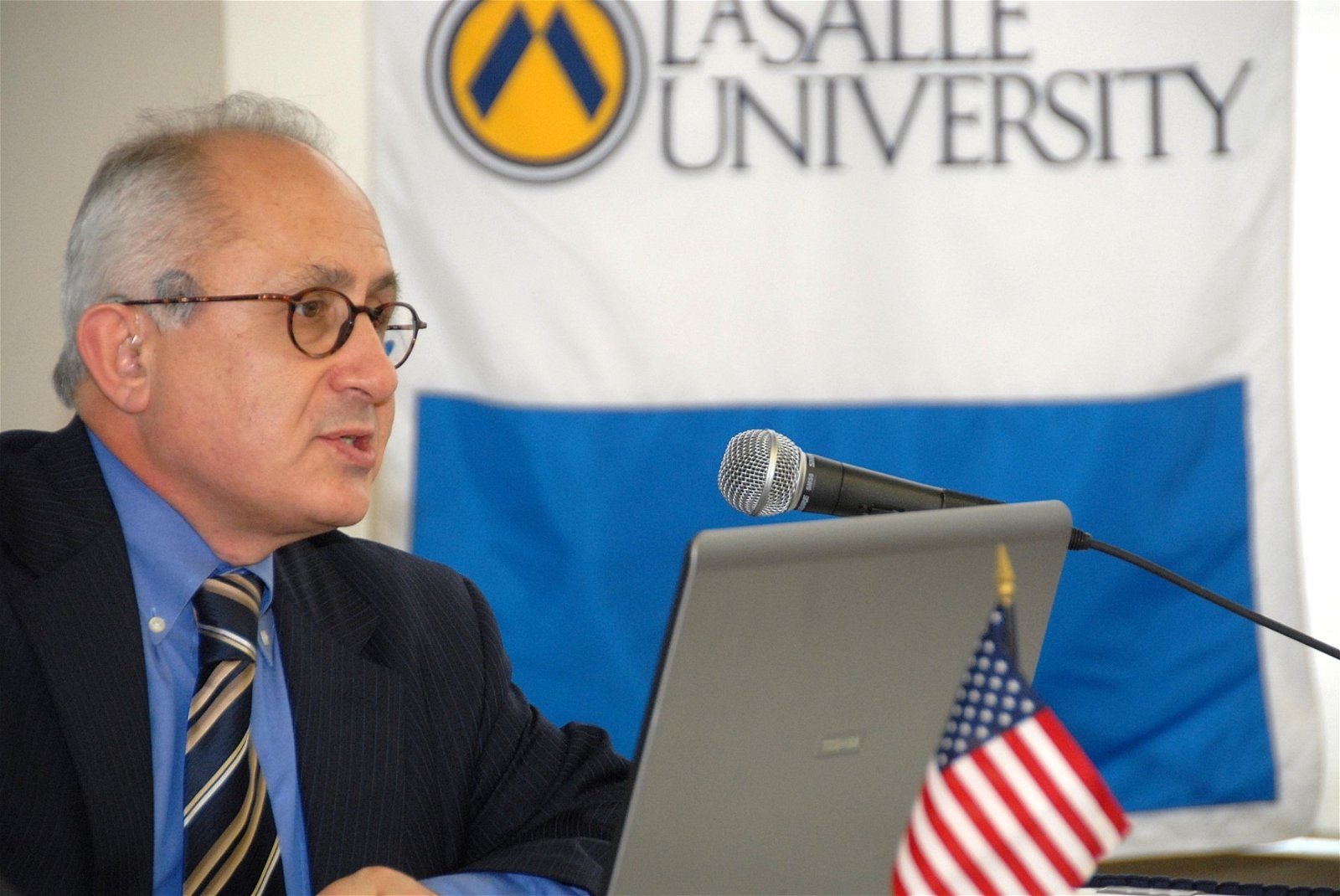
Khatchig’s built up frustration appears to have exploded in Hasan Cemal’s face. My dear friend Hasan ended up paying for the behavior of all those Turkish intellectuals who came before him.
As I said, dialogue is a very difficult art and Khatchig does have some valid points. But out of frustration and anger he stated things that Hasan Cemal didn’t deserve.
I want to illustrate just how hard dialogue is through a detail that on first glance seems rather trivial. Khatchig made this angry barb: “Cemal also repeatedly advised Armenians to be patient (read: It has only been 94 years, folks. Be patient!).” Sadly, it showed how Khatchig had himself stopped listening and reacted with a bit of anger. First, he tacitly places an “equals” sign between Hasan and the Turkish government and makes Hasan a representative of 94 years of denial politics. Secondly, when Hasan was talking about “being patient” he was not referring to the Turkish government’s policy of denial. Hasan was speaking about the birth of a new civil society in Turkey. Hasan was trying to explain how this civil society is just beginning and just starting to discover some things. “We don’t know the history,” he was saying. “We will learn it from you. We are in a learning process. We are coming out from darkness.” And he was requesting “a little patience” towards this newly burgeoning civil society. What Khatchig wrote was taken out of context. As I said, this otherwise trivial comment shows how difficult dialogue is when both sides are so invested to their existing positions that they can’t hear the other.
There is a lot Khatchig wrote that rings true, and I wish he had brought them up during the meeting. Not only would he have seen that Hasan’s ears were open and listening to him, but it would have also started an interesting debate. Hasan is someone who is ready to listen and capable of understanding what is being said. He is someone who can accept criticism if he has said something wrong and is ready to make the changes necessary to correct himself.
The proof of this is very simple. Below, is an email exchange between Hasan and myself. I wrote to Hasan without knowing about Khatchig’s article, and Hasan Cemal’s response is true also. You make the decision where the problem lies and where its solution can be found.
Before doing so, however, I would like to present my own self-critique. The day before the Watertown event, Hasan spoke to a mixed Turkish-Armenian audience at Harvard. His message was forceful and the event went very well. For the Watertown event, I informed him that it would be a mostly Armenian audience and we spoke a bit about what would be meaningful and important for that audience. I expected Hasan to speak about his grandfather, his family, and how his heart and mind have opened over the years—as he had at Harvard. I expected that he would end the speech with the words that he “had come here to listen to Armenians and that he would bring back their messages.” I’m not sure why, but he didn’t conduct the talk that way. He started his speech with what was supposed to be its ending and repeated Hrant’s statement regarding pain and understanding each other’s pain.
It seems as if it was one of those “wrong audience, wrong message” situations. The result was a dialogue of deaf, and maybe people misunderstood what he was really trying to say. I take some responsibility for the fact that the message didn’t come across the right way.
And that is precisely why I wrote to him. Below is that email exchange, which occurred after the talk. For your information the “Armenian friend” in the letter is a fictional character; I made him up.
***
Dear Hasan,
I’ve been thinking for a few days now. About how hard it is to talk, to engage in dialogue… After the Watertown meeting, I’ve been such a mess of emotions. There are some confusing issues, and while wondering how to sort these out, an Armenian friend came to me and we started talking… It was an interesting talk.
In summary he said this:
“I’m disappointed,” he said to me. When I asked “Why?” he said, “Why did Hasan Cemal tell me the things that he should be telling Turkish people? I don’t get it.” Two things stuck in my Armenian friend’s mind. “First” he said, “For us Armenians, the issue is this: The Ottoman government in 1915 annihilated almost 1.5 million of its own citizens. We want this recognized and at the moment we’re discussing how to talk about this with democratic, open-minded people like Hasan Cemal.” He continued, “What I’ve noticed is that they seem to insist that as a pre-condition for speaking about and denouncing this chapter in history, we need to understand the pain experienced by Muslims in the Balkans and the Caucasus.” My friend then added, “Don’t you think this is kind of a strange? First of all, Armenians didn’t deport the Muslims out of the Balkans or the Caucasus. What they experienced is tragic also, but shouldn’t that be taken up with the Greeks and the Russians? Why push this argument of ‘You need to understand this history too’ making it a kind of pre-condition for accepting the annihilation of the Armenians?” “I just don’t get it,” he continued. “I mean, is Hasan Cemal incapable of understanding my pain, unless I’m able to understand the pain experienced by Muslims in the Balkans and Caucasus? Let’s just say that as someone who supports human rights, I declare that I understand Hasan Cemal,” he went on, “how am I supposed to explain to the average Armenian the argument that ‘the pre-condition to having the destruction of our people acknowledged and understood is that those same victims understand what has happened to others in other parts of the world?’” I had no answer to that.
What my friend was trying to draw attention to is the fact that both of these issues are separate from each other. First is that “if a people have been annihilated, there can be no pre-condition to understanding and sharing the pain of those people.” We need to address those people without pre-conditions. The other is a general rule. If we as a people cannot develop an attitude that understands the pain of other people, we will never be able to prevent violations of human rights. “But,” my friend said, “this general rule seems like it’s become the pre-condition for understanding the annihilation of the Armenians.” My Armenian friend seemed to think that you had mixed up the two things.
The second point that my friend was trying to make is this: “I understand the importance of the democratization of Turkey, but when Hasan Cemal approached me, he came with a long ‘laundry list’ of things. Again, we Armenians were reminded of ‘all the rules that we must follow.’ I was told about these sensitivities and how I needed to be mindful of these sensitivities.” My friend was upset. “I don’t understand,” he said, “and I’m having a hard time understanding. There’s been 95 years of a very intense demeaning campaign of denial and no one during this period discussed our ‘sensitivity.’ As a result of all that destruction, we Armenians have been reduced to a mere handful of people. If there’s an issue of “sensitivity,” wouldn’t some ‘sensitivity’ towards the situation that we’ve been in for ages be meaningful? For some reason everything seems to rotate around Turkish ‘sensitivities’; shouldn’t we change this wheel? At the very least shouldn’t we demand ‘equality of sensitivities?’”
My friend gave an example: “If” he said, “Hasan wants to say something about democratization, this is what I would have liked to have heard: Until we accept the harm that was done to you, democratization will never take place fully. And we haven’t been able to bring the struggle for democracy to a level where acceptance of your pain and healing of those wounds is a part of it yet. What we need to do is to make the acknowledgment of 1915 into a part of the struggle for democracy and then and only then will the distance between us be narrowed.”
Dear Hasan, I wait with anticipation for the reaction to your talk. Most likely it was received as important and great for the Turkish students, but as someone who knows both sides and as someone who listens, I have to confess that there are serious obstacles before us. What we are doing is really a “difficult dialogue.” Here’s an idea for a way to get past it. We have to take people like this friend of mine and invite them to Turkey and create a forum for them to express themselves. Let them talk to a Turkish audience, the way we have invited Turkish intellectuals here to talk. I think the act of bringing Armenian intellectuals to speak to Turks is far more important at this juncture than Turkish intellectuals coming to Armenians to speak. We ought to open that door. If the dialogue remains limited to only Turkish intellectuals and Armenians, this road is going to get blocked pretty quickly and this type of dialogue will not bring us anywhere. Hrant’s words are in my ears: “Tell your friends Taner (he meant our Turkish-Armenian academics) this business is going to get finished here (in Turkey). Let them come here and try to become part of the debate here. Until they become part of the debate here, nothing will move forward.”
***
Hasan Cemal’s response:
I read your note with interest. Dialogue is definitely a difficult art! But we need to keep on doing it, without tiring of it. I guess I was unable to explain certain things to that Armenian friend. Some of what he said did make sense but I think in truth, he shut off his antennae after a while to keep from getting too confused…
***
What I should add is that the main problem is not 1915. The main problem is that we (the civil society in Turkey) still have to learn how to speak to each other and how to learn from each other. The events of 1915 in the past and speaking about it today are two separate issues. And there are so few of us willing to listen to each other; we have to work on this. We have to increase the dialogue between Turkey and Armenia and the diaspora. As Hasan says, we have to continue desperately to talk to each other. There are those who are ready to listen to you, ready to acknowledge their ignorance about history. As I mentioned in my talk, civil society in Turkey will learn the gravity of the past from you, and you, my dear Armenian friends, you learn the meaning of the present. This is a very hard, very difficult process. But as I put in title of my Turkish book in 2000, “Is there any way other than dialogue?”

Taner Akcam
Latest posts by Taner Akcam (see all)
- Dr. Taner Akçam on the Recent Decision of the Turkish Government - June 24, 2020
- Dr. Akçam: Genocide Recognition is Necessary for Peace in the Middle East - November 20, 2019
- Akcam: Lemkin and the Question of Armenian and Kurdish Reforms - October 1, 2015
I respectfully disagree with your opinion on this matter Taner Akcam. I thought Mr. Mouradian was quite reserved in his response to Cemel Hasan’s offensive remarks.
If Mr. Hasan wanted to be effective in helping Turks reconcile their differences with Armenians he should have hosted an event for the Turkish community of Watertown or for Turkish American youth attending Harvard on better understanding Armenians. The audacity of Cemal to come all the way from Turkey and preach to Armenians about “respect”, “patience” and “understanding” is just laughable really. And all this from the grandson of CUP leader Cemal Pasha. The fact that some Armenians actually atttended is even more disturbing.
These meetings truly represent the height of hypocrisy and our community should not tolerate such blatantly offensive venues.
After reading the title “…exploded in Jemal’s face” I couldn’t help thinking that Mr. Mouradian has done to Hasan Jemal with his pen what Stepan Dzaghigian did to his grandfather with his rifle, but from what I read here, it does not seem he deserved it… I have not read the editorial yet, though…
Armenians are not frustrated with Turkish intellectuals Dr. Ackam. Armenians are frustrated with the Turkish governments 94 year policy denying the veracity of the Armenian Genocide. Some Turkish intellectuals are increasingly becoming frustrated with the Turkish government’s fabrication and sanitization of their history. Therefore, the source of frustration for both Armenians and Turkish intellectuals is with the Turkish government’s wrongheaded policies of denial.
Armenians are not responsible for teaching Turkish citizenry about their history. We are responsible however, for ensuring that the truth about the Armenian Genocide is not fabricated to suit political or nationalistic agendas. Educating Turkish people about the Armenian Genocide is for honest Turkish intellectuals and the Turkish government to implement. This underscores the point that at this stage what’s important is TURKISH –TURKISH DIALOGUE NOT ARMENIAN –TURKISH DIALOGUE.
When will dialogue between objective Turkish intellectuals and the Turkish government occur about Armenians and the Armenian Genocide? Notwithstanding Article 301, this is how Turks can constructively contribute to “the new civil society in Turkey” not by coming to America and telling Armenians they should be patient. Maybe people like Cemal Hasan can promote such a venue of dialogue in Turkey to help promote better understanding between the Turkish government and honest Turkish intellectuals. Taner Ackam could possibly spearhead such a conference. This is an example of Turkish-Turkish dialogue that will contribute to better understanding of Armenians in Turkey.
Armenian-Turkish dialogue becomes important and central to the harmonization between Armenians and Turks WHEN Turkey recognizes the Armenian Genocide and justice has been served. Only then can any genuine reconciliation through Armenian –Turkish dialogue exist.
Finally, “turkish sensitivities” should be an issue the Turkish government is responsible for addressing and managing not Armenians. After all, it is the Turkish government that has desensitized their population to the notion of the impossibility of a ‘Turk committing genocide’.
If people like Cemal Hasan feel so strongly about better understanding each other let these people start by facilitating a better understanding in Turkey between the Turkish government and honest Turkish intellectuals.
Dear Zaven,
No doubt your post above makes all the sense.But latter has to be introduced by these turkish intellectuals themselves both to their public as well as-especially-to their government.
A very tough task eh? Mr. Akcam and Hasan.Whereas you have chosen the easy way out-you think-trying it on us Armenians in Diaspora.Each ,or near each of us have suffered not only human losses,irreplacable but also rooted out of our Habitat(s) ours for millenia.First,it would seem appropriate to redress our just claims to property and riches looted,as a mere token on behalf of your government and in extension turkish people,then speak of becoming friendly and develop good neighbourly relations. In absence of this, I don´t really understand what dialogue(s) would lead us to. Excuse the phrase, “just kiss and make up” ? Do you kid?
We certainly are all for it,but first things first,as many above have pointed out.Otherwise ,old Ottoman turkish “sugar coated” diplomacy has no place in this age.We are a very Vanguard people on the international scene as you well know and cannot be sweetened even if Your government threw in “Aghri Dagh”, Ani ruinds with strip of land around it just to soften us up,which no doubt and most probably is in the minds of your diplomats.They have not stopped to think that there is no buyer amongst us for such “Lokums”…
Hama Haigagani SIRO,
gaytzag palandjian
Without being present I instinctively symphatize with Khatchig Mouradian’s reaction. I also have every reason to believe that Mouradian is citing Cemal correctly. I cite from Mouradian’s editorial:
Cemal spoke of Armenians and Turks eating dolma, repeated slain journalist Hrank Dink’s words “first let us respect each other’s pain” a dozen times, and said: “The Turks have endured suffering, too. There was the pain of expulsion from the Balkans, the Caucasus, and the pain they endured in Anatolia during the wars. The Kurds suffered, too. They suffered the pain of being denied their language and their very identity. I know very well that pain such as this cannot be measured or compared or equated. That would be wrong. One people’s suffering cannot be compared with another’s.”
To claim impossibility of comparison of suffering is to go too far. By all reasonable standards the suffering of the Armenians were much greater than that of the Turks in these years. I remember the AKP Aydin MP Cömez went to Yerevan in 2005 and talked to a group of Armenian intellectuals and his main message was that he was deeply troubled by what happened in 1915/16. It seems that Cemal should have done something similar. It seems that more humbleness was needed.
About the suffering of the Turks. I believe that an important aspect is missing from the words of Akcam’s fictional Armenian. The sufferings of the Turks of course cannot be brought directly into the discourse on the Armenian genocide. This is relativization. But we can ask in the following way:
If we as part of commemorating the Genocide against the Armenians also extend our focus to the Assyrians, the Yezidi, the Nestorians, the Greeks, The Kurds, shouldn’t we also extend our focus to the thousands of civilian Turks who were killed in the same period simply because they were Turks?
Let’s talk politics and Armenian demands, not psychological stuff.
What the Turkish government seeks, and what the US and probably even Russia seek, is that we Armenians forget what our political demands are and, instead, get all caught up in reconciliation mumbo jumbo, and even genocide research.
I would like to thank Mr. Mouradian for printing articles and op-eds that he disagrees with. The Weekly is becoming a breathe of fresh air for our community.
As to what Dr. Akçam said…the truth is that the Turkish government, Turkish society, and Turkish intellectuals have sunk so low, that Armenians have no choice but to be more open minded, more forgiving, more benevolent, and more mature. It is extremely discouraging to see such intelligent people like Cemal getting is so wrong on such an obvious matter.
Essentially, Akçam is telling the Armenians that Turkish society and academia is so lost and destructive, that Armenians have to “trick” them with esoteric language about “understanding each other’s pain” before we can even begin to talk about 1915.
Before you can make a child understand that he shouldn’t cry over not getting his favorite candy…you have to give him the candy to make him stop crying. Otherwise, he won’t listen. No?
I really don’t understand why the Armenian community feels that it has to swallow condescending comments time and time again from “good-natured” leftist Turks who are trying to build civil society (which doesn’t concern Armenians) and are willing to sit down with Armenians to chat for whatever reasons they have (none of which I am convinced are genuine with regards to the Armenian people). Both Akcan and Cemal should not be trusted as being sincere towards the Armenian people and their suffering. They both have their own agendas to follow. “Dialogue” with Armenians is a tool for them to advance those agendas, nothing more. It never interested me that Akcam or any other Turkish intellectual for that matter personally recognized the Armenian Genocide, and I never understood the bizarre fascination that some Armenians foster for such people.
Armenians need to stop being duped time and time again. It is not Armenians who should be reaching out to the Turks for dialogue, rather it has always been Turkish society that should have swallowed its pride and demanded to come to terms, finally, with its black past. Seems no matter where you are–Armenia or Watertown–you will always find naive people willing to entertain Turkish “leftist” intellectuals. Armenians it seems will not ever learn to be weary of supposed Turkish do-gooders. Nine-four years of denial have been endured by the Armenian nation, and lately to add to that misery, mockery and rebuke disguised as sympathy and goodwill.
What is the point of dialogue with the Turks, what good can come out of it? I really don’t see anything of benefit for the Armenian people. Until Turkish society makes demands of its government to accept the Armenian Genocide– which “sadly” will never happen–there’s really no reason to outreach to leftist Turkish intellectuals who again, are simply advancing their own agendas by demonstrating their hollow willingness with the Armenian community.
Turkish civil society as it stands today does not care about the plight of the Armenians. Let’s understand this once and for all, and stop fooling ourselves.
Thank you, Christian; that was very well put. And with the passage of another eleven years (and the recent Turkish/Azerbaijani attacks on Artsakh), I’d bet most of the pro-appeasement commenters wish they could eat their words.
The fact is that the too-trusting nature of Armenians is not only their downfall where Turks (and other evil people)are concerned, it’s also their saving grace as far as being a genuinely kind and (mostly) high-minded people goes. We want to think well of others, so we mistakenly attribute to them the same basic good will and honorable/benevolent intentions towards the world as we (and a large portion of humanity) feel. But they feel no guilt or remorse and even look DOWN at us with contempt for being so naive. Their attitude is reinforced by the disgusting fact that the US, Britain and Russia (among others) have consistently valued military and materialistic advantages over moral considerations, and APPEASED them, even knowing full well what brutal and utterly dishonorable people they are. (We are not SO naive that we imagine the US Senate’s recognition of the Armenian Genocide had anything to do with doing the right thing, are we?) The ONLY thing that had changed was Turkey’s very obvious defiance of the US, and total disregard of its obligations as a member of NATO. Recognition of the genocide was an act of retaliation, but one without teeth, anyway. Turkey didn’t even object, because it was too busy trying to genocide the Kurds this time.
Kudos to Mr. Mouradian for publishing his editorial and Dr. Akcam’s piece.
I too think Khatchig’s editorial was a measured response to the same old trite propaganda. I also advocate breaking free from our slavish adherence to any attributions by Turkish intellectuals about Ankara’s continued denial of the Armenian Genocide.
Yes, Turkish intellectuals are an incredible point of leverage in Turkish society to help broaden minds and yes, historians like Dr. Akcam are much appreciated and valued for their refreshingly accurate and honest writings about the Armenian Genocide. However, let’s remember this is thier job as historians. These hisotrians are not doing Armenians any favors by accuratley and honestly recounting the truth about their history. This is what historians do for a living.
In this articles second paragraph, Dr. Ackam writes that Khatchig has been “struggling for years to promote Armenian-Turkish dialogue and has tried mightily to get voices of critical Turks to the ears of Armenians.”
How can Khatchig or anyone else promote Armenian/Turkish dialogue when there is no Turkish/Turkish dialogue? This doesn’t make sense. Change is desperately needed in Turkish society. That’s a Turkish problem not an Armenian problem. I tend to agree with some of the sentiments of Christian, Kevork, Zaven and Henry abo0ve in that good natured Turks, like Dr. Akcam, that are trying to build a new civil society should direct the voices of critical Turks to the ears of their revisionist Turkish government not Armenians.
It’s almost getting so that we Armenians are relying on various Turks to make our case for us. Naturally, we are going to be very disappointed in the results. If the Armenian Cause is simply a matter of getting Armenians and Turks together to discuss history and expecting the Turks to acknowledge the Genocide, then count me out. But I don’t think that IS what the Cause is about.
Dear Dr. Akcam – Your words have inspired a great number of people to respond. I agree that we that we have to be patient for a civil society in Turkey to reach critical mass in it’s evolution towards open dialogue about the armenian genocide. From book publications and news postings I can already see it begining to happen. There is a great difference between now and 1996 when I first read Survival of a Nation by Christopher J. Walker and had trouble going to sleep at night. And yet we remain caught up in this nightmare, which despite, flares of hope and the increasing global awareness in the internet age, seems like it will never go away. You are one of those flares of hope. Some people say you have your own agenda. Obviously! But whether you’re a seeker of truth, or have some quirky astrological component that dicates that you must challenge authority or great odds, I believe that you love your country, you want to do what’s right for your country and enjoy your native pride in good conscience. You too were born a “soldier” and you want to defend the Turkish Repbulic – against whatever, perhaps it’s wrongheadedness. Here you are pited against another 60 000 000 000 Turkish soldiers who since birth have been equally inculcated to defend the Republic against anything potentially trecherous – like the Armenian Diaspora. The German Wall came down, Antarctica is melting. Let’s hope vigourous Turkish-Turkish dialogue gets underway on armenian issues. In the meantime I appreciate and admire the work you are doing.
I attended the Monday night Harvard University’s presentation for this matter. I wish the camera had focused on the Turks in the audience to record their facial expressions and LACK of applause (to note their temperament) they were very interesting to watch. Armenians and Turks do know each other apart.
We Armenians have been duped before and to subject ourselves to any similar possibility in a modern-day ruse (without my sounding too distrustful) would be disappointingly naïve (to be put mildly).
With all due respect, that Taner Akcam has replaced an Armenian in a notable academic position at Clark University (while recognizing and respecting who’s operating the program) can benefit or hinder Armenian interests.
Here’s an idea for a way to get past it. Let Turkish intellectuals talk to a Turkish audience in Turkey. Generally the Turks don’t like hearing about the Armenian Genocide even from their own as Hrant Dink’s assassination proves. I greatly doubt it to be beneficial or palatable for Turks to hear more on this from Armenians with any sense of trust; it would be more worthwhile and hopefully believable to get this information from Turks for whom they may still have a degree of distrust for even broaching the issue.
Guido…without being unduly critical, in your comment you never failed to capitalize all Turkish references yet were less respectful on the majority of Armenian references – that paints its own picture!
I agree with Dr. Akcam. I thought that the expressed frustration against Dr. Hasan Cemal was premature to say the least. I recently befriended a young Turkish lady, who knew about the Armenians, but swore to me that she did not know about the Genocide a few years back. She told me that generations of Turks grew up knowing only some bits and pieces about the Genocide. How could she? The Turkish government knew, but the Turkish population were left in the dark. Their history books do not mention the massacres that ended up with the Genocide. When we talk about the Turkish people (excluding the Turkish government), we need to take small, gentle but firm steps, and not slam them with a ten ton truck. After all, Dr. Hasan Cemal, being the grandson of Cemal Pasha, had the courage of extending his hand to us, the least we could do is meet him halfaway and start our journey towards justice, peace and eventual friendship.
Mike Sinan
P.S.: Thank you Dr. Akcam you truely are a hero for millions of Armenians worldwide.
Armenians and Turks are two different animals. Our values are different. In order to make headway the Armenians need to discard our understanding of Turks from an Armenian’s point of view. The Armenians need to understand Turkish mentality and motivation which is totally different. Turks will never have introspection, apathy or “come to terms”. That’s not who or what they are. The Turks are ultra opportunists that still have a burning need for a “master race” identity. They not only believe that they couldn’t have perpetrated a genocide but if they did, it was somehow justified. It was their “right”. And to them everyone else just needs to understand their justification, their pain, their motivation, because after all, only the “master races'” sensitivities are the most important…….Turks only understand power and the big stick. That is why they have always befriended anyone with power and anyone that can provide an opportunity for them. That’s all that motivates a Turk. When and only when the opportunity to recognize the reality of the Armenian genocide is greater then their denial, that is when the Turks will “come to terms”.
I attended the Harvard session and have spoken with individuals who attended the followingevening at the ACEC. There is no doubt that the content and reaction different at each venue. Perhaps HasanCemal was too sensitive to the largely Armenian audience on Tuesday. I believe that Taner Akcam’s explanation is reasonable.
What has my attention is the overly critical views expressed concerning the intentions of Hasan
Cemal. Who am I or anyone else to challenge his intentions or motivations. We Armenians have largely negative views of anything Turkish. When you consider the importance of our unfinished
political agenda, this is very shallow and ineffective behavior. We are convinced that our cause and that the mere articulation of our position should be enough to convince anyone…even Turks. We have a path of increasing frustration using the same methods and the Turks have continued their strategy of denial. That is not the game of global politics. Moral and historical truth is no guarantee. Turkey will deal with the Genocide when it is in their interests. Those “interests” are dynamic and may emerge as the result of external factors( i.e EU membership) or internal( the enlightenment of Turkish society). How can we expect to influence the latter with limited knowledge
and contact with the Turkish people. It is in our intereststosupport and enable civil society efforts in Turkey.
On Monday evening, I had several questions to ask Mr. Cemal,but decided to refrain from speaking. I wanted to hear from the Turks in attendance and listen. The highlight for me was when a young Turkish man asked a question that was consistent with the denial position and he was responded to quite appropriately by Taner Akcam and Hasan Cemal. It was a gratifying moment to hear two Turks speak to another Turkish man on this issue. In a small way , it gave me hope and convinced me that their courageous efforts deserved our respect and attention. They spoke with intelligence,conviction and encouaged him to move beyound denial. Taner spoke clearly to him
about the fact that Turkey has not acknowledged it as a crime. Hasan asked him to open his heart to learning about what happened in 1915. It was an emotional moment for me. I wish to thank them for their commitment to reconciliation through the truthful dialogue.
When we challenge the intentions of something that can clearly benefit us, I also am saddened. Unless, of course,we think that we have nothing to learn. In the pursuit of justice, there is no room for displaced anger and hatred. Taner Akcam has made significant contributions to Armenians and Turks. He and Hasan represent an approach that is and will continue to bear fruit…
The academic and journalistic communities are the catalysts for dialogue, understanding and
eventually action. Who in our community would have predicted a conference on the Genocide and the Adana massacres would take place in Turkey.
I understand the impact of frustration. As a second generation Armenian born in America, the genocide has defined who we are, but remained unacknowledged by the only other party that matters…Turkey.
I applaud the efforts to increase understanding. When I heard Hasan Cemal talk about Armenians understanding the pain of Turks, I was not offended . He was simply helping us to understand something that defines them. He was not blaming us or lowering the impact of the Genocide. Our repeating our mantra on the Genocide will not convince Turkey. They will change as the internal and external factors become in “their interests” We can choose to help this process or remain angry.
I believe this is an honorable endeavor.
It is true that many Turks did not learn about the Armenian genocide in their schools, and only in the past 30 years have been hearing more about it. (Yes, 30 years, not 10 years; they read newspaper articles about the genocide, do they not?).
But then, these same Turks certainly know about the dire ongoing situation of the millions of Kurds in Turkey and yet that does not seem to have engendered enough concern among them to make a big difference. The war against Kurds goes on, after all.
If there were still Armenians in “eastern Turkey” today, Turkey would have murdered, deported and raped them all, just as in 1915. How? Easy: Turkey could at any time have declared an “emergency” of some type just like it did in 1915 (a rebellion (like with the Kurds currently), the Armenian war with Karabagh, or anything at all) and the genocide would be happening all over again. Nobody would stop Turkey from doing it.
Turkey has not really changed. This is a myth created by liberal ArmenianAmerican academicians – the ones you see on reconciliation panels – who lack historical perspective and want to think the best of Turkey. They think that when Turkey makes even the slightest change, that we’re all supposed to swoon and cheer.
Professor Akcam,
Mr. Hasan may be better served on this issue (Armenian genocide) with Turkish intellectuals, student populations, and the general public. They need to move toward acceptance of history. It’s clear the Government imposed denial of genocide recognition has it’s lasting effects on Turkish society as well as the victims.
In many ways Armenians are closest to this issue, freedom to educate ourselves, and direct accounts of the attrocities from our family, no laws against discussion of the genocide.
Maybe if we had the luxury of the fruits of our population i.e. intellectuals, we could better serve this discussion hense the Turkish Government’s calculated result we are experiencing, the 1915 genocide of Armenians.
Your the perfect example of the challenges this issue faces. When we get more Professors like yourself it may likely help all sides resolve this in a just way.
We thank you for your tireless efforts on this issue~
Fresno, CA
Taner, I appreciate what you are doing here, it is much needed, and as we see, not always appreciated.
The dialog is of course in it’s early stages, even after all these years. We need to continue, and I completely agree that there needs to be a focus on taking Armenians to Turkey, to speak to audiences there. Armenians of course appreciate hearing a Turkish intellectual openly acknowledge the genocide, since it gives them hope for the day when the entire society accepts it, but more important is as you said, for the society in Turkey to be exposed to Armenians from abroad who have a real story to tell. Turks who have probably never heard an Armenian speak, or address this issue. Turks who have often felt on the defensive, can perhaps for the first time imagine themselves in the others shoes, and realize they are not fun shoes to be in.
The positive changes in the openness of Turkish society are coming quickly, and much of this I attribute to the requirements of E.U. entry. I have heard the Turkish advice that we shouldn’t push too hard, or that the pursuit of recognition will result in a backlash among nationalists in Turkey. I cannot disagree more. Perhaps it angers nationalists, makes them more violent or protectionist, but keeping silent, or quietly waiting are not only not options due to the impossibility for the Diaspora to imagine slowing down their efforts, but because these efforts have accomplished an incredible change in Turkey itself. I do not believe for one moment that if the Diaspora had not raised the subject again and again, in the United States, in the European Union, and all over the world, that Turkey would allow nearly the kind of dialog you see going on in Turkey today.
Many Turks who suspect or know there was a genocide feel a shame for it, and many of those have transferred that shame into a hatred of the victims and even more-so a hatred of the victims’ descendants, who remind them of this shame. When Turkey finally apologizes – and I am convinced the day is coming sooner than we think – and some amends have been made, that shame can be put behind once and for all, like in Germany. Armenians can then finally focus on the actual loss they experienced, rather than have to be constantly reminded that the injustice continues to this day. It will finally allow a new chapter to begin in our histories.
I’d also like to share a op/ed piece from the Turkish site Gazetem.net which I find to be a very simple, and exceptionally powerful piece, which I wish every Turks who would deny the genocide would read, entitled “Would you wish to be an Armenian in 1915?”…
http://www.armeniapedia.org/index.php?title=Would_you_wish_to_be_an_Armenian_in_1915%3F
I feel compelled to chime in.
While I can’t claim the honor of having him as a friend, I’ve met Taner Akcam twice, if memory serves me. Both times in LA. I had posed a question to him the first time, and asked him if he still held to his answer the second time we met. The answer was yes.
The answer in question? He advised me/Armenians, that if we raised the issue of lands (and I have taken that to include reparations), then we would never get anywhere because the Turkish side would tune us out.
This representation is much akin to the issues over which Hasan Cemal stumbled by Akcam’s own assessment. So he too must reconsider what he says, when , to whom, and how.
This all comes down to what has been stated in various ways in the previous postings. It’s not my/Armenians’ problem, doing, or causation that Turkish society and state are a shambles. Since Hrant Dink seems popular to cite, I’ll do it too. Wasn’t he the one who said something to the effect of, “I know my history. It was Genocide. You are the one that needs to elarn yours.” It becomes relevant to this side of the divide only secondarily, out of a chronological/developmental necessity– the growing up process Turkey is going through. so please, spare me the requests for sensitivity until I’ve received it and the century’s worth of salt-on-the-wound has been at least partially attenuated.
I’m happy to assist in whatever Turks need to go through what will probably take two generations to achieve, but again, spare me the conditionality.
Also, consider that we, Armenians, and particularly the ARF, helped with the short-lived democratization of the Ottoman Empire. Then, we also saved the leeadership of the CUP during the counter-revolution, only to have the very same people become the organizers of our slaughter. These were the progressive forces. I’ve been related an anecdote dating to either the 1960s or 1970s (not sure of the date) by the late Sarkis Zeitlian. This time in France, young Armenians wanted to work with Turks on university campuses. They issued some statement, only to be confronted by silence, the absence of a corresponding issuance from the Turkish side. And now the utterly duplicitous “Protocols”. You’ve got to admit, the blows to the ability to trust our counterparts on the Turkish side are continuous. It makes it very hard to trust even those on the political left who generally tend to be open minded. now add the genealogical baggage Hasan Cemal carries and it should be plainf to see why any Armenian would be EXTREMELY leery of his remarks.
Finally, on a very minor note regarding typographically based respect , metioned in another post. I apologize for using spellings that in English do not truly represent the names of the Turkish participants in this matter. I do so only for the sake of consitency.
I don’t understand why we are adamantly pushing the issues of our ancestral Armenian lands in current day Turkey. These lands have been occupied/inhabited by 20 million strong Turks/Kurds. There are maybe 100-500 Islamized Armenians left on these lands. So, asking Turkey to return these lands back to us not only does not make sense, but it defies logic and breeds only more hatred and mistrust between Armenians and Turks. Heck, we have a small Armenia, and 77% of those living in our small motherland want to emigrate. I do, however understand that we are using the “land” issue not to get our ancestral lands back, but to use it as some kind of a leverage against Turkey.
The reality is as follows: Armenia is a landlocked country, surrounded on all sides by not so friendly countries. Next, Turks have the secret weapon, the almighty oil, and almost all superpowers are interested in Turkish oil. Our apples, pomegranates, grapes and wines, do not power the Western/Eastern economies, oil does. What Armenia has to do is make a bad situation a little bit better and shall I say, “palatable” for the Western/Eastern powers and to Turkey. We need more righteous Turks like Dr. Akcam and many others good Turks. Here we are pushing Turkey to recognize and accept its complicity in the Genocide, and then parallel to, we are requesting the return of 100,000 square km+ of lands that are overwhelmingly inhabited by Turks and Kurds.
The Genocide did happen, besides the 1.5 million of my peoples, about 1200 Sinans were massacred in Istanbul alone, and with the grace of God, we have come back asking for justice. We need to appreciate some Turks, who under constant threat of bodily harm and death, have come out and steadfastly challenged the conscience of all Turks. I salute all these righteous Turks. I rather have Dr. Akcam as president of Armenia, then all (3) former/current presidents who brought absolutely nothing but hooliganism and oligarchism plus a smidgen of poverty for the majority of Armenians.
I also don’t agree with “land reperations.” It is absurd for Armenia to think that we are somehow going to coherce the 4th most powerful nation in NATO and the 8th most powerful army in the world to willingly cede lands. If they ever do so, it will happen in a military conflict — one that does not take into account international law, treaties, or “historical rights.” Therefore, any discussion about getting “land back” is empy rhetoric.
Especially when you consider how most Diaspora Armenians can’t even live in Armenia (or Artsakh) — let alone with the millions of Muslims that live there now.
Ok gentleman, how about a modified hypothetical from the original:
Hitler’s grandson X, a vociferous advocate for free speech currently residing in Germany, was invited to America by a fringe Jewish organization to give a talk to Jews about better understanding and respecting President Mahmoud Amadinajad’s denial of the Holocaust. X advised his Jewish audience that they should be patient as it would take time to educate President Amadinajad and some elements of Iranian society about the reality of the Holocaust. He also advised Jews to be mindful of talking about the Holocaust because it may rub the President the wrong way and all efforts to educate him on this crime would be in vain. X finally advised his audience to “respect each others pain” as Iranians themselves were also killed around that same time.
Would you be caught dead at this event?
Look, whether Hitler had a grandson who made some similar comments as did Dr Cemal is not the issue here. The issue here is the recognition of the Armenian Genocide by the current Turkish authorities. There are thousands of Turks who have heard from their parents or grandparents that something awful did indeed happen in 1915. They are not dumb, they know how the Ottoman government alongside the Young Turks conspired to eliminate their Armenian subjects. Most know the truth, but are scared to talk about the Genocide in the open. but once again, righteous Turks, the likes of Dr. Akcam, Orhan Pamuk, and Dr. Hasan Cemal come to remind their own people that, yes indeed the Genocide happened…..and our reaction to these righteous Turks? Childish and bellicose. Instead of thanking Dr Hasan Cemal, we are frustrated with him. Again typical immature Armenian political naivete. Spewing our frustration at the wrong person will not make the Turkish government accept their complicity in executing the Armenian Genocide.
To conclude, I would throw this “land issues” out of the window right away, and without any remorse or guilt. I still have to meet one Armenian who wants to live on our ancestral lands, we just feel emotional about these lands, but when push comes to shove, not one single Armenian would go to live on our ancestral lands voluntarily. That is the almighty truth, I know that some of my compatriots will hate me for these brazen words, but that’s the truth and nothing but the truth. And let us spew our frustrations not at righteous Turks, but at unrighteous Armenian leaders who for the last 19 years have been fleecing Armenia bone dry, causing immense pain and suffering for the 3 million poor and disenfranchised Armenians. I bet no one here has the faintest idea that 90% of Armenias wealth and choice lands are in the hands of 500 or so government officials and mafiosi oligarchs. The majority of our people live like cattle and in substandard living conditions. Surprised? Don’t be.
That’s hogwash Mike and Henry. This discussion has begum to dip into the doldrums of defeatism again. Lets not confuse a sense of perceived realism with defeatism. Land reparations is our right and should be demanded not requested. Nothing is static and I refuse to make excuses for illegal Turkish occupation of my lands. The restoration of Armenian lands back into Armenian hands, as one of components of reparations, is not contingent on the feasibility of whether Armenians are willing to go back to Turkey. It is contingent on the sanctity of JUSTICE.
If I choose to return that is my decision and only mine to make. I may indeed choose to return and raise my family there. I may also decide to operate my fruit processing plant on my lands and employ local labor. I may on the other hand choose to lease my returned land to an Armenian, Kurd or Turk already residing on that land for a mutually agreed upon FEE under the normal terms of a standard lease agreement. Point being MY decision to do what I like with MY LAND is MY CHOICE. Those rights were relentlessly and viciously trampled over almost a century ago and the amount of time elapsed since those genocidal crimes were perpetrated does not de-legitimize or undermine my rightful legal claims to MY LAND TO DO WHATEVER I WANT WITH THEM.
Mike, thanks for your honesty. We look at the Armenian cause with a romantic notion that all is good with our people. It’ s almost like time was frozen for us in 1920 and that nothing has changed in 90 years. Well,our factionalism in the diaspora has been a constraint for Armenians. The reality of the Armenian Republic is nothing like the dreamswe have keepaliveover the last decades. Did anyone
dream of corruption and poverty?
My point is that we can’t hope to make progress if we constantly represent ourselves as the victimand the Turks are all bad folks. We need to be able to articulate the difference between the issues of Armenia/Turkey verses the Armenians/Turks. That’s what dialogue is about.It will help us
understand how deal with our cause in 2010 terms and not in1920 mentality. Anything less than this and we will run the risk of being written off as an angry victim with ethnocentric views.
Misguided frustration directed at enlightened Turkish individuals is unfortunate and sad. As Armenians, we talk a lot about how our Christian faith has endured our people through the centuries
of oppression…. Vartanantz through the Soviet period. Where is our faith when we engage with Turks
on issues of mutual importance. Can we put our anger, frustration and perceptions aside long enough to listen and “open our hearts”> We must encourage the changes going on in Turkish society. These are not “soft” notions. They are real strategiesto make progress and to get the Armenians out from
the rut we are in. Thank you Hasan Cemal, Taner Akcam and others.
Mr. Sinan,
What do you mean whether or not Hitler’s grandson made similar comments is not “the issue”? Did you just voluntarily assign yourself, your martyrs, and your people a less deserving piece of the “justice” pie? I think so. Mr. Ryan’s hypothetical said more than we could all say.
“There are thousands of Turks who have heard from their parents or grandparents that something awful did indeed happen in 1915. They are not dumb, they know how the Ottoman government alongside the Young Turks conspired to eliminate their Armenian subjects. Most know the truth, but are scared to talk about the Genocide in the open.” Jesus Christ, talk about an exaggeration.
I have yet to meet an Armenian who is not ready, willing, and eager to reach out to Turks who are willing to have “dialogue.” (Ok, that’s not true, there are idiots in all groups). But Dr. Akcam has been embraced by even the most radical elements of our society. As our history shows, we know very well the wisdom behind all the advice he and Mr. Cemal are giving us today. We have been practicing it for quite some time now.
The problem is…we don’t need to hear it from the grandson of one of the Pashas, being repeated as if WE AREN’T YET READY FOR DIALOGUE. Or we are no longer patient. This only suggests that despite the Turks’ ignorance and destructiveness, the Armenians are still, somehow, part of the “problem” when it comes to genocide recognition. Most Turks, the vasty majority of the Turkish intellegentsia, and definitely the Turkish government, are not looking for “dialogue” in the way you and Dr. Akcam are imagining it. They are looking for “dialogue” so as to suggest that we MIGHT be wrong or that THEY MIGHT BE MAKING A LEGITIMATE POINT. They have realized how pointless it is to deny the genocide, they seem to be satisfied with merely putting a question mark under it. And that, my friends, is even more destructive because it is cloaked with talk of “dialogue” and “reconciliation” and “friendship” and “science” and “facts.” It has clearly fooled some.
Armenians tell each other everything that Akcam and Cemal have been saying all the time. We don’t need to hear it from Turks.
Mihran, why don’t you return to our ancestral lands in Turkey? How about Now? When will our phony and self deceiving childish pranks end? Why is that our emotions always supercede our intellect? Do you honestly believe we want to go back and live in current day Turkey? Keep your emotions at bay, because in the end your emotions will do you more harm than good. Sadly, even today, we are held hostage to our emotions. If you or others erroneously think that us, Armenians alone would be able to force the Turkish government to do this or that, without the explicit help of good righteous Turks, then we all should ride “Peter Pan” buses and head for Disneyland and from there on to Fantasyland.
Sadly my friend, those lands do not belong to us anymore, wake up from your dream and we will welcome you to reality with open arms.
Sometimes I wonder if this editor is trying to get kicked out of his job, and now I am wondering if he’s trying to get kicked out of his school! You love playing with fire, don’t you, baron Mouradian?
Thank you Mihran, our rights to our land have nothing to do with military might, but with justice and what is right. The arguments being laid out by those ready to cede our claims, without even asking the others don’t even add up. “Armenia cannot take the lands militarily”. Who said we should? “Armenia is much smaller than Turkey, it has no oil”. So what? Israel did not even exist, and was certainly no force compared to Germany, but Germany made reparations because it was right. “There are 20 million Turks/Kurds living there now”. Living where? Who said we’re talking about all of Wilsonian Armenia? “I don’t want to live there, are you going to live there?” Ridiculous statements, both of them. Who cares. Land ownership is not determined by whether you want to live there. Let Turkey return some of our lands, and we can live there if we like, lease it back to the Turks if we like, or turn it into a huge national park if we like. That’s our business. Tell you what, give us back Cilicia as a test run, and we’ll see if Armos move there. I’m not sure I could resist.
If YOU don’t care about land reparations, you are forfeiting your historical right. That does not give you the right to forfeit the entire nation’s rights, thank you very shad!
Mike Sinan is absolutely correct in his assessment. Demanding land at this point in history is really just ridiculous and you cannot bludgeon someone (let alone a whole country) into accepting the notion that they committed a genocide. Education and facts will slowly win that race. However, on the land issue, we need to realize that the tide turned long ago, and while unfortunate, cannot be turned back, no matter how ‘just’ anyone thinks it might be. If you have a land gripe or a legal issue with Turkey, get a lawyer and file a suit. Any private citizen can do this. If anything, Armenians should be applauding and supporting the current Turkish government for committing the funds and labor to restore historic Armenian churches across the country – even though there are no people to use or attend them. I’ve been to Turkey and can tell you, there are plenty of historic Seljuk and Ottoman structures all over the place that deserve, but are not getting restoration funds. The other point is the fallacy that all Turks are alike. Nothing could be further from the truth. That was not true in Ottoman times, nor is it today. While there are many Turks who are linked with and support the ultranationalist Ataturk/CUP legacy in certain political parties or the military, there are also many there who see the historic flaws and dangers of racist, fear-mongering myths, and want to change the dynamic for the better. It is all part of a process, one which is moving, albeit slowly, in the direction of openness and truth. Step by step, inch by inch, Professor Akcam is moving the discussion forward….despite the overwhelming challenge. He is not alone, but he still needs everyone’s support.
Mr. Raffi,
You didn’t even catch the contradictions within your own statements. If you’re not talking about “all of historic Armenia” and only SOME of it, you are yourself forfeiting the historical rights of our “entire nation.” You are merely ceding a little more than I am willing to. Who are you to decide that we should only get back the few provinces we lost in 1923? Why be a coward like that? Isn’t it our “historical right” to ask for ALL of Armenia (yes, including Kilikia)?
And I still can’t believe that some Diaspora Armenians have the nerve to suggest that the people of Armenia should live under continued blockade and insecurity just so that ONE day, Mr. Raffi up there can have the right to LEASE his land away to Turks and Kurds. All the while, he lives comfortably somewhere else, waiting, patiently. Get over yourself.
And please, spare me the comparisons between the Jews and Armenians.
Look my dear compatriots. This land issue has been dragged and why not muddied along the way. We lost these lands, and it is very difficult to explain in political jargon that these lands are forever gone, unless…if Armenia by some divine intervention suddenly became a world superpower. You simply cannot uproot and drive off 20 million Turks and Kurds living there, I don’t understand why is it hard to grasp this reality. Screaming “bloody murder” won’t help our cause. Calling for the return of these lands and singing patriotic songs since 1915 did absolutely nothing for our cause either. I have heard and sang with pride and gusto, the “bank ottoman kravadz e …..” patriotic song hundreds of times, but no one heard our beautiful singing voices but…ourselves, no one cared who “kravetz which bank,” no one cared about our “Sasno sarer,” etc etc
But then something did occur… a few good righteous and honest Turks opened their mouths, the likes of Noble prize winner Orhan Pamuk, and Dr. Akcam, suddenly the whole world stopped and listened. Suddenly the genie escaped the box, and was free to roam the world. Newspapers all over the world, including, mind you in Turkey wrote editorials and commentaries, started analyzing past events, discussion groups formed all over the world, even inside Turkey, politicians, intellectuals and common people suddenly stopped what they were doing and started to TALK about the Genocide. And how did we show our appreciation? by accussing these righteous Turks for jumping our bandwagon too late, accussing them for saying too little too late, killing the messenger even before he opened his mouth ..and the list gets longer and longer. We have become a tiger who roars and roars but finds no prey, and then it starts devouring itself.
My focus in life is to seek justice for our Armenian people who were slaughtered like cattle and driven off to the deserts to die. My goal is to reach out to All Turks, extend my hand of friendship and trust, thank the ones who currently are helping us , and make new friends along this difficult journey. I understand the frustration and anger of some of my brothers here on this forum, but we need to grow up and move on slowly always using our brains instead of our hearts.
I for one, will Never live on historic Armenian lands, I don’t care and have no desire to return.
As one wily young Turk told me: “…you can have your historic Armenian lands any time, in exchange for your properties in California…”
Mr Sinan,
I invite you, and the defeatists like you, who applaud a couple of turks who come to earn the trust of Armenians by saying we both eat dolma and that anger is bad for our health while saying nothing relevant about the Genocide or about engaging the turks into finally acknowledging -as it happened, “Yes, we apologize to the Armenian nation for the Genocide”- to move your credulous selves to Constantinople or some other of the lands usurped by the turks and, why not, visit the couple of old churches they are supposedly restoring to save face. Then again, maybe you need invitations at all. I doubt you are Armenians. Maybe you are turks pretending to pass for Armenians or maybe you have forgotten what it is to be Armenian. Go back where you belong, before the dolma gets cold.
Mr. Avo,
That was quite empty in substance. Dr. Akcam, Pamuk, and Cemal have repeatedly recognized the genocide, and one has even contributed to genocide scholarship. And why did you feel the need to resort to questioning my or his “Armenianess.” Amot, hazar amot.
Amot tsezi, Henry Dumanian. I have not criticized Taner Akcam –as you know well, so if you read me well you are acting in bad faith–, Mr Akcam has universal recognition by Armenians. I am addressing the couple of people making comments, who claim to be Armenians –I have no means of knowing, sorry, so as far as I am concerned your word is not enough for me (or mine for you, for that matter)– who are urging us to “throw this “land issues” out of the window right away, and without any remorse or guilt”, Sinan the little is calling on us to do, just because a couple of turks are saying “let’s be friends and let’s the past be the past!”. Try saying that a Jew regarding the Holocaust and all the lost property and to give up reparations. Try saying that to the any Armenian like me. Try it, and do it publicly in any Armenian venue.
I am limiting myself to what I know to be Cemal’s statements –I have not heard him inequivocally repudiating the Genocide or calling it by that name, so please do us all a favour and include it in your future responses– and as for Orhan Pamuk, I urge you to read –and read well, if you can, without being beguiled by Pamuk’s superb rhetorical skills, what he says about 1915, and please write here whatever of substance you find about his comments on the “tragic events of 1915” (read, for example, his piece for the New Yorker a couple of years back and try to see if you can weave all the hipnotizing writing of Pamuk into anything meaningful for us, Armenians, and for the recogniton of the Genocide by the Turks).
If you are throwing “out of the window” our rights to reparations and to our lost lands just because one, two, five hundred or a thousand Turks are being polite and nice, and saying a couple of nice things about our victims and Genocide and are painting a few churches, then reconsider shame on you. Hazar amot tsezi, Henry Dumanian.
Mr. Sinan is right and makes many very good points. Let’s add that today’s Armenia can barely keep itself alive and hasn’t even reunified itself w/ Karabagh yet. The whole discussion about Eastern Anatolia is a political pipe dream, and a waste of time and energy. It is not defeatist to acknowledge the facts: if Armenians could not maintain control of those lands a thousand years ago, it is even less possible today.
Looks you are not well informed, karekin. Armenia has a working economy, trade and well prepared army that liberated Artsakh (Nagorno Karabagh) from the eastern half of our turkish enemies. As for the turks getting edgy about Western Armenia (that’s how we usually call what you name eastern anatolia) we will talk the day the Kurds proclaim an independent Kurdistan, perhaps in northern Iraq.
Ryan, an excellent hypothetical analogy. NO, I would not dare be caught dead at such an event.
Henry, why would you “voluntarily assign yourself, your martyrs, and your people a less deserving piece of the justice pie” in forfeiting your rightful legal claims to land when such a claim is yet to be tabled? Why “cowardly” toss your family’s rights away when you haven’t even made an attempt to submit that claim let alone defend it in a court of law? Why assume failure in re-claiming your family’s rightful ownership to land that you haven’t even attempted to re-claim?
Afterall, people mistakenly thought claiming Armenian assets from several life insurance companies was impossible too (NYLife etc.). Many also thought an independent Armenia was a pipedream back then as well. But look at what we have accomplished to date, an independent Armenia and Artsakh as well as assets accrued over the years that belong to Armenians. This wasn’t a result of years sulking in a defeatist ottoman mindset of appeasement and mediocrity but instead a result of diligent work to secure our rights and property through legal channels.
If for whatever reason you feel entitled to forfeit land that your ancestors were raped and burned alive on in 1915, do you think allowing the Turkish government to usurp your lands will ensure the security of Armenian’s and the current borders of Armenia?
Also, no one on this thread has yet suggested that “Armenia should live under continued blockade and insecurity” at the expense of making legitimate legal claims for land reparations. That too is nonsense. Indeed, both of these goals can be pursued as mutually exclusive and one doesn’t necessarily hinder the other. Our neighboring foes may like to present our options as an either or case, to pin us in the proverbial corner but this is false propaganda that unfortunately some of our kinsmen have fallen head over heels for.
Let’s not misattribute our legitimate legal rights to our lands with what the Turkish government and their covert agents would like us all to believe as supposedly irrational “emotional outbursts.”
Mike,
You ask “Why don’t you return to our ancestral lands in Turkey?”
Surely that is a silly question for an Armenian to ask.
Frankly speaking Mike, my land is currently occupied and governed over by the relatives of those who barbarically murdered my ancestors with beastly miss aforethought in 1915 in what is known to many as the Armenian genocide. I have no good reason to return to that land until the Turkish government has recognized the Armenian genocide, returned Armenian territory and property in the form of reparations and stopped enforcing Machiavellian laws that target Armenians or anyone else willing to speak out about cowardly acts of murder.
In other words, until my history is acknowledged, my legal rights respected in the modern confines of the law, and the majority of Turks no longer consider minority groups living in Turkey nothing more than infidels, I have no incentive to be in Turkey.
Mike, if the notion of ceding your land to the denialist Turkish government doesn’t make you queasy, that’s your prerogative. Perhaps you’d be interested in granting the rights to your land over to me seeing that you won’t be interested in using it when we re-claim it anyway. Hell, as an Armenian I’ll do you this favor and take it off your hands.
Well, I understand the frustration of some here, I grew up in Lebanon, sang and danced the songs of the “fedayis”, attended all parties, political and others. But, unfortunately I saw no advancement for the recognition of the Genocide. All I saw was one Armenian bashing and kicking another, Tashnags vs. Hunchaks? Remember? And does any one of you see this trend being continued up to this very minute? Why did not we make any progress re: the Genocide? How could we? We were/are way too busy doing the dirty work of the Turkish government, ourselves. Now, let’s take Armenians in Armenia and outside. Same trend continues unabated. And you want your ancestral lands? What kind of a childish dream is that? When will we all grow up, throw the mask off our faces, and start a serious dialogue with, read my words, good righteous Turks. If it was not for Mr. Orhan Pamuk, and Dr. Akcam and many other Turks, you and I still be singing “bank Ottoman kravadz e ……..” to ourselves and no one else will hear us. And since we were/are way too busy kicking each other, until today, inside and outside of Armenia, these righteous Turks took upon themselves to push the Genocide issue for world recognition. Let me tell you my story dear Avo, you just called me a Turk, fine, the last time I talked to my grandfather, he was orphaned and walking aimlessly in the Syrian desert, his father, Sarkis Sinan, was an Istanbul Armenian, who was pulled from his house and executed right there and then. Time and again, our fathers and grandfathers instructed us to be united as one, because united we stand?? but unfortunately our political parties are interested in nothing more than kicking other Armenian parties. We have, just like the Kurds, “tribal mentality,” and it is this very dangerous mentality that is keeping us bogged down in these senseless and stupid Arm. vs. Arm. hostililities. Maybe some of our “Avos” should direct their anger at the 100 plus political parties inside and outside of Armenia, that have done absolutely nothing but fight each other. Still don’t believe me? Read and listen to the news coming out of Armenia, HHSh against Republican, Communist against Hunchaks, Tashnags against government, and there are still 90 plus parties wasting their energies fighting against other Armenians. Corruption, favouritism, political assasinations, theft of government property, shooting your own people, oligarchism, illegal confiscation of property of the poor, and the list is long…and all this in a small country, inhabited by 3 million peoples. Who has got the time to address our Genocide, when we are busy fleecing our own people???
I am glad that some of my brothers here recognize the dangers of inter-Armenian fights, and sorry Avo, I am not a defeatist. You don’t even understand the meaning of the word “defeatist.” If thanking good righteous Turks who are here helping us and endangering their very lives, makes me a defeatist, then let me become one…but for Gods sakes, stop the hallucinations and face the realities.
Thanks to these great Turks: Mr. Orhan Pamuk, Dr. Akcam, Dr. Hasan Cemal, and 1000s of other righteous Turks, who are doing what we should have done 80 years ago, but were way too busy fighting each other.
So what are you doing for Armenians? The Armenian political parties are bad, the republic of Armenia is bad, its government is bad, the Revolutionary songs and ideas are stupid, the “Avos” are bad. Only Sinan the little and his friends with liliputian minds and vision are right. Go ahead and praise those one, two, one thousand turks because they say a few words of condolences –the ones you hear or say at the funeral of a distant acquaintance– and we will surely get Genocide recognition. Right? I will wait here. In the meantime, it occurs to me that a good of curing Turkophilia would be changing the name to an Armenian sounding one –for example, turning Sinan to Sinanian, even though dropping the “ian” from the surname does not seem to have helped Mr Sinan, as you say 1,200 Sinans were massacred in Constantniple: 1,200! It would almost seem a Turkish exaggeration if it weren’t the opposite. A Turk would say it’s an Armenian lie. It would certainly deserve a whole chapter in our prolific Genocide scholarly literature. You are so good hearted, Mr Sinan, with our Turkish brothers. So ready to forgive in exchange of a few words of sympathy and a pat in the back. So, go ahead, change your name Mihran Sinanian, set up tent in Constantinople, Kars or Van and try to say the Turks carried out a Genocide and how millions of Armenians are still grieving over that and still trying to heal the wounds, only deepened by Turkish denial. I would ask Hrant Dink, who did just that, how our Turkish brothers would react. I would, if he only was around. As for you, it’s an excellent idea you are ready to throw out of the window our claims to our lands. You certainly deserve the same fate. It’s good you stay where you are: Armenia doesn’t need you. Go back to the kitchen and keep enjoying that now cold dolma with Cemal, talking with him and reminiscing about his grandfather. Stay where you are. If we ever get back something from your turkish friends, and if you are indeed who you claim to be –of Armenian descent, for no longer you can be deemed Armenian– I will make you sure you do not get back one inch of land nor one penny for 1,200 fallen Sinans and for our 1,500,000 martyrs.
Avo, I don’t know who you are and you certainly don’t know me, but my understanding of Armenia, both old and new, is very deep and very solid. So, keep your criticism to the issue. The problem is, just like the ultranationalists in Turkey, some Armenians insist on drinking the politically tainted kool-aid of the old days. It may taste sweet, but it is laced with all kinds of fallacies and unrealistic notions. Time to think outside the box and learn a new language. Realize that Turkey, the US and others have the upper hand at this point in history, and adapt to it. The history of Armenians is about that kind of adaptation to new circumstances. Unfortunately, banging the drum of endless anti-Turkish nationalism may feel good, but the sound is way off key for today’s realities. Armenia has little leverage and if it doesn’t play the game correctly, stands to lose even more. By the way, Avo, if you don’t already know this, the Armenian population of Istanbul has swelled during the past 10 years…probably more than doubled…due to migrant workers from Armenia who need an income. They are living well – without problems – and sending money home. Too bad the diasporan nationalists can’t feed or provide for them the way the Turkish economy can.
Avo, just a reminder, the suffix “ian” has absolutely nothing to do with Armenians. It was borrowed from the Iranians. Amaduni, Rshduni, Bahlavouni, Bagrationi…do these sound familiar? Do you see the -ian here? Sinan is a very old Armenian name, it started as Sinan, and will end that way. Have you ever heard the great Armenian architect, Sinan? Hmmm, strange indeed, because that would have been a clever hint. I will not insult your intellect here.
Because we borrowed a suffix from the Iranians(-ian), it does not make us Armenian. Have you heard about these last names? Milian, Galian, Guderian…Armenian? NOT. First is a Spanish last name, the second Irish, and the third an old Prussian. Again, ignorance will forever lock your brain my friend. If you just lock up your emotions, and unlock your intellect, you will be freed from your ignorance. Is ignorance bliss? It’s your turn, answer to it.
Avo, my objective in this life is to have the Genocide spread amongst all Turkic speaking peoples. I could, however, attend (Gusagtsagan) parties, where mixed with the scotch and vodka, soda for my weak stomach, eating Khorovats, sing all and every known revolutionary songs, and spend the night away having “kef”…and waking up the next morning dazed and tired, and then expect the Turkish government to acknowledge the Genocide.
Avo, you have veered away from the subject matter, and have made this forum a stage for personal grudges and vendettas. Relax, the issue here is the Genocide, it is not about the Sinan family, it is not about Michael Sinan, nor about Avo, nor about our emotional outbursts. If Orhan Pamuk did what our political leaders should have done 80 plus years ago, we would not have had this tit for tat engagement. But, unfortunately they were/are more interested in fighting amongst themselves, and all the while the Genocide was left and remembered ONLY on April 24.
P.S.: Avo, trust me, even if I am offered the two stately houses that my great grand father owned in Istanbul (and FYI they still are standing), plus 1,000 acres of land on our ancestral lands, I will kindly refuse the generous offer, and God is my witness, am assigning you as the sole owner of my properties. Enjoy.
Actually, according to the Iranians themselves, they borrowed the “ian” thing from the Armenians. They didn’t use surnames at all, for the most part. You are spreading misinformation and demeaning Armenians without any reason except that once started you can’t seem to stop. Do try to hold off on your comments until you check your facts, please.
Mihran,
Thank you for your reply.
You have decided to analyze what I have said within the framework of your own opinions and your version of history.
By “voluntarily” giving up our “rightful” and “legal” claim to Western Armenia, I am not assigning our people a less deserving piece of the”justice pie.” Justice, to me, does not come in a package of reparations. Justice for me is Turkey’s recognition that our people had lived on that land for generations (before Turkic invasions), and that the Ottoman Empire systematically and brutally carried out a campaign of genocide: death, rape, and everything in between. For you, it does, and that is perfectly fine and you are entitled to that view, and are not deranged, acting cowardly, or anything related. But that is not what the comments that you selectively quoted from were discussing, and, as I’m sure you’ll realize by the end of this comment — neither are you.
If you stop basing your ideas on emotion, you will see that you are not suggesting anything different than I am. Please bare with me:
What you are essentially saying is that Armenia (note, not Armenians, but the Republic of Armenia), should base its foreign and national security policy on the idea of “historical rights.” Am I misunderstanding you? According to that logic, Armenia should prepare for a war and file legal claims at the International Court of Justice. No? If the ICJ rejects our claims (as it has in the past, something which you seem to not be aware of), we should not accept the outcome, file an appeal (oh wait, the ICJ has no appeals)…well…just not accept the outcome. And all this time, we should be pursuing the establishment of an open border with Turkey, and expect them to not take our militarism too seriously (as they probably wont). Oh, but before all of that, we have to either convince the Russian troops monitoring the Turkish-Armenian border to move out of the way because we are finally capable enough to do it by ourselves! (And of course Azerbaijan would not take advantage of our war front with Turkey and they would never attack us from the eastern front).
Or, of course, if the ICJ DOES accept our claims, things would go much smoother then because Turkey will definitely comply with the ruling.
After we defeat the Turks (or the Kurds), we then have to figure out what exactly we mean by Armenia. “Historic,” “Wilsonian,” or “Sevres” Armenia. (And why not Kilikia too? Or Lake Urmya in Iran?) Of course in this discussion their will be fools like me who will suggest that we do not have the man power or the means to govern Kilikia — but fools like that should be ignored because they are cowards and defeatists — slaves to the Ottomans. Anyway, back to our conquest. I see we have finished. Now if we could only figure out how we’re going to have a democracy, keep all the Muslims in (or are we? we can always commit geno…I mean…they can always die from a “civil war”), and still preserve the new “Armenia.” Population: 10 million, 3 million Armenians, 7 million Muslims (so far!).
You are definitely not suggesting anything of the sort, you seem too smart for it.
What you’re probably talking about is GIVEN THE OPPORTUNITY, we should take the land “back.”
Those opportunities are not something we should base our policies on because they are unpredictable, and don’t always mean something good. Armenia’s borders have changed when huge forces, outside of our control (disintegrating Byzantine empire, Mongol invasions, World War 1/collapse of the Ottoman empire, collapse of the Soviet Union) have created the situation for us to expand our borders, give them a new status, or what have you. Notice how each situation completely redefines the region and shifts alliances/power centers. In fact, during the genocide era, if you know your history well, the Armenian National Council only declared independence because it was forced to.
I would ask you what concrete steps any organization has taken to fulfill this dream of a “united Armenia?” None. Nothing. Not you, not the ARF, NOBODY, has offered a better alternative. Even if we accept this idea of land reparations, we still can’t take any concrete steps in getting them back until that opportunity arises. Until then, as a tiny land locked country at a state of war, a policy of claiming land on another neighbor (land that has to be REPOPULATED, which is in itself a whole other ordeal) is counter productive and does NOT serve Armenia’s interests.
Given the opportunity, Turkey will most likely destroy Armenia and fulfill it’s pan-Turanic vision. Armenia, given the opportunity, will fulfill its own desires. To plan a policy on a hypothetical future ignores the current problems and challenges.
Mike Sinan, Yes, of course I have heard of Sinan the Great: it really is a matter of debate how Armenian he was. I don’t even know you, so I have no idea what “personal vendettas” you are talking about (maybe writing is not really what you know to do, as opposed to applauding the words of some turks about Armenians and Turks sharing dolma and urging us to be patient?). I repeat, it’s good you are staying where you are. Keep applauding the kind words of condolences of some Turks. That’s all you are wired to do. Nobody can ask for more from you. Oh, and congratulations on the two stately mansions you are donating back to the turks, as well as the 1,000 acres and the memory of the 1,200 Sinans, and the dome of Saint Sophia built by your illustrious ancestor (as you claim him to be).
Just one point for karekin, who shows he has not had an Armenian upbringing despite his Armenian name, repeating the points of turkish propaganda (about the Armenian population of Constantinople having swelled, etc.) The turks had the “upper hand”, well, in 1915 too, in 1918 too, in 1991 too, during the war of liberation of Artsakh (Nagorno Karabagh, too). So karekin, if we had the defeatist spirit you are advocating, Armenia wouldn’t exist today.
Hello all….on several occasions visiting Turkey, I was told by many people that Sinan, was in fact, Armenian by birth. I also heard a Turkish tour guide answer a British tourist who asked how they knew this, and the guide’s answer was that they have all of Sinan’s architechtural notebooks…and they are all written in ‘the Armenian script’. The other key issue is that there were no ethnically Turkish architects in the Ottoman empire until well into the late 19th or very early 20th century. As one friendly native Turk said to me on a walk thru old Konya, ‘we love Armenians, we owe everything to them, our architecture, our music, our food….without them, we would have nothing’. I think the reality is that perhaps, just perhaps, Armenians have been chasing the wrong turkey….especially when you consider that the architects of the genocide were not actually ethnically Turkish – Ottoman by birth, yes – but not Turkish. And this, more than anything else, allowed them to put a plan into action that would allow them to steal Armenian assets by removing the people. At the base, it was theft. Now, if Turks had really wanted to do that, they had almost 900 years where it could have been done, but it did not. Only when the empire was overtaken by a group of thugs, who again, were largely non-Turkish, did it happen. Yes, they were able to mobilize a largely uneducated population to do their dirty work, but the brains at the top are the key here. I’d submit that the Turks were not that stupid to kill the birds who laid the golden eggs. Only those who wanted to steal Armenian land and wealth for themselves would come up with that kind of scheme. And remember, it was all done behind the back of the Sultan….who would have opposed vehemently it if he had known of the plan or the final outcome.
It is remarkable that in your last post you have not even used the word Genocide, karekin. It also shows you don’t know one bit about Sultan Hamid (was he Albanian too?), about the massacres of 1894 and 1896, about Adana in 1909, about all these “ethnic turks” (including you, perhaps?), that willingly took part in the carnage. Where have you been all these years, karekin? Reading turkish propaganda only?
You know, Avo, not every Armenian drinks the hate flavored kool-aid, thankfully. What is your point, exactly? Of course there was a genocide, of course it was orchestrated by the CUP (who were from Salonkia, and were not Turks…do some digging, you’ll find it), of course Abdul Hamid (whose grandmother was Armenian) conducted massacres. What you fail to realize is that anyone, anywhere can be an awful human being….it happens everyday on the streets of that democratic paradise, America. You insist on throwing around the word ‘Turk’ as if it is an insult. How pathetic. Who knows? You may have Turkish blood running in your veins. If your family comes from Anatolia, I’m very sure your ancestors spoke Turkish quite fluently. Several million citizens of Turkey today have a combined Armenian and Turkish heritage. Who do they belong to? My duty is to truth, not to mudslinging or insults. Khlej mart es, Avo…keedes? Sood eh, sood eh, sood eh…guh haskenas? Amen paan sood eh.
You deserve every drop of turkish blood you may have running in you, kakrekin. My ancestors, from Kilikia and Western Armenia (your “anatolia”) indeed, spoke turkish very fluently as they did Armenian and I salute all of our survivors who only spoke turkish, who were orphaned in the Genocide and who built the schools (which, to judge from your pathethic Armenian, you have not attended, obviously, or if you did, you probably wasted your time trying to catch flies, an endeavour you are pursuing now running after every little turk who says a couple of nice words to us and sends on our way after patting our back). I, and many Armenians like me, expect turkey to recognize the Genocide: that’s it, “We, turkey, recognize the Armenian Genocide”. Yet, even the nicer among your turkish friends –an honourable exception made of Dr Taner Akcam and a few others, and I am not sure I would include in this list Mr Cemal or Mr Pamuk, regardless of their merits in other fields or endeavours– urge us for patience (patience!), urge us to “understand” how upset the turks get when reminded of the genocide and the bloodied soil and the unburied bodies they have built their houses and mosques upon –so on top of being patient we have to mince words and try not to hurt the feelings of this obviously extremely sensitive people– how attached turks are to the land (no kidding! Another thing we have in common with them! We too are attached to our lands and to our Ararat! As much as you probably are to wherever is your little or big abode, karekin). It is really beyond the point what’s the fate of turks of mixed ancestry. You may want to know that your friends the turks, even today among the older generation, they call the Armenian women forcibly “married off” to turks as “kılıç artığı”. You know what that means? Maybe you do, but others in this forum don’t: It means “the leftover on the sword”. Or, in Armenian (which you probably need to brush off) “Սուրին վրայի աւելցուքը”. You know what it refers to, right? So yes, there are some nice turks who say a couple of words of consolation, and there are a few who took to the streets to grieve the murder of Hrant Dink, and tens of thousands take to the streets to celebrate, or the police take a picture with Dink’s murderer displaying the turkish flag: doesn’t that remind you of some other photo ops that date back to 1915? I tell you this: when turks like Cemal or others say nice words of condolence, I say “thank you for your kind words” and get back to business. If we had the defeatist attitude you advocate (“turkey is big and I and Sinan are little”, for example) for the last 94 years, these Cemals, Pamuks and others wouldn’t care to say not even these few words of consolation that make you rave about the brotherhood of nations. Go back to the kitchen and help your wife with the dolma for the guests you are having over for dinner on thanksgiving (and having perhaps your favorite dish, turkey).
Best,
Avo
PS: What’s “khlej”? Խլե՞ճ: Are you trying to say խլէզ? (If you don’t read Armenian, that’s “khlez”) Look it up in the dictionary, if you have one, and you will find out your description. Լաւագոյն մաղթանքներ, ընկեր:
Avo, you sure seem good at vomiting a lot of hatred around ! First of all, I don’t think anybody who had anything to do with what you call genocide is alive now. So, there is no chances of punishing the perpetrators. Then, who the hell are you puking at ?
Secondly, someone who reads all these will inevitably think that the Diaspora has nothing in common other than the genocide and if the genocide issue is in one way or another “shelved”, you will have nothing to hold onto. If your Armenian identity is this “thin”, you better start worrying about it.
And lastly, justice should apply to everyone. Armenians, Turks, American Indians, Circassians, African Negro slaves, Jews, Palestinians etc. Unless you come up with a plan to deliver justice to all, your self-centered cries will not produce fruit because they stink of egoism.
TO: Armenian Weekly, if what I wrote in my previous post was incorrect, you would not have removed it. The truth is out there, most of Lebanese Armenians know about the past.
OK, Avo, once again you called a fellow Armenian a Turk, and are desperately trying to belittle or frighten those who don’t agree with your childish and elementary assessment of events etc etc. The strange thing about Armenian Weekly is this: If you don’t agree with their political idiology, your post is yanked. But, when young emotionally disturbed kids like Avo, who might serve them as a “foot soldier” in the future running into the mine fields singing “Bank Ottoman kravadze ……….” then their post is left intact. It is very strange indeed. Hitler and Stalin did the same thing: Remove the intellectuals, and let hooligans stay. What good are intellectuals, they would not run into the mine fields, but uneducated, sorr, half-educated foot soldiers will…for the motherland.
Who is this kid, Avo?
I am neutral here, I am neither a Turk nor an Armenian.
I have, however, read Mike Sinans post, and nowhere did I read him claiming that he, Mike Sinan, was a “direct descendant” of this great Armenian architect who served the Ottoman empire.
I am an admirer of Sinans works, and I too heard, from a Turkish guide, that Sinan was Armenian by birth. So, it strikes me strange when an Armenian man, Avo, questions Sinans ethnicity, and there, in Turkey, we have Turkish guides, affirming to us that he, architect Sinan, is indeed Armenian by birth.
And Avo, listen from a stranger, your posts are full of childish Innuendos, and tons of poisonous hatred. You should thank Arm. Weekly for allowing your totally garbage filled posts. Shame on you from an Italian who loves Armenian architecture.
Armenians, need to get specific as to what they actually seek from the on-going process of Armenian-Turkish “reconciliation”.
The basic minimum that would seem to suffice for most Genocide survivors and their descendants would be the “right of return” to their ancestral lands in present-day Turkey.
It would behoove all those who find it necessary to do so to get their so-called leaders to get serious about repatriation, and not to constantly mouth generalities about “our lands”.
Critics should direct their anger towards the traditional parties who have done precious little in this regard. Armenians are fleeing the RoA in droves.
Let those “flag wavers” pack their bags and head off to Yerevan. The journey to Anatolia is shorter from Yerevan than from Paris, New York , or Beirut. Shorter both geographically as well as spiritually and culturally.
First of all it saddens to read comments where fellow Armenians hurt each other, and for what reason?Over the despute of not labeling Turks, not attributing anything negative around the word ‘Turk”?How blind can we get if we still can’t see the very wise and cunning politics that the so called Turkish intellectuals are playing!Mr. H. Cemal’s claim that “We don’t know the history,” and that “We will learn it from you. We are in a learning process. We are coming out from darkness” is just the latest proof of the passive-aggressiveness embedded in the denying strategy towards the Armenian people and International justice.If Mr. Cemal has the right to be called an intellectual, then he has no right to be unaware of the history which is the history when his grandfather was one of the masterminds of the first modern genocide.And his plea for Armenians to teach him and his people history is a pathetic way to lie around.Who in his sane mind has heard of such a suggestion?I believe Mr. Cemal could have opened some books on the subject,if he wanted to satisfy his quest for knowledge around the matter.Or is it that he conducted a life-long research and still did not find a book where the ‘beautiful ‘ and “saintly” work of the Turkish government back in 1915 was not clearly illustrated…The strategy of the Turkish people is to waste time,and meanwhile act as pious people fooling the international family that they are trying to be good with their neighbors,that they have lost their sleep and are trying their best to understand what happened but all that they understand is that over 2 million people were just lost ,that all those churches in Western Armenia have been dropped from the sky,and that all Armenian land was theirs.They are now offering their hand to devour what is left- The Armenian Repulic .God!!!Turks have never dropped their panturanistic dream.They have just changed the ways to act.They can not murder a nation physically now, but they have been blockading RA since 1993.There is no need to list all their deeds now because that will be waste of energy.What do we call this government?A pure-hearted neighbor?There has not been one honest attempt from today’s Turkish government.They are Turks and by definition they are barbarians, brutal savages. If they were not so now, they would have apologized and compensated in all possible way for the horrible trauma that they inflicted on the Armenian people .And becuase they don’t have anything human in them, they don’t know that this pain is passed on to the descendents of the genocide independant of passage of time. This pain won’t heal until they do justice.They won’t be able to bring the 1.5 victims back, nor they will be able to punish the perpetrators, but they have the power to do JUSTICE,and choose not to be like the perpetrators, their ancestors.
Lastly I would like to clarify one point:Intermarriage between Armenians and Turks did not occur till 1915.Only then the bastards raped and took Armenian women by force.And I am sure,everyone of us knows his/her family tree at least 3 -4 generations back.Then again there is upbringing and its impact… IT is just a waste of time to call each other “Turk” ,instead we should think how to be powerful not to bow infront of anyone.We must dictate the rules, not abide by anyone’s rules.
What is the hatred about, Michael and Mike? If you both are Armenian –I don’t know and I don’t care– you certainly are doing the Turkish state’s bidding when it comes to propaganda and Genocide denial. As I said, just because a turk expresses some words of sympathy I am not going to give up my rights to reparations. I will say, “Thank you for your kind words” –read my post– and then get back to business, which is putting pressure on Turkey to recognize the Genocide. An unpunished Turkey is a country rewarded for the Genocide. It means, for Turkey, that Genocide pays, in the same way that the blockade paid, with Serzh Sargsyan going begging the turks to open the border for trade. Let’s see and wait where all of this will lead us to. The Turks are learning the lesson: we exterminated them in Western Armenia, it went unpunished and unrecognized, we blockaded their country and they are coming begging to us to open the border so they can buy cigarettes and furniture, and they will know that their bloody treatment of Armenians for seven centuries is paying off and that they can resume it at any point. I’ll wait and see. Just because three or four Turkish intellectuals are saying nice words –the kind you say at a funeral– Armenians are not going to give up their rights to reparations and to what belongs to them. In any case, the emotionally disturbed are those who after their own people was exterminated –again, if you armenian– their own family was murdered and their lands were taken, are ready to make peace with the unrepentant and unpunished perpetrator. That is really sick: it’s worse than cowardice. Guess what will be the lesson learned by the Turkish state. Now go back to what you do –whatever it is that you do, writing it most certainly not what you do for a living– and do not insult our memories anymore. If you have no qualms about leaving your martyrs unburied and recognized in your own usurped land then go out and find where you have left your soul. Oh, and as a Cemal would say, “My sympathies for your loss, the 1,200 Sinans murdered in the Genocide”.
Ciao Marco Craxi, our Italian friend reading the rebuttal of Taner Akcam to Khatchig Mouradian’s comments on Cemal! I celebrate your broad intests not only in Armenian architecture but on anything regarding Armenian issues. Who said anything against Sinan the Great? There is this Mike Sinan here, that’s all, who brought up the name of Sinan to claim he is of Armenian descent. I’m sorry for mistakenly saying Mike Sinan was claiming to be his descendant. This Sinan obviously is not a descendant of the Great one.
It is indeed sad to see this ‘Avo’ person leveling what he sees as insults to those who would like to have an intelligent discussion, and uses the word ‘genocide’ as a defense. Mekhk eh. I should not have to justify my thoughts, feelings and opinions in the face of such unthoughtful comments, but will share with our friend Avo that my grandfather, educated at Yeprad College, was orphaned along with his brothers. My grandmother’s uncle was killed with everyone else, probably shortly after returning in 1914 to sell the family property. So, I don’t need lessons from Avo or anyone else on what happened in 1915. I know it very well. The issue is really, how should Armenians, both in the diaspora and in Armenia best move forward, not backward. The world is changing and clinging to old, outdated thinking and ideologies that have not served us well in the past is counterproductive, and as we’ve seen on this page, can actually be destructive. If Armenians cannot be civil to each other and respect each other, then there is very little hope for a positive future.
Karekin, Thank you for sharing your family’s history, tragic as it is. Your family history is our nation’s history and I need to add no more, then. See it for yourself, and see for yourself who the Turks are. There are nice individuals among Turks as there among every nation on earth, as there are unpleasant Armenians as there are among any nation. Our issue is not with Turkish individuals, good or bad: It really is naïve to say “such and such said there was a Genocide”, “Cemal expressed regret over what happened”, “A Turkish guide acknowledged Sinan was of Armenian descent”. So what? It’s like a guide in Mexico acknowledging that the people who built the pyramids were of Mayan or Aztecan descent. Fine, then? Our conflict is with the Turkish state and its Ottoman predecessors, which have consistently been our enemy: they subjugated us, they threw us back into the dark ages –why do you think by the early 20th century most of our people had been reduced to the sorry state they were in, why do you think they decided that enough was enough and took up arms against this oppression– they massacred us, constantly, they finally exterminated us, then Mustafa Kemal was on his way to obliterate the nascent Republic of Armenia, to finish off what was left of 1915, then they imposed the blockade on Armenia in 1993 –which continues to this day– in solidarity with Azerbaijan, Armenia’s enemy, when their kin began to be beaten in Karabagh. What do you think the Azeris were doing to the Armenians in Karabagh? What do you think they did to us in Sumgait and Baku? Do you remember Türgut Özal saying in 1993 saying “We have to show our teeth to the Armenians”? Do you think for one second that he didn’t know what he was talking about? He knew we would see it with a historical perspective. As I see it, Turkey –the Turkish state– has not ceased to be Armenia’s enemy. I welcome any acknowledgment of the Genocide by any Turkish individual but I say “Thank you” and that is not nearly enough. The recognition of the Genocide is not only a moral demand. It is in Armenia’s most vital security interests to have the Turkish state recognize the Genocide. A Genocide unpunished is a Genocide rewarded, and just because we are appeasing the Turks they will not cease to be our enemies or, for that matter, the allies of our enemies on our eastern border. We cannot renounce our rigths just because a few or a lot of Turkish individuals are saying the right things or things that sound like it. We need to demand that Turkey acknowledges its crime for our most vital security interests. They will probably always be a bigger nation than ours. Even Movses Khorenatsi wrote that we were “a small nation” but that we have many acts of courage that deserve to be written about. That’s our challenge, being a small nation and fighting to survive against formidable enemies, and live and multiply, as you may know from Baruyr Sevak’s poem. Just because we are a small nation we must not give up. Always, I repeat –always– circumstances have been overwhelmingly adverse for Armenians: we didn’t secure Armenia, whatever we have –but we have it– or Karabagh, or survive the Genocide by acknowledging the massive odds against us. We did despite the massive odds against us. And the fight goes on, and not because we chose it.
OK, Avo. I think we may have bridged a gap here, which is good, and both of us understand that the issue is a mindset or a political group. I think we may agree that it does none of us a service to bash Armenians. Like it or not, we are all on the same team, and should act that way. That said, perhaps the disagreement is on how to change the direction of things for the better. My concern is that demanding anything, or jumping up and down screaming insults usually does not result in the desired result from the target party. No one is saying, ‘give up’, but there are better, smarter and more effective ways of making a point or achieving a goal, and these should be used. It has been shown over and over again throughout the world that dialogue and understanding are the best ways of doing this. As Mr. Sinan suggests, all the patriotic songs (and I’ve sung them too) have not produced much in the course of almost 100 years. Time to change tactics and learn from this.
OK, let’s all go back to the main subject, and that “was” the help rendered to us by some righteous Turks, pushing the Genocide recognition. Some here painted these Turks as “agents” working for the interest of Turkey and its government. I see no reason why we should not exploit that service, albeit indirect, for our interests. If some here think that these people are just trying to mislead and derail our political objectives, then they are mistaken, because our resolve to get the Genocide recognized is much stronger now, than it was 80 years ago. Having said that, we should always be humbled to recieve the support of righteous Turks. Let us not kid ourselves, not all 60 million Turks in Turkey are blind to the Genocide. Why would Orhan Pamuk or Dr. Akcam talk and preach about the Genocide, what’s in it for them? They have repeatedly were/are threatened day in and day out with DEATH, are called Traitors by the Turkish government and the people. Maybe Orhan Pamuk was paid million of dollars by the Armenians to betray his own people? I don’t think so. I strongly believe that these people are genuinely trying to have the Genocide recognized.
As for our lands, we should have been united when Tigranes II was fighting the Romans. But as always is the case, some Armenian Nakharars along with Tigran Jr. rebelled and betrayed the King. The same exact things have happened all along our history, and because of this “there are no foot soldiers left in Armenia, all want to become generals” mentality, the enemy was/is able to crush us every single time. Sadly, even today, we are fighting each other, this forum is our witness, we don’t discuss..we fight. If someone does not agree with my understanding of past and present happenings, then by all means,and in a civilized way, prove it for me otherwise. So, to conclude, let us forget these lands, realistically, Turks/Kurds outnumber us 20 million to ZERO. Because 100 or so Armenians(out of about 9 million Armenians worldwide) want to return and claim these lands, we will not jeopardize the recognition of the Genocide for land reparation, which is a far fetched and almost impossible dream for us all.
All right, so you suggest that we give up our rights to our lands, to compensation and to Genocide recognition even before Turkey –ie, the Turkish state, NOT some intellectuals who have said a few nice things, none has gone to the lenghts Taner Akcam has– BEFORE Turkey has agreed to recognize the Genocide. So, we give up our rights as a sign of good will. What comes next? Let’s suppose the Turks say, “Thank you for dropping these demands” and they go ahead and do not recognize the Genocide. Moreover, with that obstacle out of the way, the Turks may demand –as they are already doing– that we withdraw from Karabagh or they would reimpose the blockade, which is still standing, anyway, but let’s assume for argument’s sake that they lift it. What comes next? We should withdraw, I guess, following this logic: they are more, the issue is contentious, we don’t have the population to inhabit these lands, we have to overcommit defense resources best applied to trade with Turkey, etc. All perfectly reasonable, right? One day the Turks and Azeris may expect us –“expect” is an understatement, anyway, that I’m using just not to hurt pro-Turkish sympathies– to give up Zankezur, because Nakhichevan –which used to be Armenian and we gave up because again, we were too few and far away there, etc.– is separated from Azerbaijan and isolated. If we don’t, they threaten military action. We shouldn’t fight, should we, for that little tongue of land? Why waste all of these Armenian lives for a barren land?
All right, we applaud these Turkish intellectuals for expressing some sympathy for us. What comes next? We pray that the Turks reconsider and say, “OK, we agree there was a Genocide and we recognize it if you give up the demand of your lands”? The administration of Serzh Sargsyan has just done that with these protocols, or it intends to do so anway, and it has repeatedly said –both Sargsyan and his foreign minister Edward Nalbandian– that Armenia has no territorial demands whatsoever from Turkey? Has Turkey inched forward just one bit towards recognizing the Genocide? Not even by far, unless of course you entertain different information in this regard.
Anybody is free to decide whatever to do with his own rights perhaps. Perhaps if, God forbid, criminals killed all your family, stole your property and sat in your house –which is what Turks did during the Armenian Genocide– you would simply acknowledge the overwhelming superiority of criminals and go away peacefully? God forbid something like this happens, and I am not being ironic. You surely wouldn’t give it up, would you? If you would, then I’m confident most people in the world wouldn’t. That goes against the most basic human rights and dignity. This happened to us collectively as a nation, and even if we don’t have the force, the power or the numbers to get these lands back and even if it is not realistic, these lands were stolen from us by a gigantic act of crime, and this first has to be acknowledged and then we sit down to talk. Germany was certainly emptied of Jews after the Holocaust but the German state is doing to this day everything within its means to compensate survivors, victims and their families, returning every property as well. It is not an act of kindness to give up one’s rights. It is an act of of giving up one’s dignity, and that only feeds predator states like Turkey.
Avo, why is it you always get personal? People who don’t have anything meaningful to say, get personal. Kindly stick to the subject matter, and discuss this extremely important Genocide in a more civilized way. It is generally accepted, by the world Psychiatric association, that people who get angry and take issues on a personal level, and attack others on a personal level, ignoring the norms of civilized manners, are considered to have mental and psychiatric issues. Every time someone disagrees with you, you virulently attack them and try to belittle them.
My advice for you? Grow up and deal with your adversaries in a civilized and cordial manner.
Marco, I do not know what the “world Psychiatric association” says on people who have difficulty understanding anything in English –I understand it’s not your mother tongue, but still– so strongly objecting to things that are not personal. What is so personal above for you? Are you offended by the fact that I expect recognition by the Turkish state, as I say in the posting above? Or that Turkey expects Armenians to withdraw from Karabagh? Why would that be personal to you, who claims to be “neutral” in all this but whose blood is obviously boiling for saying a few unflattering facts about Turkey? Personal? Are you related to Recep Tayip Erdogan? Abdullah Gül? Ilhan Aliyev? Why are you so offended that I disagree with Sinan, the one we have here, not the Great one? I repeat, I find it extremely commendable that an Italian architect is so ardently interested in Armenian affairs, and not only that but also psychiatric issue, so your intellectual horizon is wide indeed, almost
Now, thanks for your comments on the “world Psychiatric association”. Check out also your case with them, what they have to say about an “Italian” (as you claim to be) who comes lecturing Armenians on how to handle the Genocide issue. Are you offended that nobody cares about your touching comment about the Turkish guide that acknowledged that Sinan the Great was of Armenian birth? What a great man (or woman) this Turkish guide! You know, once in Villa Giulia, in Rome, an Italian guide confessed that the Sarcofago degli Sposi had been made by Etruscan (Not Roman, not Italian!) sculptors. Wow! Isn’t that brave? I gather you know what I’m talking about, since you are both an Italian and an architect. Now, you, who are civilized, what do you advise us to do? Drop our demands? Go back and check with the “world Psychiatric association”, and since you are there, have them run a quick check up on you. Buona sera, our “Italian architect friend” (you know, there’s surprisingly nothing in Italian or English about any Mario Craxi architect: nobody is obliged in a forum to disclose his identity but I certainly hope you are not falsely impersonating anyone else; that is dishonest and may indicate some psychiatric and mental issue you should address immediately, if that is the case; I’m sure it is not). Now go to bed and have a good sleep.
First off, this discussion forum isn’t about the authenticity of your Armenian-ness, Turkish-ness, Kurdish-ness or what have you. I don’t want to believe that Henry and I are the only two that can keep a civilized discussion despite our differing opinions. I can’t say I’m proud of some people here who seek to antagonize each other at the expense of fruitful discussion. I have no doubt, that there could very well be Armenians, Turks, Kurds, Jamaicans or Sri Lankans posing as whatever they want to be on this site in order to push their agenda. But we shouldn’t allow this reality to undermine discussion over the merits of an argument. Of course we don’t agree on everything. That is a sure sign of a vigorous and healthy group of free thinking people. And that is what I am proud of.
Thanks for your reply Henry and pardon the belated response.
You too have analyzed what I have said within your own static framework of geo-political understanding. Everything is negotiable in the diplomatic maneuvering of states. This you can’t ignore. Our wily neighbors would like us to believe that everything will remain the same in the region only to further paint a doom and gloom scenario of consequences that would undermine the RA’s viability if we don’t heed their suggestions. Negotiation depends on so many different variables and factors that such a static assessment of the status quo from your own bird’s eye view (it’s not a flawed view; it’s just one static view at this particular moment in time) may overlook possibilities that exist now and in the future with the land reparation card still in our hands.
I would be VERY weary of tossing away a critical point of leverage in developing a set of reparation protocols or justice protocols in potential post-recognition justice negotiations with Turkey. Who can predict what integral role the land reparations card may play in the development of our negotiating strategy or BATNA with Turkey? Why make a decisive decision to sell ourselves short or accept the shortEST end of the stick by forfeiting this point of leverage now?
With reference to the ICJ matter: Who said the RA can’t sit down and negotiate a set of Justice Protocols with a Turkish government that has recognized the Armenian Genocide to determine the particulars of a reparations package? And why assume that any astute political party can’t influence or help craft the development of a set of justice protocols in the future? Henry, you ask “what concrete steps any organization has taken to fulfill this dream of a “united Armenia?”” Yes, I agree, unfortunately little has been done on this front by any one political party. But let me tell you this, there are many that are working diligently to be part of the process that rectifies this shortcoming. To throw away demands for land reparations right now would be incredibly shortsighted.
I agree with you Henry in that you don’t seem to be willing to assign “our people a less deserving piece of the justice pie” at all. You seem to have negated the justice pie all together. Please bare with me.
In the spirit of using telling analogies let’s say that a close acquaintance steals something from you for whatever reason (let’s say an iPod ok). He or she is eventually caught. They confess to the crime and apologize. BUT, they don’t return your property (your iPod). You now see this person walking everyday along campus with your property. In fact, he or she will even have the decency to stop and chat with you for a while about life, studies and the prospects for a job after graduation before scurrying off to class. All this, with your stolen iPod still in their hands.
If the crime of genocide is considered in its legal definition as it is applied to the Armenian Genocide case, then justice for this crime can also be considered within similar legal parameters.
Is the confession and apology for stealing the ipod a form of justice in a strictly legal sense? No, it is merely an acknowledgement of wrongdoing. A common fallacy amongst some in our community is to misattribute the recognition of a crime as constituting a form of justice. This couldn’t be further from the truth. In the case of the Armenian Genocide, there neither has been a confession nor an apology, let alone any consideration of any form of reparations.
Many people, including myself, see this misattribution as dangerous and preposterous. I appreciate that you don’t think people who hold these views are deranged, cowardly or anything related. I respect your opinion on this matter Henry but would like to know more about its premises. What I’d appreciate your clarification on (with the above mentioned in mind) is why you believe holding on to legitimate land claims is detrimental for Armenia and Armenians and what you think will result (benefits and disadvantages) from forfeiting these lands for Armenia and Armenians? I would also like to clarify for all here that land reparation demands are not based on emotional pie in the sky dreams. They are based on the merit of legal property rights that are documented under the names of our ancestors.
Now, Mike, in your latest post you ask “Why would Orhan Pamuk or Dr. Akcam talk and preach about the Genocide, what’s in it for them?” I respect these esteemed Turkish scholars for their courage, wisdom and foresight in recognizing the Armenian Genocide and discussing it in public at the risk of yes, their very lives. They represent enlightened men of the Turkish nation and scholars that will one day be revered across Turkey as Ataturk is today. However, I also understand that these scholars, as concerned Turkish citizens, have much at stake in seeing Turkey come to terms with its past. Talking about the Armenian Genocide is their right and speaking and writing truthfully about this history is what you would expect from historians exploring Ottoman history. In addition, speaking truthfully about the Armenian Genocide and other secrets of Turkish society will serve as a vehicle in furthering their goals to build a new civil society in Turkey. In other words, no one coerced them into talking about the Armenian Genocide.
Mike you seem deadest on labeling land reparations a “farfetched and almost impossible dream”. I respect your opinion and hope you do mine void of any pejorative remarks referencing “Peter Pan”, “Disneyland” or “Fantasyland” as you’ve made above. The reason why I would contest your logic in forfeiting land reparations is because I believe you would be ceding your rights to your land for NOTHING IN RETURN. In essence you would be dangerously ASSUMING that the ‘good will’ of forfeiting land will be reciprocated for recognition of the Armenian Genocide or something else. There is absolutely no evidence that indicates forfeiting our rightful legal land claims will help:
a) Secure Armenia’s borders;
b) Ensure genocide is not repeated;
c) Assure the safety of Armenians living in Turkey (like Sevan Nishanyan etc.);
d) Guarantee Turkey’s recognition of the Armenian Genocide;
e) Assure the safety of courageous writers like Orhan Pamuk and Dr. Ackam.
Instead the only evidence thus far seems to indicate the exact opposite result irrespective of whether our demands for land are forfeited. Hrant Dink’s murder, the continued threats against Armenian and Turkish writers in Turkey and the mere fact that Article 301 is still being employed against those who choose to speak out against state sanctioned murder. If the Turkish government had 1 ounce of respect or remorse for the now assassinated Hrant Dink, Article 301 would have been rescinded the day of his murder.
Why do you insist on justifying more concessions to Turkey when we have already conceded 1.5 million martyrs with nothing in return for over 90 years? No recognition (It’s been 90 years), no respect (don’t kid yourself the majority of Turks unfortunately still consider us infidels), and no justice —land repartitions— (now you’re saying we’ll just relinquish that little detail ourselves…). So Mike what your advocating is to give up some more of our rights (cede our land) and see what happens…?
Karekin, change our strategy and tactics yes, but NOT our goals (land reparations etc.). Perhaps we can achieve those same goals with different yet more effective strategies and tactics. How can you justify changing our goals when only one strategy has been tried?
In short, it is my contention that for the Republic of Armenia (RA) and Armenians’ to throw away our demands for land reparations now would be reckless and imprudent at best. I believe that our collective Armenian voices over 90 odd ears have been the impetus for the beginning of slow change in Turkey (our gift to the Turkish people). It has been our voices for over 90 years calling for genocide recognition that has ultimately empowered the Orhan Pamuk’s and the Taner Ackam’s towards further introspection of Ottoman history and the truth.
Avo…attacking people or their ideas instead of actually discussing their merits or not indicates a certain amount of frustration. I suspect that frustration comes from the realization that you are actually quite powerless to change the course of history, that Turkey won and Armenians lost, that nothing you, or I or anyone else does is going to change a thousand years of history. Maybe you have heard people suggest that Armenians would have been much better off building fortresses instead of all those churches. However, the issue is deeper than that. Armenians, who are the products of a very ancient eastern tradition, believed in tolerance and acceptance, perhaps more than their adversaries. They believed that all humans deserved respect as they were all ‘divine’ beings, (not unlike the Christ of their religious tradition or even the Buddhist tradition), and this always made them less war-like. For instance, the Armenian church does not believe in missionary activity…they respect all religions as equals. There is both good and less good in this approach, but this is the approach to the world, nonetheless. With that in mind, it might be helpful (and calming) to accept reality as it is and work with it, not against it. Nothing good can be accomplished by maintaining a constant state of combativeness, it is a waste of time, energy and resources (real and emotional). Whether it is a nation or a person, an aggressive stance puts everyone into a defensive posture that precludes a positive interaction. Today’s Armenia is incredibly vulnerable and can barely maintain itself. Would you want to risk everything by asking Armenia to be uncooperative with its neighbors? It has done very well by maintaining positive relations with Iran, Russia and others. If it can include Turkey in this loop and can discuss things openly, there are many positive benefits that will accrue. Of course, it should remain vigilant, but despite the criticisms being thrown at them from the Diaspora, they’re not stupid…they’re thinking of the long-term survival of the people and the nation.
Karekin, Your views and mine on engaging people on their ideas differ. I have been respectful with you once you told your family history, and I took it at face value. I have noticed, and certainly I hope this is not your case, that the phoneys in fora usually throw in a lot of “facts” and “family history” to prove their assumed identity, which is dishonest, saying, for example, that their family lost 1,200 members –quite an extended clan, unprecedented in the history of the Armenian Genocide– or mentioning their survivors educational background: I hope you have contributed all the information on your grandfather towards Armenian Genocide research. Very, very few people know of their ancestry educational background: a few other things don’t add up either, but then again, these were times of turmoil and information that has reached us is imperfect, at best.
One word on your comments. Drop the attempts at pseudo psychoanalysis here about the sources of frustration, etc. because there is no frustration in me. There is simply just fun I’m having –and I am having a ton of fun, laughing har– seeing a lot of people with their blood boiling over the fact that Armenians cannot be fooled with a few kind words from a bespectacled, smiling Turkish “intellectual”, who happens to be the grandson of the biggest mass murderers in history. I am simply saying, and I will repeat so everybody finally gets it, “Thank you, now we want Turkey to recognize the Genocide”. The fact that this is not being addressed, neither by nor anyone else who is simply happy with a few statements of condolence, is highly suggestive.
Finally, I notice your immense reluctance to call the Genocide by its name; I think you have used it once or twice, and once, certainly, saying that I’m shielding behind the word ‘genocide’. Now, you know, I have had very powerful arguments with Armenians who disparate points of view but not even the most conciliatory among them weaves his ideas the way you do, none among them writes Genocide between quote marks, none says that Armenia is on its final throes of existance –that’s hardly true after Armenians beat the hell out of Azerbaijan, a supposedly more powerful country floating on oil, corruption and ineptitude, and sent them packing from Artsakh (Nagorno Karabagh)– and NO Armenian, no Armenian who has had an Armenian upbringing, would say “Armenia is incredibly vulnerable” (I’m quoting you) because it patently is not. It has withstood and won a war over the turks on its eastern border, and it has withstood a crippling turkish blockade. Now, if it were “incredibly vulnerable”, it wouldn’t have, would it? None would quote the statistics about the Armenian community of Constantinople having multiplied tenfold. The turks do that very often. It just attracts my attention. “Uncooperative with its neighbors”? Who imposed the blockade on Armenia? Why don’t you discuss your views on Karabagh? We should have withdrawn, from your perspective, shouldn’t we? Why don’t you answer my questions on Zankezur? What should Armenia do? Give in to everything the turks say because they are big and have big teeth like Turgut Ozal’s?
One final thing: you are the first Armenian I know, and I am still assuming you are Armenian, who says “Turkey won and Armenians lost”. To begin with, a Genocide is a sick notion of victory: the Germans won and the Jews lost, right? Sudan won and Darfur lost, I assume? NO Armenian would say that, with that implicit contempt about our martyrs. We are still standing. We are here. I am here and I speak Armenian, I come from an Armenian family and I have formed an Armenian family and there are millions of us, 94 years after most of our ancestors were exterminated by the turks. turkey didn’t win: it stole, it pillaged, it massacred and it’s incredibly furious and suffering from huge complexes over the fact that world and their next-door neighbors –three million Armenians, true, much less than the 60 million turks (I’m discounting the kurds from this equation)– know the truth. And turkey didn’t win because Armenia and Armenians exist today and they are still thriving, despite all these difficulties. Since you are a man, and an Armenian one, I can arrange to meet face-to-face and discuss your views on turkish victory over Armenia by way of Genocide frankly. Like a man. Բարեւներ:
Mihran, for me, one single Armenian in the sea of 9 million, the recognition of the Genocide supercedes all others, land reparations, monetary compensations etc etc.
I honestly believe that, Armenia, the smallest internationally recognized country in the Caucasus, with the smallest population and declining, with a well trained bur small army, surrounded on All sides by enemies, without any natural or natural wealth, population whose standard of living is basically Zero outside of Yerevan(Remember Armenia is Not Yerevan), a country whose wealth is controlled by a few hundred greedy men, a country where political assassinations are a norm of life, a small country with relatively large numbers of political parties with differing political agendas, a country where all three presidents are “alleged” crooks, a country where emigration outward is alarmingly high, a country which basically is bankrupt, a country lacking an adequate air force to protect the regular army in case of hostilities (we cannot rely on 10-20 Russian air force jets, they may as well betray and abandon us), and there are 100 more reasons why it is impossible to get these lands back.
Let me give, if I may, an example: The state of Israel. A small country, 7 million people, enjoying all the might, political and economic, of the USA, a people united like a strong oak tree, powerful militarily(they had 200+ nuclear warheads in 1976, it is estimated that that number has risen to 800), considered to have the best Secret Services agencies in the world (Mossad and Shin Bet are second to none). Now if Armenia was in similar position as the state of Israel, I would not even have asked for this world opinion regarding the Genocide or the land reparations, I would have taken the matter into my own hands and have liberated all our ancestral lands 20 years ago. But unfortunately, our national and ethnic character of disunity, mistrust, political divisiveness which is continueing right to this very moment while I am typing these words, would deny us the pleasure of getting everything we have in sight.
What Armenia and Armenians need is getting rid of all political parties, and forming one political party, in times of danger, Armenia does not have the luxury nor can afford to have 100 political parties that are at each others throats day in and day out.
Why did Strabo write..”the Romans trembled hearing Tigranes name..” because our greatest King, had absolutely no taste for these backstabbing nakharars, he saw them as a stumbling block for Armenias expansion, the same is true for our current day nakharars(political parties) that are doing absolutely nothing but fighting each other. And the enemosity is so deep rooted in our political parties, that when push comes to shove, some parties will betray Armenia and move over to the enemies side…
Thank you and I welcome your comments.
OK Avo…no problem. Let’s say Turkey does agree to acknowledge the genocide at some point (which I agree it should do – but realize you can’t force that to happen – it has to come from within not from outside)…then what? What will you do? What will Armenia do? Will it solve Armenia’s many problems? As for history, Avo…do you realize that the Seljuks were able to conquer Anatolia ONLY because they got help from Armenians, who hated the Byzantine Greeks so much that they worked against them? Of course, Armenians did not lose their language or culture or 4000+ years of history, but they did lose their land…90% of it. That is the fact I was referring to. If you don’t think Armenians lost, then what’s the problem? If you still don’t, go to Turkey and take a look…it will be painfully obvious what Armenians lost. The problem is that you keep accusing people of things that don’t exist and insist on treating your fellow Armenians as enemies, because you have no one else available to bash. Amot eh, shad amot eh, and you know it. So cut it out, dude. I can read and write Armenian too…big whoop. Nice thing, ok, but you don’t get extra points for that, at least not on this forum.
For sale: Parachute. Only used once, never opened, small stain.
This is what our political leaders are trying to sell to us……Grandoise and Phony expectations.
Instead of concentrating their efforts on the Genocide.
Bravo Ranchpar, I could not have said it any better. You are so right, and I always thought that my fellow Armenians, will, once in their lifetime, see the “real issues” and the “real geopolitical” situations and alliances, and act accordingly. We all have foolish and unattainable dreams and expectations, the trick is to have these unattainable dreams and far fetched expectations when nobody is watching and listening to you.
First thing first. Let us all unite and work for the recognition of the Genocide, and if righteous Turks want to join our bandwagon, they are welcome with open arms.
Someday we’ll look back on all this and plow into a parked car.
Karekin, no one is trying to score extra points. I’ve been to Turkey three times. All that has confirmed to me is as a big threat to Armenia as it has always been. Yes, there were nice people, very hospitable, there were the filthy ones, the anti-Armenian ones: all sorts. Last time I was there I remember Mein Kampf was the best seller in turkey, and this was in the late nineties. It says a lot about our neighbours. Once the mayor of a little turkish town ordered all the Pamuk books in town to be burned in the main square –after Pamuk said those few things about the “Armenian tragedy”– and none of his books turned up. It illustrates a bit about this country, doesn’t it? We certainly cannot revert the collapse of the Byzantine Empire, yet we have been successful –despite our numbers, despite our limited military strength– to push the hordes back. So, saying that “turkey won and armenia lost”, is not only obscene but also of a very relative value. They wanted, as they still do, off the map, and that is victory. The turkish state is by its very definition anti-Armenian, and while all support from an extremely limited number of individuals is welcome, turkish society is massively anti-Armenian due to their complex of guilt, their criminal past and the fact that they are reminded about it by us. So be it.
So, OK, let’s assume you are right: Armenia “lost”, by the obscene definitions outlined above; by way of a Genocide, turkey won. Since turks and turkey don’t really feel like recognizing the Genocide, because it really bothers them, we give up that too. We stop demanding from abroad, because it has to come from within, which also indicates that you believe that if we hadn’t been demanding for this long the Akcams, the Pamuks would suddenly out of the blue be acknowledging it. You think that if it had not been for the outside pressure the Genocide issue would become, out of the blue, an issue among turks, however limited, and however most of them believe it’s a lie: in the early seventies, it wasn’t even on their radar. That came from the outside pressure.
Anyway, what are you suggesting then we do with the turks? What’s your proposal? Instead of venting your frustration with how Armenians are handling this issue try joining any organization and articulate it in a meaningful way. I really don’t know what you are after here. I said, and I repeat for the zillionth time: “I welcome all expressions of support by turkish intellectuals” and I thank them, and then I get down to work, which is putting pressure on the turkish state by all available means to recognize it. I really don’t understand what you are after: you rubbish the Armenian approach; you say it hasn’t worked. Really? When I was little, almost nobody among non-Armenians had even heard about Armenians and the Genocide. We now have put the issue on the agenda. You think that’s nothing. So, what should we have done? Just shut up and acknowledge the superiority of force, resources and money of our enemy? I say we achieved all we have despite the massive odds against us. So, what are you suggesting we do? What’s your new approach?
Thinking that if we shut up turkey will become a less hostile state to Armenia and Armenians is the biggest fallacy and the culmination of naivete. Finally, I would invite all in this forum who have taken stock of the “real issues” and “real geopolitical situations” to become good will ambassadors to turkey. They are turkey’s to keep.
PS: On a personal note, I’m glad you write and read Armenian but I don’t really give a fig.
Genocide ‘solution’? 1) Turkey awards a sum of money (huge amount – to be determined by the UN or some impartial judge) to Armenia along with an apology for the genocide 2) Armenia relinquishes all claim to former Armenian territory in Anatolia and agrees to drop anything else related to the genocide 3) Armenia gets to keep Karabagh and surrounding territories completely 4) Azerbaijan is awarded funds to resettle former Karabagh residents elsewhere. 5) Turkey agrees to treat ethnic Armenian citizens as equals and restore up to 100 Armenian historic sites chosen by Armenia. Done deal. Everybody wins something. This is the right time to clean the slate and move on. Failing to seal a deal like this will be catastrophic for Armenia in the long term.
Excellent solution Karekin.
Why should Turkey agree to your genial solution?
Continue your Dream!!!!
It can be a basis for compromise. Yet nobody has offered a deal like that, so there is nothing to seal. The protocols are not what you have outlined even by far. And then again, first things first, and turkey –before anything else– has to recognize the Armenian Genocide. Without that, we cannot move on to the other stages, even though the current Armenian administration has pretty much agreed to relinquishing a lot without anything substantial in return, and turkey has just done nothing to inch forward towards an acknowledgment of the Genocide.
Very well said Karekin. I also think that we have an opportunity to settle the Genocide recognition, Artsakhs incorporation into Armenia proper, monetary compensation, and once again, the land issue won’t be solved and almost impossible to regain with almost no Armenians left in Armenia, let alone on our ancestral lands. If we let the “hot headed fanatics” steal our only chance, it will, as you say, be suicidal for Armenia, the Turks, can and are able, to walk into Armenia any time they desire, yes we will put a ferocious and honorable fight, but lets not kid ourselves, Armenia will be able to hold Turkish forces for a few weeks, one month the most, then Armenia will succumb and will be incorporated into Turkey. Thank God, our fanatics are few in numbers, and most of our people realize the seriousness of these matters. Careful diplomacy and cool headedness will eventually make our dreans come true.
Here is something for my hot headed friends to ponder..
Naturally the common people don’t want war; neither in Russia, nor in England, nor in America, nor in Germany. That is understood. But after all, it is the leaders of the country who determine policy, and it is always a simple matter to drag the people along, whether it is a democracy, or a fascist dictatorship, or a parliament, or a communist dictatorship. Voice or no voice, the people can always be brought to the bidding of the leaders. That is easy. All you have to do is to tell them they are being attacked, and denounce the pacifists for lack of patriotism and exposing the country to danger. It works the same in any country.
Hermann Goering
Of course, genocide recognition is integral to the concept I proposed, but there are benefits accruing to all sides as a result that would encourage Turkey to participate. In addition, as part of this, I would also ask Turkey to sign a fully binding non-aggression treaty with Armenia. As I said, I think this has the potential to provide a win-win outcome for all concerned parties. Perhaps someone should actually put something like this on the table…maybe Hillary Clinton could do it…with the idea of finally putting to rest all of the underlying tension that exists between Turkey and Armenia, and allow people to move on in a positive direction. The point is, someone has to break the ice, change the dynamic and help positive change to happen. It will not happen spontaneously….as with anything, success needs a catalyst, it needs a leader, it needs a champion. Wallowing in and massaging the past as we’ve seen and experienced for the last 80 or so years, just isn’t healthy on any level.
The proposal you have outlined above could not be turned down by any Armenian administration. If such a proposal were on the table it would have been signed by Armenia long ago. It would as perfect for Armenia as it can get in the circumstances. As long as turkey has no incentive to budge, however, I don’t see it in their interest to sign any such deal with Armenia. Contrary to some assertions above, it is not the Armenian hot heads who are really preventing a deal with turkey. It is the fact that turkey wants Armenia to give up not only its claims on what was stolen from Armenians, but also Karabagh, Genocide recognition (they are just dilatory tactics, angling to kill off any demands overseas by Diaspora pressure groups and reduce our Genocide demands to a contentious issue; they want to get rid of that embarrasment overseas.) At this moment, Armenia should not aim for more than trade with turkey. It is not the time for an all encompassing solution simply because turkey is not interested in it.
When did Hye Tahd begin to consist solely of the demand to have Turkey “acknowledge” the Armenian genocide? What kindergartner or social worker came up with that?
No national liberation movement that I know of has ever had acknowledgment of mass murder as its ONLY demand.
As a general statement, I would like to point out how deep the inroads are of the imperial domination mentality that we have inherited from six centuries under Ottoman rule that reward caution to the point of emasculation and defenselessness. We have Armenians, and for all ironies I am sure most of them are well-intentioned, chastising fellow Armenians for their flaws, for demanding what’s right and what is their right –regardless of the attainability or political expedience– or for refusing to admit, essentialy, that “might is right” (i.e., that we should let Turkey get away with murder) yet they are ready to jump and embrace and kiss in both cheeks without any restraint or caution any Turk who says something remotely nice for our plight. Thus, the onus is put on the Armenians to “get their act together” to expect results from Turkey. We have been fairly together in this, for all the political infighting within the Diaspora. Nothing we had done differently would have nudged Turkey towards recognition. The only other thing we could have done differently would have been to give up the fight completely, and that would have amounted to national suicide in the Diaspora. Yes, we have faults, and we have them by the shipload. We should, however, judge that in perspective. We come from communities founded by orphaned kids who were Turkish-speaking and who laid the foundations for our schools, for the Armenian-speaking second generation. Theirs, our grandparents’, our Genocide survivors’, has been a generation of titans. All of us who are in this forum who are of Armenian descent are still here thanks to them. And we are here because we still want to remain Armenian. That, in the Diaspora, when we could easily embrace completely the identity of our host countries and forget about our burdensome nationality, is our choice. Let us not blame the Armenians for not having achieved all of our goals so far: whatever we had done, Turkey would still not acknowledge the Genocide, would refuse to compensate us and would remain essentially an enemy state, because that’s what it is by definition. That we can do things differently is true. That, however, does not make us responsible for what Turkey has done to us and for what it is failing to do to make peace.
Since when does Armenia still need ‘liberation’? What a joke. There is a very real, azad and angakh Haiastan on the map, from what I can see. Take a look. Yes, it’s there. It really is. Yet, some people insist on focusing on something that has been elusive for what….?…a thousand years, or so? Armenia is emptying of people for lack of jobs, Karabagh is hanging on by a thread, and yet we hear otherwise intelligent people talking about ‘liberation’. Look around…there are very few ‘captive’ Armenians on the planet, folks. For the most part, they are wealthy, well fed and nicely clothed. Quite a few drive very nice cars and live in very big, ostentatious houses. Not quite the image of those requiring ‘liberation’. That thinking went out w/ the dodo bird…or soon thereafter. Stop jeopardizing the future by focusing on a mythic, romantic past that remains in history books and fairy tales, and start participating in today’s reality.
Karekin, Without taking issue with your core argument –that we should not sacrifice our present and future pursuing adventures in the name of a romanticized past– you may note that sound knowledge if history is what has to direct us to our goals. You may also note that nobody is doing anything in that regard. There is and there has been very little place for adventurerism in the two, very challenging decades of independence in Armenia. Until these protocols –that may yet yield fruit or, for most Armenians (including those in Armenia, according to surveys) may set us on a perilous path– for all their faults, Armenian administrations have been very cautious in the circumstances and very much aware of the limits for their action.
Your comments about Armenians being wealthy are a very common myth among Diaspora Armenians, something we were discussing last night with friends. That myth, that all Armenians are wealthy, has contributed in several of our communities to drive away from our institutions many Armenians who are not well off (and who, I suspect, are the less visible majority of us.)
It still is a mystery as to “why” some young Armenians still dream of the days when King Tigranes the great reigned supreme, when Armenia was a major power in our part of the world etc etc. Those days are long gone, the world is a different place now. Religions have changed, our immediate neighbours have long gone, new faces and religions surround Armenia. To top, we must discard the “romanticized” version of Armenia. And let’s embrace and keep whatever we have NOW. We fast are losing our focus. Let us start with the Genocide recognition, next Artsakhs immediate incorporation into Armenia. I don’t want to fight the Turks, it will do Armenia no good at all. Turks have long understood that one day, maybe one day, there might be a military confrontation with Armenia and its allies, and such, they have left the Eastern parts of current day Turkey, bordering Armenia…BARREN. Whereas 30 km east of Ararat, a big metro city of Yerevan, sits like a “sitting duck,” ready to be shot at, and which will easily be surrounded and decimated. Let us keep our emotion in check all the time.
As for the “blaming game,” I blame all Armenian political parties for all the pain and suffering the enemy has inflictd on us in the past including today. Political parties, were the old “Nakharar” houses of Armenia, and of course the always at odds and always bickering political parties of today. These parties were at odds with each other and fighting each other before the Genocide and after.
United…we never were, divided we always are.
– Plato
Avo, while I know plenty of Armenians who are or were quite poor (my ancestors are among them), in general Armenians, by virtue of their hard work and devotion to education, usually rise above those around them. This is the truth. I also suspect that most diasporan Armenians would prefer to be exactly where they are…in the US, France, Argentina, etc.rather than in Armenia or in eastern Turkey, or even in Istanbul (beautiful as it is). It is in that sense that any ‘liberation’ cause is destined to fail. Most people are just too comfortable and apathetic being ‘part-time’ Armenians, but are also very accustomed to it at this point. My point is that the people don’t need ‘liberation’, it’s history that needs liberation, at least in Turkey. I believe that will come…give it time and be patient. Rome wasn’t built in a day.
Interesting read from today’s New York Times titled: Jewish nationalists and Palestinians clash in East Jerusalem
http://www.nytimes.com/2009/12/02/world/middleeast/02mideast.html?_r=1&ref=world
“A Jewish organization reclaimed the land around the tomb based on property deeds that date from the 1870s.”
So Mike in response to your above post you argue that Armenians shouldn’t reclaim our lands based on our ottoman property deeds from 1915 because…
a) Armenia’s weak
b) Much time has passed since 1915
c) Americans live on occupied Native Indian territory
d) Armenia is the smallest internationally recognized country in the Caucasus
e) Armenia has the smallest population and declining
f) Armenia has a small army
g) Armenia is surrounded by enemies
h) Armenian has no natural wealth
i) Armenia’s population has a standard of living that is basically Zero outside of Yerevan
j) Armenia’s wealth is controlled by a few hundred greedy men
k) Armenia is a country where political assassinations are a norm of life
l) Armenia is a small country with relatively large numbers of political parties with differing political agendas
m) Armenia is a country where all three presidents are “alleged” crooks
n) Armenia is a country where emigration outward is alarmingly high
o) Armenia is a country which basically is bankrupt
p) Armenia is a country that is lacking an adequate air force
q) Armenia is not Israel
r) Plus 100 more (unknown) reasons why it is impossible to get these lands back
s) Mike Sinan and a slim minority of Armenians think its a pipe dream worth forfeiting for nothing in return and the fanciful hope that ceding this land will change things.
Mike do you see how illogical the points of your argument are? Land reparation demands are based on the merit of legal property rights that are documented under the names of our Armenian ancestors.
Why do you believe further forfeiting our rights to land would not harm Armenia and what do you think will result (benefits and disadvantages) from forfeiting these lands?
The great British diplomat and writer Harold Nicholson believed there were two kinds of negotiators: warriors and shopkeepers. Warriors use negotiations as a way to gain time and a stronger position. Shopkeepers operate on the principle that it is more important to establish trust, to moderate each side’s demands and come to a mutually satisfying settlement. Whether in diplomacy or in business, the problem arises when shopkeepers assume they are dealing with another shopkeeper only to find they are facing a warrior.
In forfeiting your ancestral lands Mike, you assume that you are dealing with another shopkeeper.
Mihran….if you have an Ottoman land deed, go to Turkey and claim your land. Go for it. No one is stopping you. The reality is that for almost 2000 years and perhaps many more, Armenians have never been war-like or successful warriors. That is a term reserved for the empires that conquered them…the Byzantine, the Persian, the Greek, the Arab, the Seljuk, the Ottoman, the Russian, etc. Being a ‘warrior’ from your living room chair and on your computer is rather bogus. As they say, talk is cheap. You have an Armenia now….and should be working day and night to help, preserve and support its growth instead of focusing on land that was lost. There are tens of millions of people living on that land now…and they’re not Armenians. If you don’t change your approach, you risk seeing today’s Armenia being lost as well. Then what? What will you say? What will you do? Who will you blame then? By then, of course, it will be too late. Armenia needs your help and support. It needs to reunite with Karabagh. It needs to stay afloat in a storm and doesn’t need the mindless and useless distraction of those who want to recapture a farm in Erzerum or Malatya. Get real.
Me robe Karekin…you missed the point about Harold Nicholson’s description of NEGOTIATORS. The term “warrior” was NOT used in its literal sense!
For your sake, let’s add another nonsensical “argument” to the list for land reparation naysayers:
t) “There are tens of millions of people living on that land now…and they’re not Armenians.”
With this pseudo argument you ignore the fact that the return of land is based on the sanctity of justice not on how the turkish government will handle the feasiblitiy of administering justice. It’s their problem. Don’t make their problem ours.
Reclaiming personal property land deeds Karekin is a given. But how do you justify pursuing our personal legal land claims and not swaths of land that also legally belong to Armenians by prosecuting a duplicitous government?
If you forfeit your land demands from the Armenian Genocide, what makes you think you don’t blatantly risk the loss of today’s Armenia as well? Then what? What will you say? What will you do? Who will you blame? By then of course it will be too late my friend and the warrior will have already taken you to the cleaners for good…
We all know why most Armenians in the world don’t have deeds to the homes stolen by turkey nor their life insurance policy documents. The approaches advocated above have all been tried and failed, and failing, to judge from the results the protocols have attained so far. It is very easy advocating help for Armenia from an armchair, with an approach that basically amounts all that Mihran has outlined above: we are small, we have no power, no army, give in to anything the turks want. Why would turkey respect a country that gave up its rights? Do you think they would interpret that as a sign of good will and would promise to not bother us anymore? That’s the wildest fantasy. Why not sign off Karabagh to them too, since they and their kin patently want it?
We are now a Diaspora and are here to stay, whether we like it or not, and we are going to remain Armenian, whether the turks like it or not. You outlined a proposal above that would be a basis for negotiations yet turkey has no incentive to adopt it, and it will have even less incentives if we let up the pressure. If the Genocide and reparations are an issue on the table–and the reason the turks spend so much money on lobbying against its recognition, and it drives them mad– it’s because of all the work we’ve done over these decades. Had we given up the work turkey would not even bother to deal with this issue. You only see the empty half of the glass.
Mihran,
Sorry for my own belated response, but I’ll try to make this brief considering I plan on elaborating further in a seperate op-ed.
You seem to have confused national “rights” with state policy. The Republic of Armenia has absolutely no legal claim to Western Armenia in any sense of the word. For one, the independent republic was not recognized by any foreign state and thus does not fall under the jurisdiction of any international court (as in, even though treaties may exist between the Turkish National Assembly [itself not recognized at the time], we have no legal venue to pursue these complaints). Secondly, contrary to the propaganda the ARF and its sympathizers have spewed since the mid 1920s (once it was a diaspora organization that held none of the responsibilities it did as a government force in Armenia), the Democratic Republic of Armenia has ceded all of Western Armenia to the Turkish National Assembly (under the looming threat of war, or, as some have suggested, under the assumption that the government in Constantinople would prevail and the treaty would be null and void). So, even if legal rights under the umbrella of “property rights” could be asserted — they could only be done so on an individual basis (by relatives, by the way, which complicates things further) and not as related to the current Republic of Armenia (which is, arguably, a whole other legal entity). And second, if we were to get by these gigantic obstacles, Turkey could well present itself (with a lot of credibility) as a new legal entity and not the Ottoman Empire, the guilty party.
This is however nonsense talk because all international courts have upheld the decision that crimes as defined in the Genocide Convention committed before 1951 cannot be tried. Yes, the ICJ has ruled, it was genocide, but this has no legal ramifications because it was done before 1951. Essentially, Turkey cannot be tried for violating laws that did not exist at the time.
And why do you seem to only talk about “Western Armenia”? Why not Kilikia? Or why not the Hamidian Massacres? Or why not the forced deportation of Armenians from Nakhijevan to Persia a hunred years before that (by the Iranian government of today, I’m assuming)? Is the fact that it happened in the 20th century somehow more legally credible than if it happened in 1899?
There is, however, Mihran, nothing stopping you from going and filing a legal claim to land in Easter Turkey today. Nor is it stopping any Armenian organization for filing legal claims to international courts (like we did with New York Life Insurance). Why haven’t they done so? Why have you not held your leaders responsible? Why don’t you lobby them to do so? Do you expect people in Armenia to believe all of this while the people saying it have offered no real way of achieving these goals?
I understand we “deserve” it — but when I make the formal demand for it, people should expect me to explain to them how we’re going to get it. What does that say about me if I don’t have the will/intellect/time to come up with a way of achieving this goal?
Imagine if we had this mentality during the war for Artsakh. Would you base policy on unrealistic odds like the ones you’re preaching? Good thing the adminstration in power at the time didn’t…and LOOK AT THE RESULT. Wow. A much deserved victory.
How easy it is to justify victory in Karabagh in hindsight! I wished I could know what all were thinking when the movement was beginning, when the Artsakh Armenians were lawfully demanding unification with Armenia, when the war broke out –during Soviet times, and I remember very well the panic and ardent denounciations by Armenian “realists”– and then when the future seemed uncertain, during the defeats we took in the winter of 1992, when an Azeri victory seemed certain. I guess it was good we weren’t “realists” then, even though the odds were ominous for Armenians.
It is also interesting how, on the one hand, Armenians are urged to follow the path of the law and legal niceties, none of which Turkey has ever bothered to observe. What these realists seem to imply is that the law is for the weak –nothing will come out of it, anyway– and “might is right” for whoever can get away with it, like Turkey, that has always seemed oblivious to the law from the Genocide to the occupation of Cyprus in 1974 and the incursions into Northern Iraq these last years to fight “terrorism”. Wow. I would love to hear our “realists” when Turkey decides it can bomb “terrorist” targets in Armenia if it one day builds up the case that the PKK is harboring there. I’ll ask my family where the hell have my grandparents put the deeds for their homes.
Avo,
Your sarcasm is becoming offensive. Why do you feel the need to speak in tantrums when confronted with legitimate conversation?
But I will respond to your half hearted and ignorant point about the war in Artsakh in itself being “unrealistic.” Your (and the community at large suffers from this) continued attempt at generalizing all conflicts and all glorious struggles against the mighty Turk as the victory of proud patriots against defeatist Armenian traitors is dangerous.
A region that is populated by 80% Armenians fighting against an army the size of Azerbaijan’s is NOT the same thing as trying to reclaim a piece of land that has no Armenians that we lost in 1915 through bizarre and fantastic legal/military methods, all of which have been rejected. Stop trying to overgeneralize hugely different scenarios to fit your narrow historical perceptions of Turk vs. Armenian.
Here’s a history lesson on Artsakh you seem to urgently need. By Armenia’s independence, Artsakh’s and Armenia’s security seemed to be directly linked (or at least a good case for it was made). The drive for independence started with the drive for Artsakh’s reunification with Armenia. At the time (1988), when the Kharabagh Committee was formed, our leaders probably didn’t envision war as a result (or independence) and tied their hopes to the legal and political decisions in Moscow regarding reunifying the Kharabagh SSR with the Armenian SSR. When the Soviet Union itself began to collapse and its power waned, it was clear that a military show down was inevitable and, whether Armenia liked it or not, if the forces in Artsakh were defeated, the Azeri army would be crossing over the border into Armenia proper — thus, the choice was made for them.
Had Artsakh never risen up (a right it was entitled to, but was nonetheless never ENCOURAGED TO before it actually did, by Armenia), Artsakh-Armenia relations would have continued like they have with another Armenian enclave in a neighboring country…
Have you heard the name Javakhq? The only reason we haven’t had war there is because Akhalkalaktsis don’t want it — if they did, it would be a different story (quite possibly a MUCH different story, unlike Artsakh). (Maybe they are following a realist policy that understands Armenia cannot afford to fight right now…ugh…those defeatist fools).
Please don’t reinvent history to present Armenia’s decision to join a suicidal war against Azerbaijan as an example of “good patriots” vs. “defeatist traitors.” It was not gung-ho nationalism that brought us to the war, it was the pragmatic realization that Artsakh’s security was tied to Armenia’s. This is how all Armenian states have behaved (Cilicia, the DRoA, the RoA).
You see, “realists” (like LTP, Vazgen Sarkissian, Vazgen Manukyan, or as I’m sure you call them “defeatists”) realized that the best course of action would be to join Artsakh in their struggle. In your head, however, you have devalued “realist” policy and intentions to mean “anti-national.” The decision to join Artsakh was a by product of realist policy (as was the drive for independence, by the way — you should look into how the ARF, Hnchaks, and Ramgavars [“nationlist” forces by anybody’s account] were against independence).
If I have accepted defeat, Avo jan, you surely are obsessed with it.
The scenario you’re painting about Turkey bombing Armenia for PKK targets proves my point. Do you see them following that policy now? No, they don’t. They are being realists. I’m sure (although this can be debated), if the circumstances permitted (you know, like REAL circumstances), they would. If you weren’t so completely afraid and beaten to the ground by the Turks you would be able to realize that IF THE CIRCUMSTANCES PERMIT (you know, REAL circumstances), we would probably reclaim Western Armenia and Javakhq — heck, we’d reclaim Palestine too! Absent any…umm….reality-related stuff…Turkey won’t be making any bombing campaigns soon, nor will we ask for Western Armenia back. (Although, the case for Western Armenia with these terms falls flat on its face).
Realist policy is the state’s pursuit of the nation’s goals with respect to time, space, and capability. Nationalist policy is the nation’s pursuit of historicity irrespective of the state’s concerns.
Look at the expansion of Turkish borders in 1939. Turkey began pursuing a policy to reclaim parts of Cilicia (or Syria) when it saw the real oppertunity to do so. Before that, had it done so, it would have meant an unneccesary war with the French and Arabs.
It’s good to hear the word “realistic” on this website finally. Everybody knows that 19th and 20th centuries were a “fucked-up” period in human history. Lots of wars, migrations, killings etc. Every nation, except maybe for a few, has entered into this shit to a certain extent, like it or not. Unless justice is restored to ALL nations involved in those turbulent times, nothing is going to happen in the way of what you call the Armenian cause only. Let me demonstrate with an example. Some people here are talking about restoration of pre-1915 real estate deeds to Armenians. I have an Ottoman title deed myself from 1870’s in Macedonia for a piece of land that belonged to my ancestors. Can you restore that as well? There are more than 5 million people in Turkey whose grandparents had to flee from the Balkans. Can you restore them back to their places? There are millions of Circassians distributed throughout Turkey and Jordan. Can you restore them back to the Caucasus ? No. Nobody can. It is time to let go. Unless you come up with a win-win strategy for all, don’t expect Armenians to receive special treatment.
See, Henry? Selcuk agrees with you, and he is not sarcastic. Keep up the good work.
What he said was completely unrelated to anything I talked about…
But it’s nice to see you’ve let a random Turk inadvertently dictate to you how to shape the future of your own people.
It’s quite sad that, at least in America, one side of Armenians has accepted defeat, and the other is obsessed by it. You both let Turks dictate to you the terms of your future. Some of you do do it under the banner of “pragmatism”, but others do it under the banner of “do the opposite of what the Turks want us to do”…
Thank God the people of Armenia aren’t plagued by this mentality.
If we were able to predict the course of History, the world as we know it today would certainly look different. There are so many players and factors at play that futurology is a vain exercise. Yes, unnecessary provocations seldom have happy outcomes: Nobody here, even those that the very cautious jump to call “hot heads” is advocating adventures like those launched by the president of Georgia against Russia. Nobody here is advocating that Armenia launches military operations in Javakhk –I certainly hope and pray that no war breaks out there– but then again, we shouldn’t judge history within the narrow limits of our lifespan. The pendulum has swung very violently for Armenians in our history, so we have been through a lot and my point is that we would not have achieved all we have today, our little Republic and Artsakh, if we had calculated the odds against us because they are always formidable. Always, formidable odds against us. What if one day Georgia turns against us? To judge from our history, they have never been very reliable, have they? I guess it would do Armenians no harm to get back Javakhk, in a scenario similar to Karabagh. So, what do we do? We decide it on the spot, or we better are ready in the face of such an unpredictable neighbor that has brought upon us this huge disgrace of being forced to open the border to so-called “Turkey”.
Only 16 years ago, Turgut Ozal was calling for “showing our teeth to Armenia”. Only 16 years ago, So-called “Turkey” imposed a blockade against Armenia in support of Azerbaijan, a blockade that stands to this date. So-called “Turkey”, hence, can afford to show its enmity and hostily towards Armenia more or less with impunity because it has military might and yes, true, we need to factor that in, as I am happy to see Armenian governments have done so far. We have had very cautious governments, who have conducted a wise and pragmatic foreign policy. Except, of course, for these protocols. It is plain to see that Armenia needs a more or less working relationship with so-called “Turkey”, but there was no need to capitulate on our demands for the acknowledgment of truth. You want trade? Fine, a mere document stating that from such and such date onwards Armenia and turkey are open for the traffic of merchandise and people would have sufficed. No need for those grandiose and vague terms so-called “turks” will do every effort to use against our demands. And as long as you are alive, you do not give up your demands to what’s right. We now live in a world which has made some efforts to more or less abide by international law after the tragedies of World War II and generally the 20th century. These people –I repeat, these people and their government– obliterated the entire population of Western Armenia. People get rightly horrified by the death toll of September 11th, the Bosnian war or the disappeared during military repressions in Latin America, then they tell us to hush up and behave because so-called “turkey” is big and we are small. So what wise people do, when we are not being offered a deal –no turkish government that I know of has ever offered to acknowledge, negotiate and agree on compensation for the Genocide– you don’t give up what you are asking for. Simple bazaar rule.
I’m sure you don’t think Armenia dies the day you die. Armenia will continue for very long after all of us are gone and you never know what the future brings to so-called “turkey”, we don’t know if there will be an independent Kurdistan one day and how that may change the balance of power in the future. I’ll sit and wait, without giving up what’s mine, especially when the turkish side is not even considering to sit down & negotiate. As Franklin Roosevelt used to say, when you reach the end of the rope, tie a knot and hang in there. That has paid off for Armenians in the past and I don’t see why it shouldn’t in the future. S0-called “turkey” is a country so riven by internal contradictions, secular vs. Muslim, Kurds vs turks, new Latin script vs past Arabic script –a country that cannot read its own past. Who knows? Maybe turkey is rotten to the core, and we can’t see it yet, in the same way nobody could predict the collapse of the Soviet Union. We just need to hang in there.
In other words, if history was predictable it wouldn’t be what it is.
I’m glad you have accepted defeat. Keep the seldjuks happy. The rest of us have work to do.
Mr. Avo,
Did you bother reading what I wrote? If you did, I think you seriously misunderstood almost everything I said (and I wonder why, you seem to write quite eloquently, you must understand English). You went on to restate how bad and evil the Turks have been, how bad and evil they might be.
Why do you keep thinking through this narrow and paranoid lense: “What if the Georgians turn on us?!”
So? What if they do? If we can prevent we will, if not, so be it. We have an army to protect us and beyond that we can’t do much…all states have limitations and expectations…including Turkey, and including Georgia. Why are you so worried about what the Georgians will do? Considering the second most powerful army in the world is trying to destroy Georgia, shouldn’t they be the paranoid ones? The Russians could’ve completely demolished Georgia last year — why didn’t they? What was limiting their behavior? What if WE decide to turn on them…should we? can we? why would we?
You also failed to respond to anything I said earlier — presumably because you have nothing to say. It seems to me as if people like you have become so arrogant so as to believe you know what is best for our nation (and have always known). Now that the Great Avo has made the decision to “get back” our lands (lands that we never had and were never a majority in), everybody else has to figure out a way to bypass international law, solve the Turkish military threat, figure out what to do with the Muslims in Western Armenia, and then figure out how we’re going to get people like the Great Avo (who has been asking for Western Armenia for a very long time) to leave his home and go live in a new land, completely different from his own. In the meantime, we should work to open the border and solve the Artsakh conflict…
At this point, you have contradicted yourself so much that you have grown angry: “Nobody here is advocating that Armenia launches military operations in Javakhk –I certainly hope and pray that no war breaks out there– but then again, we shouldn’t judge history within the narrow limits of our lifespan.” So what exactly are you advocating? And what exactly are you advocating in terms of policy regarding Western Armenia?
Your mentality reminds me of Robert Kocharian — he came in thinking he was going to be Liberator in Chief, until he realized he lived in the REAL WORLD. His policies (and Sarkisian’s) swung so far to the “defeatist” camp that they made LTP look like a Fidayi.
Genocide recognition a precondition for relations with Turkia…and then it wasn’t.
Ambiguity on the border issue…until he recognized the border.
Not giving “an inch back’ to Azerbaijian…to the Madrid Principles.
Azeris/Armenians too different to coexist…until we needed to reconcile.
The ARF has also gone through a reverse transformation of this process — it used to be an extremely pragmatic and realist political party…a party that gave us the first Republic, thus insured the survival of the Armenian SSR, and thus the new Republic. However, once it became a diaspora party, so defeated, so scared, so exiled, it ran to bizare and extreme mentalities that have no basis in reality.
Mr. Avo, if you want a good read on how our discussion played out in Paris, 1919 — look into Boghos Nubar Pasha’s proposal that Armenia stretch from Baku to Kilikia, from the Black Sea to Northern Iran. Then look at the ARF’s response to that fool. Ignoran Diasporan Armenian. Typical, typical.
“I’m glad you have accepted defeat. Keep the seldjuks happy. The rest of us have work to do.” — And when are you exactly going to begin this work? Please, do tell.
We already are.
Mr Henry Doumanian,
Come down from the clouds. When you are negotiating with rug dealers like the turks, you don’t bargain by giving up everything before the deal has even started. That’s inviting the wolves to feast on you. You negotiate when you have a partner to negotiate with, and so-called “turkey” is no such partner.
As for my Javakhk example, I am not one bit paranoid about the Georgians. We all need people around to entertain us. Perhaps I should rephrase and say that in changing geopolitical circumstances, what is seen as a handicap may become an asset and viceversa.
I’m not sure we disagree that much, Baron Doumanian. What bothers me is that you show your cards even before the game has begun. Feeling instinctively that we play for the same team, it’s understandably annoying to see how my fellow Armenian is playing his cards. Why do you think you made Selcuk’s day?
Thanks for calling me the Great Avo. I don’t deserve it though. I’m not that tall. Then again, my great-great grandmother was Corsican, like another person who wasn’t that tall.
Parevner
I just read the following statement made by Dumanian above: “Now that the Great Avo has made the decision to “get back” our lands (lands that we never had and were never a majority in), everybody else has to figure out a way to bypass international law, solve the Turkish military threat.”
I am fascinated by the pro-Turkish, historitcally inaccurate claim of Dumanian that Armenians were never in the majority in Western Armenia. I guess what he really meant to say is that AFTER the Turks murdered, abducted, deported and forcibly Islamized Armenians (over a few hundred years), and brought huge numbers of Kurds up from the south, plus Muslims from the Balkans and God knows where else, THEN the Armenians were not in the majority.
I am always fascinated by Armenians who parrot pro-Turkish propaganda. I guess they get a rise out of hearing other Armenians react to what they say because otherwise no one would pay any attention to them. It’s sort of like when a child throws a temper tantrum to get attention.
Why do people insist on arguing from fantasy and not from reality? Grow up. The world does not operate on the basis of romance or justice, folks. Get a grip. Get real. If you really want land so badly in Turkey, go there and buy it. There are some very beautiful places, especially along the coast. The Brits, the Dutch and any number of other people are purchasing homes there. There are plenty of amazing properties on the Prince’s Islands…there’s even an Armenian one, with a church. You can be there, too. It’s very, very beautiful. But, don’t expect anyone to give eastern Anatolia back to you, anymore than Boston will go back to the native Americans or Alaska to the Eskimos. This is the way of history, like it or not. And, even if you (or Armenia) got it, what would you or they, do with it and the 10 million + people living there? Until this kind of bogus nationalist discourse comes to an end, you will continue to argue amongst yourselves and ignore what you have, as you pine away for something you will never have. Once again, there is, there really is, an azad and angakh haiastan…check the map, folks. Take good care of it, otherwise, you might lose that too. And then, who will you blame?
Keeping Selcuk happy or unhappy – yeah, that sounds like a very healthy point in an argument, Avo. Can’t you come up with a win/win solution whereby both of us are happy? No, because you only care about your Armenian interests. That being at the expense of another’s interests is irrelevant to you it seems. Then why should Turkish people bother to dignify this selfish mentality of yours with a response at all? If you don’t care for them, why should they care for you? Had ASALA continued its terrorist acts today, do you think you could even find Akcam’s and Pamuk’s today? You wouldn’t find a SINGLE person to correspond with.
Everybody should know that there is nobody, no international organization or country in the world, that can put the events of the common history into the right perspective other than the Turkish and Armenian nations themselves. Your hatred is not helping this happen.
Oh that’s right — by beginning from a position of “we want Western Armenia” back, we are beginning from a position of strenght.
No, the truth is — like Robert Kocharian’s attempt at getting Europe to make genocide recognition a precondition for Turkey’s annexation into the EU, it will only underscore our weaknesses. Turkey held its breathe for one minute when Kocharian sent that letter to Brussells, but once Brussells responded negatively, the Turks were more convinced and felt less threatened by genocide recognition. Now they can completely ignore us in full confidence. Had we not done that, maybe Turkey would have placated Armenia (I doubt it though) to show Europe it’s being somewhat nice to us. Instead, Kocharian calmed Turkey’s fears by proving that the genocide is a non-issue for the EU, and it can say and do whatever it wants towards it.
The Turks (and everybody else) knows very well that we, in fact, can do absolutely nothing to get Western Armenia “back” (although we never had it). Just like how we can’t do anything to get Europe to make genocide recognition a pre-condition. To extremely simple minded people like you, this might seem like a valiant struggle. But in the real world, it underscores our weaknesses.
Look at Azerbaijian’s repeated threats for a renewed war. The fact that they don’t do it and have been talking about it for 10 years shows that, they in fact, can’t and wont. Similarly, America’s threats at invading Iran sound a little half hearted because it doesn’t seem like they can — the Iranians are using this loop hole to the fullest extent. Georgia’s calls about “liberating” Abkhazia and South Ossetia fell flat on their faces once it became obvious that they could do nothing about it. They’ve hushed up since then. Now they talk about Russian aggression and occupation.
Similarly, Turkish threats about “showing the Armenians our teeth” and “invading Armenia” stopped once the Russians began monitoring the border. Everybody knows they won’t do it — so why would they only underscore their weakness by reminding the world that they can’t?
Haha “show my cards” — as if Turkey and the international community are that stupid.
so-called “turkey” and the international community are no more stupid than you. Get together with selcuk for some dolma and, as your turkish friend suggests, listen well to turkish interests in the matter: you have a very keen ear for that. Yes, yes, I know, little selcuk wants us to take turkish interests into account but they won’t consider Armenian ones. Why should they, right? We are a tiny speck on the map. This much I know: if Armenia ever needed someone to defend its interests, you wouldn’t be the last one on one million lists with one million candidates. Then again, I propose we send you as a good will ambassador to Constantinople, and while you are entertaining your friends the rest of us works for Armenian interests.
“I am fascinated by the pro-Turkish, historitcally inaccurate claim of Dumanian that Armenians were never in the majority in Western Armenia. I guess what he really meant to say is that AFTER the Turks murdered, abducted, deported and forcibly Islamized Armenians (over a few hundred years), and brought huge numbers of Kurds up from the south, plus Muslims from the Balkans and God knows where else, THEN the Armenians were not in the majority.”
Please, spare me. The Armenians never constituted a majority in Western Armenia in the 19th or 20th centuries. We were a plurality (about 40% of the population). The Muslims outnumbered us. I’m using Richard Hovhanisian and Professor Suny’s statistics from their books. The only places the Armenians were clear cut majorities in was our Caucasian homeland (so…present day Armenia + Javakhq, Nakhijevan, and Artsakh). And even than, Caucasian Armenia was nowhere near as homogeneous as it is today.
If you want to know the truth, the Armenians helped the Seljuks defeat the Byzantine Empire. The Byzantines had a clear policy of trying to assimilate Armenians into the Greek Church. The Turks were nowhere near as oppressive, at least originally.
You’re misudnerstanding of what happened in Anatolia in the early Ottoman era is unfortunate. Some of what you said is true, some of it is not, some of it is an exaggeration, but none of it can form the basis of a state’s policy. Explain to me again, why you wanted to touch upon this subject?
Do you people realize that the classic definition of insanity is when someone does the same exact thing over and over again, but expects to get a different result? If you want a different result, change the activity.
You are such bad players that the fans of the rival team are rooting for you. You are the proverbial soccer player who scores against his own team to the delight of the rivals. The “alternative” policies advocated for an Armenian foreign policy on turkey are variations of the humbling attitude of submission to the ottoman masters because they are big and they can do with us whatever they want. It should be noted that the current Sargsyan administration follows such a policy with very uncertain results.
turkey has absolutely no incentive whatsoever to accommodate any Armenian interest, no matter how much Armenia gives up. It does not matter if we give up our land demands in the spirit of realism, it does not matter that we renounce Genocide recognition or if we cease to demand reparations. Nothing there counts. The relationship is so assymetrical, the odds are so massively against any Armenian capacity for coercion, that turks are only using dilatory tactics to gain time, defuse this embarrasing issue of the Genocide, make the world forget even the very little it knows or cares about Armenia and then squeeze us out of our land, either by economic pressure, demographic assimilation, war or a combination of all these factors thereof. All that matters to them is that Armenia is a tiny little country that cuts off the two halves of the turkic world. It’s almost a law of nature that they want to join their kin as they tried for quite a bit during the 20th century: in the same way that Armenia had to liberate Lachin in order to unify with Karabagh as matter of national survival for both halves of the Armenian world, the turk naturally see us as an obstacle. So, all they need from us is that we get out of our way. Of course it’s not easy, it’s not going to happen overnight but wise states operate with a historical perspective and they know that by attrition, sooner or later, they can get their way. As the Germans say, “For the hammer, all the problems are nails.” For the turks, the same.
They certainly can get their way. Or they cannot, if we stand firm. They need us out of their way, and hence we must have the least possible relation with these people. They have proved, over and over and to this date, they are Armenia’s enemies: they are blockading Armenia in solidarity with Azerbaijan, they support militarily and economically Azerbaijan, they want us out of Karabagh, they deny the Genocide ever took place or that Western Armenia was Armenian at all and the we all are a bunch of hot head lunatics and liers. Armenians under ottoman rule led miserable lives, punctuated by massacres and our extermination, the onslaught against the nascent Armenian Republic of 1918. What else do we need to see that turkey is our enemy and that it has consistently been our enemy regardless of how Armenians have been towards turks? Subservience only brought what? The massacres of 1894 and 1896? The massacre of Adana in 1909? They have not changed one bit. They don’t have to. All of their murderous and genocidal behaviour has ben rewarded: they have kept our lands, the Genocide is ignored and their blockade made Serzh Sargsyan go begging to open up the border for the of fetid turkish cheese and crappy car parts. Why on earth would they have to accommodate just any –any– Armenian interest?
Then again, I’m grateful that we have geniuses like our “realists”. They are going to save Armenia.
Avo..you are an angry little man. Angry about history that took place well before you were born and can’t change, no matter how angry you get. You are mortally angry at people you’ve never met and this isn’t good. It isn’t healthy. You are so angry at ‘Turks’, but don’t stop to realize that Turks are in Anatolia because of the help Armenians gave them at the very beginning. You are angry but don’t stop to realize that for a thousand years, Armenians paid their taxes and were very much appreciated for what they could contribute to the empire. They owned the Ottoman empire as much as anyone else…they were there first, remember. Armenians were not ‘submissive’, they had been conquered. They figured out how to survive. But I’m telling you, at this point, everyone is chasing the wrong cat, and this is exactly the result some people want more than anything else. You are falling right into the trap that was set a long time ago, unfortunately, and perpetuating the myth. Divide and conquer always works…but only if you cooperate in making the division happen.
As I said, Karekin, you are already on the other side. You are a happy little man. Their buffoon. It saddens me to see an Armenian in that position, but then again maybe you are not even Armenian, or if you had an Armenian name and surname, you have disowned it a long time ago. For all practical purposes, you are liliputian turk. “The Armenians owned te Ottoman Empire as much as anyone else”!!!! HAHAHAHAHAHAHAHA.
HAHAHAHA.
HAHAHAHA.
Did you read that in Bernard Lewis, the “renowned scholar”. You have been told, read and believed so much rubbish that I don’t think there is redemption for you. You know what, little karekin? The permanent pattern of your interventions are in defense of the ottoman past, of turkey’s good intentions and always aiming at belittling Armenian interests and arguments.
“The Armenians owned te Ottoman Empire as much as anyone else”. HAHAHAHAHAHAA. I have better things to do. HAHAHAHAHAHAHA. Thanks for the good laugh though.
PS: HAHAHAHAHA.
I don’t deal in propaganda or insults, especially ones that come from not only angry, but stupid, completely uninformed people. There’s much worse I could say, but will not insult the Weekly by adding that to this list. Suffice to say, Armenians should not be attacking Armenians, especially when they have alot to learn themselves. So, good bye….go find some other Armenian to bash. I don’t take that crap from you or anyone else. Adios…
I am not sure Avo has ever cared to read Ottoman history at all. The Ottomans promoted Armenians in many areas. It is the Ottomans who moved (maybe you would wanna call this “deportation” as well?) thousands of Armenians from Anatolia into Istanbul to enhance trade who was mostly at the hands of the Greeks. The number of Armenians working in government offices, especially foreign affairs, was too many to list here. There were so many Armenian musicians whose music is still revered in Turkey. How can one produce one of the best classical Turkish music if he does not feel himself deeply a part of the Ottoman culture ? There were so many Armenians serving in the Saray. The Armenians in Anatolia used to dress like Turks (wearing turban and all) and some of them spoke only Turkish. They were called, until the 1860’s when they started revolting, “Loyal nation” by the Ottomans. If you don’t believe me, ASK ANY ARMENIAN IN ISTANBUL.
Ah those nostalgic little seljuks, who miss good old ottoman times… how sad to see all these people shedding tears over a romanticized past. Such a pity disloyal Armenians helped trigger the demise of the ottoman empire. Life was so good back then. Woe to us for causing the disgraces that befell us. We brought the Genocide on ourselves for revolting in the 19th century: how couldn’t we see life was so wonderful. Why would we revolt? Why were so stupid?
Now, really, the Armenian Weekly is really an example of integrity, letting turks and others vent their anti-Armenian turcophilia to honor what in so-called “turkey” can cost you your life: freedom of speech. To any turk or turcophile who disagrees, the answer is Hrant Dink. Are there still objections? Yes, thousands took to the streets of Constantinople to grieve for him. Many more thousands celebrated, and policemen had their photo taken with the “hero” who murdered Dink, displaying the turkish flag. Of course it’s our imagination if we see an uncanny resemblance with other photo ops that date back to 1915. That was all our fault. Dink’s murder was his fault too: why should he have opened his mouth? Where did he think he was?
Umm…we know the Armenians definitely prefferd Ottoman rule over Byzantine rule in the early years. After the 16th century, their Christian religion gave them dual citizenship in Europe. Because of this, the Ottoman government encouraged them to go to Europe, learn new trades and come back and teach the Ottomans. And when the industrial revolution kicks in — the Armenians become an extremely well educated, and prosperous group of people in the Ottoman empire. Which is where the “how will we live without our stomach?” quote comes from.
But why are we discussing this again? Avo jan, I don’t see in any way shape or form how what Selcuk said was what I said. He seems to have his own misconceptions about what I said and about history. Yet its funny to me how, all it took was for him to say “I like realists” for you to go nuts over what we said. Essentially, you skiped the part where you had to analyze things and decided that the best/default position should be the one opposite of the Turk. This is actually a wonderful example of what I was talking about how one side has accepted defeat, and one side is obsessed by it.
You are also, as an individual, so immature, that you undeservingly branded me, Karekin, and a few others all into one group. You also seem to have become hysterical.
To bring the discussion back into some form of relevance…I still haven’t seen ANYBODY (Mihran seemed to be the only person putting some thought into things, but he’s gone) refute any of the things I said. All Avo did was act like a child.
Trust me, the Turkish foreign minister would MUCH rather have the Armenians follow this policy of “trying to get Western Armenia” back. He would prefer them over the other serious people. Imagine a meeting between Hillary Clinton, a Davatoglu, and Kiro Minoyan — I’m pretty sure Davatoglu would give the entire floor to Minoyan to make his case for why we should get Western Armenia back. They would MUCH rather have us make fools of ourselves than be taken seriously be the international community.
And Avo, you still didn’t address the first point I made which was that REALISTS were the people WHO BEGAN THE DRIVE FOR INDEPENDENCE and the REUNIFICATION OF ARTSAKH (while the “NATIONALISTS” opposed it — i.e. Dashnaks, Hnchaks, Ramgavars). And a REALIST adminstration was in power when the decision to join the ARTSAKH war was made. So explain to me why “traitor realists” ended up making what you seem to think as “pro-nationalist” decisions.
Henry Doumanian, If you are happy about the course of foreign policy followed by the current Armenian administration –in the end, it seems that more or less it coincides with your views– I don’t know why you are so angry: it’s all being put into practice.
What you say about the status of Armenians in the ottoman empire seems to be true mostly for the Constantinople Armenians and some amiras. In the end, however, conditions for Armenians in the Armenian provinces had deteriorated so much that an uprising was impossible. The Constantinople Armenians are still generally speaking a well-off bunch, if much shrunk and afraid of voicing anything that sounds remotely disloyal to their turkish masters. I don’t if you have been to Bolis. Go and see for yourself what’s the reality of turkey for the Armenians left there. I need to add nothing else.
Which brings me to what really concerns me, over which you and other “realists” got nuts. That turks are a completely unreliable people, and turkey an enemy state. I don’t know if you know Archilochus’ parable of the hedgehog and the fox, as analyzed by Isaiah Berlin. Essentially, it’s that the fox knows many small things but the hedgehog knows one big thing. The turks have been hedgehogs and we had been foxes until our independence of 1918 and our new independence in 1991 and the war in Artsakh, when we also became hedgehogs.
The one big thing the turks know is that force pays, and that violence intimidates into appeasement. It’s the German metaphor, “For the hammer, all the problems are nails”. That’s how turkey has thrived. We are dealing with an extremely unreliable neighbor, who used to be our master and ultimately had the right of coercion upon the ruled nations, esp. the infidel. It’s all good in fantasyland, but in the end of the day it was turks who imposed their laws –and their scimitars– over Armenians and other “infidel” minorities. So enough of this hogwash about the ottoman empire. I certainly hope that within 150 years we don’t hear similar idiocies about the Soviet Union and that Armenians were having a great life there.
Basically you are going all over the place in terms of “realist” answers to turkey, and you don’t seem to take into account that the way the turkish establishment sees us is like the former servants now ruling one room in the palace or, more accurately, a bothersome fly walking over the dinosaur. We are just a nuisance for turkey. They are threat to us. All of their history, and if you don’t like, all of their last two centuries of history up to this date in what regards Armenians, is enough to show why.
The Davutoglus and all the others not only would mock me; they would mock people like you too. We just need to hang in there, and engage the turks as little as possible, without giving up our rights on principle. You seem to have enormous difficulties understanding that. You want trade with so-called “turkey”? Have trade. Open the border for that. You just don’t sell your mother in order to have trade. You don’t set up commissions and you don’t give up what’s yours just because you don’t have the power to get it back by force. You only respect international law and diplomacy when it comes to accommodating the turks, not when it comes to defending what are our rights. You think that’s childish. Fine. You certainly don’t put on a circus act to get it back. That’s why we have diplomats, and very capable ones. But you just don’t give it up. I doubt you run your business –whatever it is– like that. Or maybe you do, but that’s your problem.
“What you say about the status of Armenians in the ottoman empire seems to be true mostly for the Constantinople Armenians and some amiras. In the end, however, conditions for Armenians in the Armenian provinces had deteriorated so much that an uprising was impossible.”<br><br>
I wonder what kind of special detoriation, prior to uprising, did the Armenians face compared to Turks and Kurds living in Eastern Anatolia ? Do you mean to say Turks and Kurds were all rich and the Armenians were poor?<br><br>
“It’s all good in fantasyland, but in the end of the day it was turks who imposed their laws –and their scimitars– over Armenians and other “infidel” minorities.”<br><br>
Believe me, Armenians in Ottoman empire had far more say with the Sultan than you have in the country you are living now. Please give me something other than “hear-say”.
I would just find it the ultimate offense having to engage with someone called what you are called, defending the right of self-determination of any nation in the world, including the one you belong to and which it enjoys immensely at the expense of others’ freedom and independence. I would, if there was any substance in what you say but it’s all just hopeless rubbish. I will just say this: if an Armenian said something like that in what you call your own country –which you must know it’s stolen land, from Constantinople to the borders with Armenia, Georgia, Iran and Iraq– calling for the recognition of the Genocide or said a few truths about Ataturk, he would be immediately indicted under Art. 301 , and that would be perhaps the lesser of evils if someone doesn’t take it into its own hands. Armenia does not live in fear of its own past and its truths coming to light: We have nothing to be afraid of and we have the integrity to own up our history. It looks like very few turks can do that. It takes dignity and courage to do it. We don’t need to intimidate people into silence, ask them sing oaths of loyalty to “turkishness” in the schools and go begging and bullying around the world against the Armenian Genocide recognition and reparations.
And for all those preaching realism and the impossibility of fighting massive odds against us, just read how Karekin Njteh held up Syunik and Zangezur for the Armenians against the onslaught of the Soviet, Azeri and Turkish armies, with the capitulating government of the first independent Republic of Armenia ordering him to withdraw. He refused to budge and he held up against ALL odds, and he saved not only Syunik but the corridor to which we very possibly owe the territorial integrity of modern Armenia. That’s the kind of men we need against turks and Armenia’s enemies.
Enough said.
Avo, you are a true Armenian. You are the definition of our Armenian Ethos. The rest are just western liberal mental masterbationists that have no idea that the so called impossible is possible. They lack true Armenian warrior instincts. They lack the desire for Hay Tahd to be successful. It’s important to fight our enemies, so called Armenians and the nameless barbarians when they spread their anti Armenianism, however do not engage them as if they are people. They are not. They are irrelevant. Think of them as irrelevant. Their existence is meaningless. Armenian in name only. Remember this, there are plenty of Armenians to reoccupy our historic lands and there are millions of Armenians who dont care anymore or stick their nose in business that does not concern them because if our lands were cleansed of the barbarians tomorrow they would not budge out of their leather recliners. When you engage those who have no desire to free our lands keep this Khmer Rouge saying in mind about them, ” to keep you is no benefit, to destroy you is no loss”
P.S. The only legally binding treaty between Armenia and so called turkey is the Treaty of Sevres. The other so called treaties between Armenia and various turkic entities are void ab initio.
to:AVO and DINO
WHAT PLANET ARE YOU LIVING ON? MARS!
Ali, People who eat rotten dolma end up like you. Countries where everyone eats rotten dolma end up like turkey.
Selcuk, don’t talk in the name of Kurds, OK?? I am not a Turk, and you are not a Kurd. Bringing your dishonest and cryptic “..I wonder what kind of special detoriation, prior to uprising, did the Armenians face compared to Turks and Kurds living in Eastern Anatolia ? Do you mean to say Turks and Kurds were all rich and the Armenians were poor?” will not get you Kurdish sympahties. Well, the only slaves were the Armenians and the Kurds, and you used and abused us, and eventually massacred 2-3 million Armenians. And then turned on us. So, don’t you ever try to talk in the name of my Kurdish people. Because what you wrote was a bold faced LIE.
You will never get our symphaties until Ocalan is freed, and Kurdistan is recognized a an independant country, OK? So, using my people as an example, is a stupid and oxymoronic way to make an argument, since we still are suffering under your vicious rule. You can talk about the Armenians, but don’t bring my people in to make a totally rubbish argument.
Long live Ocalan, long live FREE Kurdistan.
My 2 cents for this forum.
As I said before, I don’t hate Turks, nor Kurds not even Azeri Turks. All I am interested in is the Recognition of the Genocide committed against my people by the Ottoman government. And since the current Turkish government is the continuation of the former, it naturally bears the responsibility of their predecessors.
Even Turks know the truth, the Turkish government indirectly accepted that the Genocide did happen, here are two examples:
1. Mustafa Kemal, founder of the Turkish republic, in an interview with the New York times, and while talking about the hangings of some young Turk officials, explicitly and directly acknowledged that the “previous regime”, i.e. the Ottoman regime, was directly responsible for the massacres of its Christian subjects. Of course, Kemal was no fool, he knew he was toying with a dangerous subject, and such, he avoided to mention “who” the massacred Christian subject were. The whole world knows that the said subjects were the Armenians.
2. As recently as a decade or so ago, Torgut Ozal, in a stern warning to Armenia, quite callously said that if …”Armenians do not stop( I believe there was fighting in Artsakh at the time) that it will suffer another lesson like the one in 1915…” I wonder what did he refer to???????????????????????????????????
So, denying the Genocide is a strategic tactic for Turkey, but they will eventually accept the Genocide.
So, I believe that it is ripe time for Turkey to accept its responsibility.
As an Armenian, I know and understand that a lot of Turks died. Remember, most Turks died fighting the allies, some died fighting the Armenian Fedayis, but how can we justify a few hundred Turks that died fighting the Armenian fedayis, with 1.5 million massacred? This number does not include the Hamidian massacres that happened before 1915.
Most Armenians have absolutely no issues with Turks. But I do have an issue with the Turkish government.
Maybe Ali and Selcuk erroneously think that I hate them. I don’t hate neither one of these gentlemen. But I owe it to my Armenian people and my grandfather, Sarkis Sinan, whose whole family was dragged out of their homes and slaughtered (alongside thousands of Istanbul Armenians) like cattle on the streets of Istanbul, and see that Justice is served, and that 1.5 million Armenians did not die in vain.
I want nothing from the Turkish government nor the Turkish people, nor do I wish them harm, but only acknowledgement of the Genocide.
I wish “everyone” here joyeous Holidays, and Merry Christmas to all. I want to invite Ali and Selcuk to join us and celebrate Christmas together, seriously.
Many thanks to all my Armenian compatriots for their patience and understanding. I love and respect you all. I might not agree with you on every point, but hey, I still am an Armenian.
Many thanks to all those righteous Turks who are fighting an uphill battle against their government. We owe them our sincere thanks.
Many thanks to our Turkish friends, Ali and Selcuk, for honestly discussing the Genocide from their perspective. You don’t have to agree with us, and we don’t have to agree with you.. but at least we are “talking” to one another. Take care guys.
Many thanks to Ferhat for bringing the “Kurdish” point of view regarding the Genocide and the Turks. Take care Ferhat.
Many thanks to Armenian Weekly, for allowing “most” of our posts to be seen and read.
I wish all good luck, good health, and let us all pray that Turks and their government, finally accept the Ottoman governmentss complicity in executing and carrying out the Genocide.
One day, may our two peoples live side by side as good friends and equals.
See you in 2010.
Mike Sinan
Hi Sinan:
Thank you for your kind and very friendly comment :)
Sure we have differences regarding political issues. I have two Armenian friends, sometimes we go to diner and movies. I go to Armenian restaurants and pastry. Personally, I had no negative experience from Armenians ( I am totally surprise by AVO and DINO’s comment). I believe Armenian who from originally Anatolia are more close to Turks then Armenians who live in Yerevan.
Warm regards and marry Christmas.
Ali
Mike,
You want justice served? You don’t want the 1.5 million to have died in vain? (setting aside the genocides of the Pontians, Assyrians and Yezidis and mass murders of the Alevi Zazas) And all you want is recognition? That’s not justice. Justice would be for them to come back to life tend their fields and worship in their 6th and 7th century churches, dance Armenian dances, go visit Armenian castles and tend to the grave sites of our ancestors, live happy lives on Armenian land under an Armenian sky. But of course that is not going to happen. So the alternative is, for the turks to leave Armenian villages, give up occupying Armenian castles, get out of Armenian churches used as mosques and return the wealth stolen with interest. That is not going to happen with if all people thought like you. I too dont hate so called turks. (So called because only 9% central asian blood runs thru them. If you seperate Kurds and the non indigenous influx from the balkans out of the equation then whats left is either of Armenian or Greek ancestry. Thats a huge chunk of the population) Heck I have even dated turkish women in germany while I was a soldier. Best dating experience ever. I have never laughed harder in conversations in my life than with turks, turks I know, turks that are strangers on a new jersey turnpike rest stop. But know this, people from Anatolia who fight Armenians against recognition and justice are the direct descendants of the people that murdered our families. Some of them are members of that nepotistic organization called the turkish foreign ministry because of the murder of their diplomats. These people still want to wipe Armenia off the map. As recently as 2006 the turkish army destroyed and carrried away the rubble of an intact domed 6th Armenian church. They pave roads and public bathrooms with 9th century Armenian cross stones. They want our civilization to be completely erased. They have done a good job so far. Eastern turkey is Western Armenia and to have justice it must be returned to the descendants of the indigenous people that were murdered by the turkish government. Your historical foray is flawed but I dont have time to explain, you have left the gate without a horse anyway. And yes one day we will live side by side with non Armenian Anatolians except not with the ones who work hard against Armenian interests. Their fate lies somewhere else. Their should be a handbook to set Americanized Armenians straight about Armenian history and Hye Tahd and the true nature of the barbarians who seek our destruction. So mikey, sit back, continue eating your back-lay-vah this war is not for you.
No offense, but a nations survival is at stake. Maybe you could pray for peace? That might help.
Ali, Don’t be surprised. I’m sure Mike Sinan is a good man and a good Armenian, yet Armenia and Armenians were exterminated by the turkish state and our demands are from the turkish state. It is irrelevant whether we believe all turks are good or bad, or if we can be friends. The turkish state is a natural enemy of the Armenian state, it has consistently been so –the turkish states, be it ottoman or be it modern turkey, do not tolerate the existence of an independent Armenia or the existence of an Armenian state. Since they have never been punished for their stance –unlike Germany, which also had difficulty accepting an independent Poland yet it had its nose broken for good and never bothered again Poland or anyone else after 1945– the turks assume what they did is right and that Armenians are an ungrateful bunch because they lived relatively unmolested –and I emphasize relatively– for a couple of centuries, even though as Christians they were second class citizens, by Qoranic laws, which may have been enlightened in the 7th century AD but they were clearly found wanting by the minorities in the ottoman (turkish) empire in the 19th century, after several centuries of oppression. So it’s irrelevant whether you celebrate Christmas with an Armenian or go out to dinner with them. Your country is continuing its enmity with Armenia by allying with its turkic kin, azerbaijan, blockading Armenia for our liberation of Artsakh (Nagorno Karabagh). Unlike what was clearly stated from the beginning, turkey is now demanding that Armenia withdraws from Artsakh as a condition for signing the disgraceful protocols, which were supposed to be “without preconditions” and yet turkey is now imposing a precondition hostile to Armenia. Now, add to that the Genocide denial and the fact that it was unpunished, and I need no further proof that turkey is an enemy state biding its time against Armenia. I have no reason whatsoever to trust turkey and every reason to distrust it, regardless of the fact that Armenian individuals and turkish individuals can be friends. It’s not a matter of friendship. It’s a matter of state policy.
Dino and Avo!
Relax people, OK?
Not only your families suffered death and forced marches in 1915, but mine and Mikes and Karekins.
My grandmother was the ONLY survivor out of 50 plus of her family. So, please refrain from attacking your fellow Armenians.
You can scream and wail and cry and accuse this and that person for betraying their kin, but what you are writing in all the posts that I read above are all childish “rhetoric.”
We cannot talk to Turks by fighting with them all the time.
I too, want justice for our people who were massacred and driven to the deserts to die. I too want the recognition of the Genocide, but spewing childish demands, and calling fellow Armenians “names” will certainly won’t help “your” cause. We have to think as one. No more, “I want this land, and I want that land.” I am more humanist than the Turks. I don’t want Turks to leave the lands they are living on today, I want them to stay living there. Besides, we don’t have the “manpower” to populate these lands. So, land compensation is out the door for me. As for the recognition of the Genocide, yes I definitely would like to see it recognized by the Turkish government. We cannot fight Turks and then turn around and ask them to recognize the Genocide. Let us talk to them, and not fight them. I knew a friend of mine in college, a Turk, who steadfastly refused that the Genocide happened. Well, I “talked to him, respected his ideas, agreed with some, and respectfully disagreed with others, but in the end after he was shown all the documents and books and thousands of pictures and videos shot at the time, he finally came to accept the Genocide.”
Now, in respect to Ali and Selcuk, I believe that they really want to know the truth, otherwise they will not waste their time frequenting and reading our posts here. I also believe that if we respectfully introduce them to the Genocide and show them all the proof, they will come to know the truth. But we cannot scream “bloody murder” and then turn around and ask them to recognize the Genocide. You simply are antagonizing some Turks who I believe “honestly want to see and recognize the truth,” but my friend Avo and Dino are on a full assault on anyone here, Armenian or Turk, who disagrees with them.
The only two people, sane people here who are talking with their brains instead of their hearts are Karekin and Mike Sinan. I salute them both, for putting emotions aside, and are genuinely trying to bring the Genocide on to the table for discussion.
There were 3 unofficial polls conducted in Armenia starting in 1992 and the last one ending in 2008. And here is the painful surprise: Between 77%-92% are planning to leave the country if they get/have the means. This is extremely dangerous for the survival of Armenia, young kids running away, and the older folk are left behind. We should put ALL our efforts to make the Genocide recognition our priority, and not the return of ancestral lands. Come on people, let us mature and see the reality. If I am running from Armenia, why should I want to live in our ancestral lands, when not one single Armenian is left?
To conclude. Remember cooler heads will survive in the end. Let us welcome all young Turks to this and other Armenian forums. Ali and Selcuk did not in any way use derogatory or bad language here, and we need to continue talking to them. They are here, it means that they are looking for the truth, but please let us talk to them, instead of asking them things that they cannot deliver. Remember, they are not the Turkish government, but individual Turks who I believe, are genuinely interested in the Genocide.
I wish all a very Merry Christmas, and a safer Happy New Year. Invite your Turkish friends to your homes for the holidays, let us invite them to our churches, let us “talk” to them.
I don’t know when the Islamic “Eid” is/was, so, If I did not miss their holiday, I wish my Turkish friends a happy “Eid.”
Henry Amaduni, I can’t make sense of what you have written. Happy Eid to you.
BREAKING NEWS for all of you: Erdogan has just said that the Armenian Genocide is a “lie”. So much for normalization of Armenian-turkish relations.
He further said that the turkish parliament may reject the protocols. Progress between Armenia and Azerbaijan is needed first. These protocols were “without preconditions”. Remember? Oh well, that was two months ago. I guess we should begin emptying Karabagh of Armenians? Friendship with turkey comes first, I say. No? I would like to hear ideas. Maybe these can discussed over the joint Christmas and Eid meals some of you will have. Bon apetit.
OK, I do agree with you that what Erdogan is doing is playing political mind games, but that does not make us stop work, attack ordinary Turks, and then ask them to return our lands.
Our job is to continue our work bringing the Genocide to as many Turks as possible. I myself don’t give a rats a – – to what Erdogan does. I did not care about the protocols anyways, because it was doomed the day it was commenced. So, if you think that you are a “political savvy” smart alec, I’m sorry to inform to you that not only you’re wrong, but your posts here are utterly childish and full of naive and very elementary mumbo jumbo, the kind that must have been before 1915, and not today. Today politics is done behind closed doors.
Example: Aliyev, has been threatening war non stop, we know that without the explicit “a OK” from the USA and Russia, he won’t fire one bullet, his rhetoric is for the Azeri population, and not for us Armenians. So, if you see Azerbaizan attack Armenia, then you know right away that either the USA or Russia has given their OK. The moral of the story: Your childish outbursts are intended for the Armenians or the Turks? If you honestly think that in 1-5 days you will have Turkey to recognize the Genocide and they return 100KM squared miles of land to us, then you are dreaming my friend. And how would you protect a 100KM square land? Remember Monte Melkonian, during the Artsakh liberation, time and again he “mildly complained” that he lacks enough Armenian fighters, and that he could have occupied more land, had he the manpower. Let us assume that Turkey relinquishes these lands, how many Armenians would we need to watch the borders? We don’t have enough manpower right at this very moment to protect the small land we have. So, STOP your nonsense, and start working for the recognition of the Genocide, making more Turks angry and isolated, does not do our cause any good.
You are making more enemy Turks, they won’t even read, let alone answer your way too childish outbursts. I am, however, surprised that Armenian Weekly is allowing your naive and childish outbursts to continue.
After too many childish and naive outbursts, even Ali and Selcuk will stop answering to your excruciatingly childish posts.
And regarding their holiday, the Islamic Holidays, I see absolutely nothing wrong wishing them their Holiday, so stop your sarcastic remarks child. Almost all your posts are full of hatred towards your fellow Armenians, you branded them as Turks, or Turkish sympathizers. Who are you and what right do you have to call other Armenians who do not agree with your modus operandi? If you are so smart and knowledgeable and patriotic, why don’t you volunteer to serve in the Armenian army?
Enough Already, because Karekin and Mike were kind people, that does not give you the right to attack people, let alone myself.
Thank you for enlightening me, Henry Amadouni. Happy Eid.
Dear Mihran, I like your analogy that you rightfully expressed to Mike about Warriors and shopkeepers. It makes good sense and I thought it fitting!
I have written two cogent posts on this site. Nothing insulting. I love the rhetorical backhanded insults thrown at me. It seems I have struck a nerve with the pro protocols-AAA crowd. Squishy Armenians or better yet false flag turkish lobby bloggers are irrelevant. The Armenian nation does not need Armenians who give so called facts about why nationalist desires are not possible. The turks are deeply afraid of our irredentist demands. They conduct themselves on these issues as if they would lose those lands tomorrow. Every idea from the naysayers are lies, half truths and turkish inspired sophistry. Turkey and Islam are a threat to the survival of not only Armenia but of Western Civilization as well. http://www.jihadwatch.org/
P.S. Not only are there too many Armenians living in Armenia, most are the wrong kind of Armenians. The carrying capacity of the de facto area of the Armenian Republic is only 900,000 which is more in line with the actual population numbers in turkish occupied Armenia.
OK, once again Armenian Weekly removed my last post.
You guys cannot win over the Turkish public by posting totally irrelevant and bombastic messages.
Let me make one point clear: If you think that by attacking fellow Armenians by calling them Turks, or defeatist, then I got news for you: If it was not for the Armenians who reached out to the Turks and showed them the truth about the Genocide, we would not have had an Orhan Pamuk or Dr. Akcam supporting Armenians and talking for us.
You continue deviating from our real goal, which is the recognition of the Genocide, and going into
“land reparations,” then you already lost rounds one, two and three.
I for one, don’t care much about our historical lands. And I doubt that any of you here posting extremely personal messages and attacking others, care about these lands. Most of you probably live in the USA.
All I care is the recognition of the Genocide, nothing more and nothing less.
If we cannot reach out to the Turks, then the whole idea of having a forum sounds ridiculous. What good is it to attack Turks and Turkey, and all the time we are posting messages for ourselves. What good is it to scream when there are no Turks listening to us? What good is it if not one single Turk reads our posts? Then we have Avos, Sirvarts and Dinos hauling sarcasm to fellow Armenians, and Oh yeah, that helps our cause, right? Typical divisive Armenian character.
Avo and Dino, it seems that you own this forum. Since your attacks on fellow Armenians is tolerated, and when we respond, Armenian Weekly removes our response. So, I wish you all luck, now the whole forum is yours, enjoy bashing each others head…I am on my way to Hawaii for Xmas.
Merry Christmas to all.
It is important to elucidate the fatal logical flaws of those who wise to deny real justice to the Armenian people whether they be tukrish or Armenian or whatever. Some quislings wish by force of flawed argument that we only pursue genocide recognition. Recognition, restitution, reparations and restoration all go hand in hand. This why the so called turks fight tooth and nail against recognition because all the other three R’s come along for the ride. We have many allies within Anatolia and outside Anatolia of different ethnicities and faiths. Everyone has suffered at the hands of sunni turkish plurality. We have all suffered at the hands of certain sunni kurdish tribes who worked in 1908, 1915,1925, 1930 and 1938 against Armenian, kurdish and Alevi Zaza interests and continue to work for their sunni turkish masters.There are good people of Anatolian ancestry in turkey and outside, no doubt about it. Of hand I would say ( and having conversations in turkish with turks without them knowing I was Armenian) that 1/3 of turks would like to go to watertown or glendale and butcher as many Armenian women and children as possible, 1/3 are clueless as to what an Armenian is ( lately this has been changing due to all the news) and the last 1/3 are completely in our corner. And honestly, the last third would probably make better neighbors than some quislings amongst our population. The ones who are here are not here to understand but to monitor and squash anyone who writes about real justice for the Armenian people. They are scared of what may come down the pike. They know all to well that the Treaty of Sevres is the only legitimate binding treaty between Armenia and turkey. All other treaties between Armenia and turkey are void ab initio. They know very well when the court of public opinion is completely on our side, we will then pursue Hye Tahd in the international court of justice on various fronts. By the end of the day they will be worse off than south africa during apartheid and north korea put together. Financial markets will be completely closed off to them and any funds they have in foreign banks will be confiscated and trade between turkey and the world would cease until they follow thru with the turn over of lands they illegally occupy in eastern turkey, pay for the damages to all cultural treasures they have destroyed, pay for all development costs for Armenians to return to Western Armenia and pay for their citizens to settle in central anatolia. It will happen if you want it. For those who think it is crazy go on back to stuffing your faces with bak-lay-vah, and dont try to diminish the aspirations of Hye Tahd. Afterall, wasn’t the soviet union invincible and Armenia would never in our lifetime be independent? How soon we forget. The impossible is possible. Never forget that.
Avo, as far as I know, the proper greeting is Mubarek Bayramin Olsun….and you just missed it. It seems that Mr. Amaduni is yet another Armenian who chooses intelligence over hate, reason over bluster and reality over fantasy. Abrees! While I agree that Erdogan’s statement is completely out of line and ridiculous, it also means that Armenians cannot stop their quest, but should not descend into the abyss of hate and negativity. There has been and is today, way too much of that in the world, and it has produced nothing of value. Time to stop.
Thank you, Karekin. Sorry I missed it. Mubarek Bayramin Olsun. Accept my belated greetings.
Shad shnorhagal em, Avo-jan. Terevus, anzial ankam, perahnut kotze yev kulughut patz, keech muh. Polornal unger enk, hos. Bedk eh.
Ներողութիւ՞ն:
Well, it was about time Avo apologized. I hope you are that hard headed on the battlefield, we need people like you on the frontlines.
I am not apologizing. It’s just a courtesy question. Thank you for your compliments.
I still want to know why Avo doesn’t think we should get Kilikia back…? Or does he…? (and part of northern Iran).
Avo, I hope you won’t lose your courage and bravado when Azeris attack Artsakh. We need people like you to run and face our enemy on the battlefield….will you? And since your friend Dino suggested that you are “Gods gift to the Armenian people,” you should go to Armenia and fight in a volunteer army.
The only people here sane enough to talk some real sense are Karekin, Mike Sinan and Henry Amaduni. Look, you cannot fight the Turkish government with empty rhetoric. Our mission in life is to get justice for the 1.5 million massacred Armenians by making sure that the world and the Turkish government recognize the Genocide. The rest, land reparations etc etc can be arranged by “talking” with the Turkish government. No need for arrogance my friend. Your “high pitched” and “combative” posts and arguments are causing more damage for our cause than any good. You will never get what you want by antagonizing Turks. Turks access Armenian Weekly to see, read, learn and argue(civilized way) the Genocide, if they don’t, then the whole idea of this forum will be doomed, as one sane Armenian put it nicely. What is it that you will gain by arrogance? Nothing. We need to talk to these young Turks frequenting this and other forums. If they don’t agree with you, then, without any bellicose statements, try to explain to them the facts, direct them to some websites where they can read and decide for themselves. But you cannot hide behind the shadows of Armenian Weekly and harass and belittle fellow Armenians and visiting Turks.
Why would I read about the Genocide? I know about it, both my great parents were orphaned because of the Genocide. The whole idea of having the Armenian Weekly will be useless, IF only Armenians access it. We need more Turks accessing Armenian Weekly. Not all Turks are bad people. Most will listen to you if you open up to them. But if you keep attacking them and your fellow Armenians because they can’t see what you are seeing, then you lost not only your Armenian friends here, but also visiting Turks.
Onnik, you would have a point if your approach had anything to show for it. It was tried and failed in the first fifty years after the Genocide to no avail. It was just tried and failed with the protocols signed by Armenia and Turkey. Not only Turkey has not relented one bit, but it has also made more bellicose announecements on Karabagh, Zangezur and Genocide recognition. As for winning hearts and minds, I am not against it but it does not make one bit of a difference because our conflict is with the Turkish state, not with Turkish individuals. Theoretically, all Turks might come to acknowledge the veracity of the Genocide and the justice of our demands yet nothing there would change the interests of the Turkish state, which pin it naturally against Armenian interests. No decent human being would agree to a war, yet that was what Armenians had to do in order to save Karabagh Armenians from the fate our kin underwent 94 years ago. While your point on earning the goodwill of Turks it’s well taken, I do not think there is a need to remind here that this is an Armenian newspaper informing anyone in the world who pleases to read it, but it is not a vehicle for a public relations campaign to mince words that may offend the Turks.
You are entitled to your own convictions. I don’t like war but as you may know if you know our history, it’s not that we have had a lot of choice when we had to fight for our survival. If you think that saying nice things to the Turks so they consider that maybe their country committed Genocide will make ANY difference in Turkey’s goal of taking at some point Zangezur and unify both halves of the Turkic world, then take a second look at the issue. I have nothing further to say on this. Merry Christmas and Happy New Year to all. Շնորհաւոր Նոր Տարի եւ Սուրբ Ծնունդ բոլորիդ:
“The only people here sane enough to talk some real sense are Karekin, Mike Sinan and Henry Amaduni.”
During the last 15 years of the Soviet Union nationalists were thrown into insane asylums. Under the same rhetorical assumptions. It’s common simple minded rhetoric to imply that ideas not of your liking are crazy so as to dismiss them out of hand without I must emphaize, a cogent rebuttal to those ideas. Seriously, I would like to have the following questions answered by karekin, mike and henry. If you could snap your finger and all the turks would instantly disappear from anatolia, would you snap your finger? Yes or no would suffice. Also, are you for the protocols yes or no. I would like to know what the holy trinity really thinks. But if you are going to throw back handed insults then we will know more about you as men then about where you stand. It’s funny how you guys stand behind pseudonyms. For all the we know karekin, mike and henry is just one guy.
For the record, I don’t know Mike or Henry at all, other than their responses on here. As for the ‘snap your fingers question’…it just shows a very childish response to a very serious issue and a very long series of historical events. No one can challenge history…it’s already happened. The Arabs, the Persians, the Russians, the Greeks, the Turks…they’ve all overrun Armenia along the way during the last 3000 years. If you snapped your fingers, would you turn the clock back to the beginning? How ridiculous a question is that? If you really care about Armenia at all and its survival, you should be thinking about the future, not obsessing about a past you cannot change! You should be talking about today’s reality and dealing with it in a practical way that takes these realities into consideration. Throwing coins into a wishing well isn’t an intelligent excercise, and neither is ranting and raving at a boogeyman you have no power over. Pres. Sarkisian, no matter what his faults may be, is dealing with or attempting to deal with a very difficult reality – his country is in a very difficult position…how does he change it for the better? There are many larger and more powerful forces working against him….so, he certainly doesn’t need criticism and anger from the peanut gallery. It’s a waste of time, energy and everything else to do that. If you want to release your tensions and anger, find another forum…take it out somewhere else, but leave people here alone to discuss things intelligently. Please.
Avo, no one here has any issues with your ideas. The problem is your attitude towards those who disagree with your point of view. And trust me, it is a mystery as to why your attacks on fellow Armenians has been going on unabated. I think that you have some kind of a connection with people inside Armenian Weekly.
Keep your amateurish dreams at bay. You are doing more damage to the Armenian cause than anyone else here. You cannot win any points by asking way too much in way too little time. And please stop your attacks on fellow Armenians. Did you know that people who talk big, deliver very little if nothing. Look at Israel, they say very little, but boy do they deliver some nasty punches.
Dino asked: “If you could snap your finger and all the turks would instantly disappear from anatolia, would you snap your finger?” Once again very elementary amateurish question, but…
My answer? A Gigantic NO. Why should we? Turks are people too, and majority of Turks are good people. They have been living there for hundreds of years. Who are we to remove them from their homes? Even if they forced us out and occupied our houses, well… the current reality is that they live there, and we don’t.
I am for the “protocols” if Armenias and Artsakhs security is guaranteed.
I personally know Mike Sinan, a dedicated Dashnak since 1982, but who usually tries to use his powerful mind, over his weak emotions.
I understand that you lack political acumen, but for Christ’s sake, STOP your, if Armenian Weekly will allow me to use, this “childish and very arrogant” attacks on others.
You guys are making Armenian Weekly look like a “fools lair.” The professionalism of past participants have been replaced by people who vent childish and unwise nonsense.
As for Dino, seems like he is your subordinate. He keeps “Ay-ing” and “Na-ying” like a trained parrot, every single word you write. Strange indeed. Let Dino fly free from your talons, let him express his thoughts more freely and more intellegently.
Come on people, let us not make Armenian Weekly a stage for fools talking and screaming …absolute “nothings.”
Once again, the majority of Armenians, like myself and 2.9 million Armenians in Armenia, are more interested for the recognition of the Genocide, than other issues.
And don’t even try to call me a “defeatist” or a “Turk,” I have been, for the last 18 years, a committed member of the ARF. But the times require that we move our attention to the current situation in Artsakh and Armenia, and the Genocide. You guys are running too fast, we cannot “kill two birds with one stone,” we don’t have the economic, military and human resources to accomplish all the things that we dream of.
One step at a time, will take us forward. Remember a Chinese saying: ” A journey of 100 miles starts with a (one) step.”
Hagop, You fault me for an alleged arrogance that your comment is overflowing with. I have no inside connection whatsoever with the Weekly staff –to their credit, they are running your comment hinting at some “collusion” (for lack of a better word– without even knowing who I am. While I enjoy irony, which in other parts of the world is met with humour and respect without missing on the message that’s being conveyed, American readers find it offensive. Too bad for them. The more angry you get, the bigger the fun. Grow up and try to handle it. Or, if you can’t take the heat, get out of the kitchen. I am not writing for your approval. I really couldn’t care less, esp. after reading what you have to say: a lot of nothing in too many words.
I said as much as you said, withouth attacking anyone: that our problem is with the Turkish state, not with Turkish individuals. So, no attacks there. Only in your imagination. Your problem.
One point to you, “committed member of the ARF for the last 18 years” (that would make me think that you would have a connection). If that’s what you are and I am not buying it for a fraction of a second, I need to remind that this is a forum where people are free to express themselves and I take full advantage of that, as you do. There is a moderator for that. Let me quote you a writer whose ideas you probably share: stop this “childish and very arrogant attacks” on others. That’s to quote you. You are not here in a ARF meeting, where you can call everybody to order to read what comes from high above. You dislike an idea, you say it, whether writing well or, as you do, in a very amateurish style. It is a mystery what do you mean by “You cannot win any points by asking way too much in way too little time”. I really don’t know if that’s addressed to me or what you are referring to: in any case I don’t care one bit. Just do me a favour: don’t come here to lecture. And it’s time to go to sleep. You should have been put to bed a long time ago. Kisher pari.
It is important to elucidate the fatal logical flaws of those who wise to deny real justice to the Armenian people whether they be tukrish or Armenian or whatever. Some quislings wish by force of flawed argument that we only pursue genocide recognition. Recognition, restitution, reparations and restoration all go hand in hand. This why the so called turks fight tooth and nail against recognition because all the other three R’s come along for the ride. We have many allies within Anatolia and outside Anatolia of different ethnicities and faiths. Everyone has suffered at the hands of sunni turkish plurality. We have all suffered at the hands of certain sunni kurdish tribes who worked in 1908, 1915,1925, 1930 and 1938 against Armenian, kurdish and Alevi Zaza interests and continue to work for their sunni turkish masters.There are good people of Anatolian ancestry in turkey and outside, no doubt about it. Of hand I would say ( and having conversations in turkish with turks without them knowing I was Armenian) that 1/3 of turks would like to go to watertown or glendale and butcher as many Armenian women and children as possible, 1/3 are clueless as to what an Armenian is ( lately this has been changing due to all the news) and the last 1/3 are completely in our corner. And honestly, the last third would probably make better neighbors than some quislings amongst our population. The ones who are here are not here to understand but to monitor and squash anyone who writes about real justice for the Armenian people. They are scared of what may come down the pike. They know all to well that the Treaty of Sevres is the only legitimate binding treaty between Armenia and turkey. All other treaties between Armenia and turkey are void ab initio. They know very well when the court of public opinion is completely on our side, we will then pursue Hye Tahd in the international court of justice on various fronts. By the end of the day they will be worse off than south africa during apartheid and north korea put together. Financial markets will be completely closed off to them and any funds they have in foreign banks will be confiscated and trade between turkey and the world would cease until they follow thru with the turn over of lands they illegally occupy in eastern turkey, pay for the damages to all cultural treasures they have destroyed, pay for all development costs for Armenians to return to Western Armenia and pay for their citizens to settle in central anatolia. It will happen if you want it. For those who think it is crazy go on back to stuffing your faces with bak-lay-vah, and dont try to diminish the aspirations of Hye Tahd. Afterall, wasn’t the soviet union invincible and Armenia would never in our lifetime be independent? How soon we forget. The impossible is possible. Never forget that
I think the fact that people like Ajemian and Avo still haven’t answered my question regarding what Armenia’s policy should be in attempting to get back Western Armenia only validates what I said in my very first post: they are dreamers, irredentists sitting somewhere comfortable, assuming that just as long as they keep this “dream” alive, smarter, stronger, more committed Armenians will one day achieve their dream for them.
The fact that no political force, organization, (or even a serious intellectual adventure) has ever attempted to map out a plan, policy, or approach to getting back Western Armenia only proves how hollow these people are. And, at the very least, the “wait for the right moment” mentality only implies a realist policy of doing nothing until a REAL opportunity arises — much in the same way we behaved during Kilikia, during World War I, and during the Kharabagh movement.
Aside from ideological inconsistensies (like why should we only ask for parts of Historic Armenia alotted to us under Sevres and not Kilikia, parts of north-western Iran, and the outer most Armenian provinces of the Empire, despite the fact that we have “historical rights” to them), Mr. Amejian and his clever attempt at labeling us weak have failed to offer any solutions as to how we’re going to overcome the military obstacle.
No state’s boundaries have ever been readjusted without a military component — a component that we do not have, and a component that never offers us a guarantee that Turkish troops wont be occupying Yerevan and slaughtering what remains of our people (don’t tell me the Russian will protect us like they did last time). I’m sorry if you think this sounds defeatist but who in their right mind thinks its a smart idea to be childishly macho with the second most powerful army in NATO (oh that’s right…what are we going to do about NATO again?) As an Armenian leader, I wouldn’t be willing to roll the dice on the lives of 3 million Armenians just so I can give our never-supportive-when-it-matters-Diaspora a sense of historicity.
The scenarios you’re imagining with the Kurds, disguntled Turks, or whatever other misconceptions you have about Turks in Van today are all fantastic geopolitical situations that no responsible Armenian politician should ever base the future lives of Armenian children on.
I agree with Henry Doumanian that trying to get back Western Armenia would amount to a suicidal adventure for Armenia and the Armenian nation. Or not. It’s so unfeasible at the moment that it wouldn’t even take off. It is true that we ought to focus our efforts on strengthening the current territory of Armenia and Artsakh.
What you do not do is to give up your rights on principle just because the reality is adverse. It is one thing to acknowledge political realities and it is quite a different thing to renounce truth and one’s own rights, even in the face of overwhelming adversity. By the same token, we ought to give up our campaign to get recognition for the Genocide. Turkey is unlikely to acknowledge it, even after the Armenian government has given up all demands, all preconditions, renounced to the lost territories of Western Armenia. Yet these territories were stolen from us. It is a matter of debate where you draw the line on the map, but the territories granted by the Sevres Treaty legally belonged to Armenia and that ought to be binding by international law. It is not respecting international law that the Turks got them.
In other words, truth is truth and you do not give it up. Theoretically, anyone can profer all kinds of lies under torture but confession under torture does not count. Yes, the torture has power over you, yes, you are saying what the torturer wants to hear but no, that’s not true.
While everybody is free to believe and pursue whatever he wants, my demands from Turkey do not stop at Genocide recognition. There have to be reparations. Moreover, it is not only a moral demand. Never forget that we have next door an unpunished and unrepentant state that exterminated us and came close to doing the same with the population of modern Armenia in 1919-1921. This state is now imposing new demands for Armenia to withdraw from Artsakh before they ratify these protocols which are already the fulfillment of pretty much what I understand you advocate, so the lesson for me is that Turkey will never give up until they open contiguity with Azerbaijan and unify both halves of the Turkic world. It’s in their natural interest, come think of it. Hence, Turkey is naturally Armenia’s enemy, even if you omit the Genocide recognition, the Western Armenia territories and all other demands from the equation. The Turkish state does not want to seriously negotiate with Armenia, not in the long term, in the long term they would want us out of their way: do not confuse it here with Turkish individuals, who may be good or bad, nice or not, friendly or not, it’s irrelevant, as irrelevant as for Chileans and Bolivians to be friendly yet Chile and Bolivia, both Latin American countries, both Spanish-speaking, majority Catholic and almost identical in ethnic makeup, yet Chile not even for one second has agreed in the last 100 years agreed to grant Bolivia a 2-mile strip of coastal territory from lands Bolivia lost in a war in the late 1800’s. Why? Because the Chilean state, as any state in the world, naturally resents giving up territory and it’s naturally the enemy of Bolivia, who in the past has proved an unreliable neighbour.
Great states and statesman operate with historical perspectives and not the short-sighted perspective of history as the beginning and end of our lifetime.
No Armenian government has the right to renounce what’s ours in the pursuit of its foreign policy, especially not when there is no compelling reason for it. You can have trade and relations with Turkey without giving up your rights. Turkey has not given up the rights of Northern Cyprus in its relations with Greece nor has it withdrawn its claims on some Aegean islands for the sake of that.
The problem in our case is that the Armenian government does not truly represent us, and that’s the Diaspora’s fault too. We do not have a panArmenian body, so to speak it, that would grant us some voice and vote over issues that are critical to us all, whether Armenian citizens or Diaspora Armenians, who are as much Armenian as any Armenian in the world, whether in Armenia or not, with the added burden that we are striving here in the Diaspora to remain Armenian every day against formidable challenges. So, we need that: a kind of panArmenian parliament that represents us, where you have the voice to express your views on what you expect from Turkey and where I can do the same and every Armenian can. As far as I am concerned, when it comes to Turkey and Armenian relations, as Faulkner said, “the past is still there: it’s not even past”.
Respectfully yours,
Avo
Mr. Dummanian,
You are enjoying the sound of your own voice. I am sorry to say. I don’t know of any question in your so called first post. Ask me a question and I’ll give you an answer. Bend, twist, add half truths and outright lies about anything I have written is very sad on your part. What you do is very easy. You assume things and give sly insults. You have much to learn from me. And please give up the insulting language, we are all Armenians, no need for it. Just Focus on what is written and present intelligent questions. Don’t be a blog terrorist.
Mr. Ajemian,
You should scroll up, I posed these questions numerous times — you were a late comer into the discussion. I don’t understand which part was insulting (confrontational, yes, but not insulting).
I presented intelligent questions…do you mind answering them?
I’m sorry I offended you — but for someone who is so concerned with being offensive, you should be chastising Avo, and, frankly, you should stop trying to attack your opponents by claiming they are all one and the same person trying to “trick” readers: “but if you are going to throw back handed insults then we will know more about you as men then about where you stand. It’s funny how you guys stand behind pseudonyms. For all the we know karekin, mike and henry is just one guy.” That is quite offensive.
Anyway, back to the discussion — enough with this empty “we are all Armenians” rhetoric — we KNOW we are all Armenians. I might disagree with some of you but I wouldn’t be arrogant enough to think that you have FORGOTTEN who we all are.
Hajoghutsyun.
Mr. Dumanian,
I have been fighting the barbarians for the last 30 years in various ways which I wont go into at this time. Our enemies are very sophisticated in their tactics and overall strategy. They use whatever they can to muddy the waters. I must concede that including your name was a mistake. I think the value of these discussions is avoiding the pot shots and come down to a synthesis of ideas that would be of value ultimately to the Armenian nation. In my last post (which was edited) I asked if you had taken any undergraduate or graduate classes in Armenian or Transcaucasian history. I dont think you have. Only because I believe you have your view points based on the here and now outside of the understanding, a deep understanding of Armenian history. Now I know what you are going to think. That my thinking is stuck in history and devoid of understanding of the present realities. Far from it. I must say at this point that your last post did not have a question posed to me. Anyway, in a nutshell this is what I believe( as obvious as some may be I will state them anyway): We are living in the best and worst times of Armenian history. The Armenian state is in a precarious situation. Armenia is a protectorate not an independent state. Russian owns all the infrastructure in Armenia; rail and energy. The oligarchs run the commodities markets as monopolies. The oligarchs(who by the way, have no national pride because of a lack historcial perspective) on their trips to turkey have been salivating at the ideas their turkish hosts have been feeding them on what lucrative deals can be had if they could work together and have the border open. Europe wants more secure gas supplies. At this moment in time and space, unfortunately, we have the protocols. It is my belief that the protocols will make Armenia not only a Russian protectorate but a turkish one as well. In the 19th century Russian imperialist policy was summed up in this quote ” an Armenia without Armenians”. Nobody cares if we suffered a genocide and 90% of our patrimony has been stolen from us by the turks. We are in the situation we are in precisely because of the genocide and its consequential material losses.
As unfortunate as being economically controlled by Russia is, the turkish equation is one of their being a dominate force by using the economy to destroy Armenian culture, Armenian national imperatives and come to control the policies in Armenia which will alter the ethnic demographics of Armenia making it the last turkish province and destroying Armenia once and for all. We will be dependent on every piece of food coming from turkey. Why I believe these things will be could be explained in another posting if you have the questions.
I believe also we could have energy security, food security, military security and real independence. That is not a pipe dream. It can only happen within the context of soul penetrated understanding of our past. You young Henry must know your ancient patrimony, wherever it is in Greater Armenia and make that part of your consciousness. As much as I have been maligned on this site, the bottom line for me is if you dont know your past you dont know your future.
Never let this one idea leave your mind for even a second when you think about Armenian political subjects, the turks wish to destroy us and they believe nothing will stop them . The question is, Henry, what are you going to do to stop them?
Hey Avo,
You sound like so many other deluded Armenians who still think they ARE ACTUALLY DOING SOMETHING CONSTRUCTIVE while they dream of Western Armenian lands. You people always have an excuse when it comes to making the ROA a place for all Armenians to come and live life in normal, democratic conditions.
People like you are sadly mired in self-deception.
Henry Dumanian,
Your answer, attacking me after I have given a decent and respectful response to your arrogantly posed question, just shows what kind of a person you are. It speaks for itself. You either read my answer and were frustrated for the lack of irony this time around –I have noticed you do not have a stomach for irony– so there was nothing there that would warrant attacking me again, or you did not even bother to read it. In any case, you are truly now, in every sense of the word, someone unworthy of engaging in a debate. I put forth an idea, which would guarantee some impact to your ideas –a panArmenian congress or body–, to which you replied still insulting. You have just shown that not only you do not tolerate irony. You are simply incapable of engaging in debating ideas, probably because you have none. This debate has died out a long time ago & I see no further point in whipping a dead horse.
Ranchpar, I honestly had a more humble opinion of my impact on international geopolitics. You seem to be implying that it is thanks to me and people who think like me who are preventing a normal life in Armenia; or, alternatively, you think that it is because of me or people who think like me that Turkey is blockading Armenia; or that droves of Armenians are leaving the homeland. Wow! I didn’t know me and people like me had such a huge impact.
You know what? If I were to follow your logic –to call it somehow, for it has anything but logic to it– then it would be thanks to people like you that Armenia will evolve into a prosperous place, become a fully democratic country and have normal relations with Turkey. I don’t think so, “Ranchpar” (you scare many people with that name, you know? The Turks would rout before you if they just heard “Ranchpar” is coming!).
“The Story of Near East Relief,” by James L. Barton, 1930, Djemal Pasha brought 150,000 Armenians t0 Beirut and Aleppo according to his “Memories of a Turkish Statesman.”
“We are absolutely convinced that the policy of Russia alone was responsible for the enmity between Turkish and Armenian elements. .. . I did everything possible during the whole period of their deportation to give help to the Armenians….When after the deportations of the Armenians of Anatolia, the civil authorities received the command to deport all Armenians from Adana and Aleppo, I repeatedly opposed this measure…However, as I was convinced that the deportation of all Armenian emigrants to Mesopotamia was bound to cause them great distress, I thought it better to bring a large number of them into the Syrian vilayets of Beirut and Aleppo; I succeeded in obtaining the desired permission after I had made vigorous representations to Constantinople. In this way, I was actually able to bring nearly 150,000 Armenians to these vilayets.”
I bought this book and others in order to learn the history; and I will donate these books to the AGM. It would be nice to have these books digitalized for all to read, since they are rare and getting old.
Hasan Cemal does write nice articles which are published in Hurriyet. I did find this passage written by his grandfather, which I thought might be interesting to you.
Armenians ! why are we always seeking to convince ourselves that we do not deserve to be part of this world ? why we always hang with our past to seek a future and why people like Armenians came to understand what happened in past is what we did not deserve to let go? The answer is not any deferent than what we are doing now,, like no any other nation, when we do need to feed our children we are those doing the work to please our Masters as a hard working people, in this case where we were a people customed to live in a peaceful life under any shade there was always those eyes watching in our backyard to hear our laughter and happiness see why do we live better than them with even less, so came jalousie and mocking at 1st, than came looking at our wives and doughter`s to steer and aggravate a chid`s hero as father was and is still , than to brake his pride to take and decimate a family , than it became to disturbing for them to watch their crime everyday of what they have done and their guilt as punished and hunt them in their sleep they stand behind the wall and shout to get read of peasants as they could not bear to watch and eat in peace so he paid few with plundered wealth to plunder livelihood of his neighbours, so they killed and barred the history one family at the time until they got so good at it they got away with a Village and than it became masters to take it to the nations History tellers that it was a must to be done in any cost! all in the need of one neighbours greed to another all began and so on goes now to tell the world ” It needed to be done” because they can not stop now ! The world has become their “mirror mirror on the wall, who deserve it to have it all ?” you see ! you can change all saddles of a Mule , but a Mule is still a Mule ! They done it in the name( Ottoman) now to change their saddle does not change any deferens of their nature . To make this a better understanding for everyone is 1st acknowledge apology of what your fathers have done ,but wait a minut people ,weren’t their fathers their hero`s of their childhood ? sure now they can not even apologise ,in fact ,they going to glorify them with their guilt and create a histories behind many nice words they can find with their scholer`s created “neo” dictionary and even counter expectation for apology from people they have tormented for not 100 years but over last few hundred years . This is not about 1,5 million people killed in 1915 ! this is about how they could do that without feeling of any guilt to massacre Women and children ,old and young in the name of “treason” ,so they named it ! How long they did it and are they still doing it ,even world has turned their eyes away of this as a way of living and diminishing Armenians as they don’t care, it is how we decided to fight for so long and teach our children to hate and get this hate carried for generation in our hearts and we will still going to pass to the next generation. Long gone those feel sorry ,long finish those patient for “a reason” , long passed time of reconciliation , long vanished those cry for justice , we are here to stay and we are coming to carry another 100 years to pass these anguish of being a nation to ask for your understanding ,so you better begin your another 100 years to fine the ways to hide but you can not see me in my knees before you. 1,5 million people is a nation of 50 million during 100 years , so this is not about the 1,5 million you could get read of , it is about how you got to be what you are now in my name! We are not changing our religion or belief ,those one`s you have forced them under your sword are standing on their feet now and facing you eye to eye ,so tell me now ,, why should I apologise?