



I love to walk. I can walk for hours and hours in New York City, my current home. My great-grandmother Lucine loved to walk. In the mid- to late-1950’s, she would walk for miles and miles through Aleppo and into the outskirts with my toddler father on her shoulders.
For the last 25 years I have been carrying Lucine on my shoulders.
I’m a first generation Armenian-American, born in Baltimore, Md., to parents from Aleppo. I was raised in small Technicolor American towns in Alabama and Indiana with summers spent with my mother’s family in Syria. I have grown up in a strange dichotomy: the weirdly named, hairy-armed Armenian girl (You are from Syria? You speak Syrian?) in my Mid-Western town; the green-eyed, honey-color-haired American in the markets in old Aleppo. An outsider in each of these existences.
But I grew up feeling burdened by my otherness. Longing to belong. To eat peanut butter, and not zaater sandwiches for lunch. To go to arts and crafts camp on summer vacations, not the mountain resort in the tiny village of Areha in the province of Idlib, from where my maternal family’s livelihood stemmed. I wanted to have sleepovers with my girlfriends Sarah and Heather, not watch Mahmoud slaughter a lamb and then be chased to have its blood be marked upon my forehead.
I begrudged this Armenian-ness. I wanted to be American. Progressive. Educated. First-world. Taheen does not cure a sore throat, mom. It just makes me gag. And everything in the world that I want to do is not amot.
I come from a family of artists and storytellers—actors, musicians, photographers: My great great-grandfather Abkar, the puppeteer in Urfa. My great-grandfather Artin and his brothers, photographers in Aleppo. My grandfather Bedros, an actor and singer. My grandmother Ovsanna, my namesake, telling me the stories of Krikor the Illuminator in the well, recovering his eyesight after being blinded. Stories of angels making premonitions that came true. And from a young age, this mysticism pervaded my life as well. I heard the chattering of ghosts in the hallways of our Indiana home and was petrified by the Virgin Mary’s presence in my bedroom watching over me every night.
I have been open to the magic of stories my whole life. I have been open to what our storytelling can do. I found my own personal salvation at the age of eight, performing on a stage. It helped heal my loneliness. It helped me understand the world a bit better. It helped connect an introverted, taciturn child to the rest of the universe.
Perhaps I have known the story of Lucine from Kharpert. Pregnant, surviving the beheading of her husband. Making her way to Aleppo. Walking.
I have always been someone who asks questions. Incessantly. Someone who has never been satisfied with what is given and accepted as truth. This skepticism directly springs from the disparity between my personal family history and the history that didn’t appear in those books of my schooling. Truth has been something I have had to find on my own. Truth has been something that I haven’t taken for granted and left in the hands of others.
During my years of university in North Carolina, I had the honor of studying with the poet Maya Angelou twice. In the summer of 1998 in between the two courses, I began reading her autobiography, I Know Why The Caged Bird Sings. I became engrossed in her personal journey as a young Black woman in the United States, breaking boundaries and making strides. Trail blazing. I felt a kinship with her outsiderness in America. I had the habit of spending whole days reading in the aisles of bookstores, and one afternoon a book caught my eye that would change the course of my life. That would ignite the kindling of all the stories about my personal/family history and set it ablaze. I found Peter Balakian’s Black Dog of Fate, and it incensed me. Here was a book that held up a mirror to my own existence as an Armenian-American trying to make sense of this in-between space.
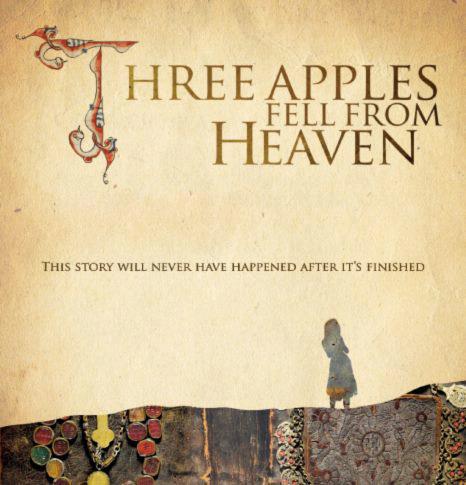
If it was Balakian’s book that changed the course of my life, it was Micheline Aharonian Marcom’s novel that put it on its destined path. I came upon the stunning Three Apples Fell from Heaven inthe fall of 2001 while shooting a film in Yerevan. This was my first visit to Armenia—I had had no reason to go before. All my family was in Syria, the descendants of genocide survivors. Intense, emotional, heavy, this young country changed my inner landscape. On that first trip, we fought, Armenia and I… But then we fell in love. In a moment of much-needed solitude, I went to eat dinner at a restaurant on Tumanyan Street that no longer exists. The electricity had gone out, as it often did during those days, and I ate by candle-light as I read an AIM Magazine article on the debut novel of a young Armenian-American woman. I read an excerpt about baby Dikran, left beneath a tree on the march to the Der Zor. I couldn’t believe the beauty of the prose I was reading. I immediately had to find and devour this book.
A few months later I met Micheline at a reading at Abril Bookstore in Los Angeles. I geeked out on the Walt Whitman allusions in her novel and I told her that my grandfather was born in Kharpert, where Three Apples is set, and that his mother, Lucine, gave birth to him in 1915. And then she left her home. Went walking.
It would be another two years before I would contact Micheline again, this time about a film adaptation I wanted to make. It was after I convinced my boyfriend at the time to read the novel on the way back from the Cannes Film Festival where his film, “The Motorcycle Diaries,” had premiered. I had finally read The God of Small Things by Arundati Roy, one of his favorite books, and it reminded me so much of Three Apples. As I expected, upon reading Three Apples he fell in love. I found Micheline’s contact information and called her. That first call lasted two-and-a-half hours, and ended with the decision to visit her in Berkeley a few weeks later that June. And it was there that we planned to go to Der Zor together. As it turned out, she had been reading The God of Small Things while writing Three Apples.
In October 2004, Micheline and I flew to Aleppo. We stayed in the only house that has been a constant in my nomadic American upbringing: my grandparents house in Sulemanieyah. The house where I was given the stories of my ancestors, where I first heard of places like Aintab, Urfa, and Kharpert. Micheline and I had read the articles of the journalist Robert Fisk, and based on those we went to the Der Zor desert. In Syria. To Margada, in search of bones.
We drove five hours, passed Ras ul Ayn (where tens of thousands of Armenians were massacred) and went south into the desert. On this drive, watching the barren, beige vista and imagining the Armenians walking, my mind went to my sensitive feet. I had a strange epiphany. Were my sensitive feet connected to a past life experience? Was I on this walk 90 some years ago?
We arrived at a site with a small chapel. Walked around the sand dunes unsure of what we were doing or looking for. A young Bedouin boy approached me. Our friend Hrag Varjabedian asked in Arabic if there were still bones where we were. The boy nonchalantly squatted down and picked up a handful of dirt, speckled with tiny pieces of white. There they were, after 92 years under the Mesopotamian sun. I was speechless, thoughtless, and all I could do was walk. Walk away. Looking at the earth beneath my feet and all the sorrow it held, all that it had accepted and given a final resting place to. I heard Micheline call my name from a distance. Standing by a mound of dirt, I watched as she pulled a piece of an arm out of the side of a hill, and then I watched it crumble.
I brought back bones from the Der Zor. I brought back bones, and my boyfriend still proposed to me.
After the desert, I knew I needed to go to Turkey. Yes, Turkey. It dawned on me that Kharpert was a real place. I needed to see this real place. To bring to reality the mythic place where darkness had transpired in some sinister childhood story I was told. I’ll never forget the first time I searched for it on a map. The name had changed. I called Micheline. I wanted to go to Turkey for my honeymoon. Did she want to join us?
We met in Istanbul. My husband, Micheline, and an American filmmaker friend of ours who had been living in Turkey for 15 years. We flew to Kars. Went to Ani, Van, Akhtamar, Dogubeyazit (the foothills of Mt. Ararat), and ended in Kharpert.
I imagined Lucine walking those roads in this city on a hill. I found a stall where a local Turkish man was selling goods from 100 years ago—old metal bowls, hammam boxes—engraved in Armenian script with the rudimentary tools of a century ago. As I sifted through his dirty wares, he said to me in Turkish (as my friend translated), “You are Anatolian, aren’t you?” I had my friend ask how he could know. He responded, “I can tell from her eyes.” I stared into his—a sense of calm, recognition, familiarity. Grateful, moved, I smiled and I walked away.
At every juncture in life, I believe we have the choice between two things: love and fear. And I believe choosing love is always the better choice. I had gone to Turkey with anger, trepidation. I left feeling like I belonged. This tragedy was not an “us” against “them.” We are an Anatolian family. This pain was tremendous, because it was the breakup of a family.
The summer of 2012 I knew I needed to go to Armenia to begin in earnest to lay down the groundwork of the film adaptation of Three Apples. My trip coincided with the Golden Apricot Film Festival. I also needed to pick up my recently granted Armenian citizenship. I landed in Yerevan with a mission and one contact that my amazing co-producer Alex Kalagnomos had given me: the lovely Madlene Minassian and her wonderful husband, Arthur Ispirian. The country, the community, was hungry for a film to commemorate the upcoming 100th anniversary. An epic, historical drama. There was no time to waste.
In a matter of days I met Vahé Yacoubian. In my passion, I needed a partner to take this dream and turn it into a reality. In early July, fate introduced me to that partner in the lobby of the Ani hotel. A man that is passionate about Armenia and passionate about this story. Who spent the first evening I met him telling my visiting American girlfriend our entire Armenian history. A man who at his core is a supporter of Armenian art and Armenian artists. It is through people like Vahé, and his faith and belief in what is possible through our artistic endeavors, that we are able to manifest and make tangible the power of that art.
When I returned home to New York, the events that transpired can only be described as magical. The internationally acclaimed director, Shekhar Kapur, had been wanting to work with my husband since reading his Academy Award-nominated screenplay for “The Motorcycle Diaries.” Within a day of receiving the screenplay for “Three Apples Fell from Heaven,” he called us at 6 a.m. Mumbai time to say it was the most beautiful script he had ever read.
Through a serendipitous meeting, the French producer of “The Motorcycle Diaries” has joined me, saying this is beyond a film. This is an event!
Through a Turkish friend, I was introduced to a wonderful young Turkish producer. She is more hardcore about Turkish acceptance of the genocide than I am. She is passionate about making this film with us. And it is vital for me to make this film with her. With Turkish artists and filmmakers. This is our collective story. This is the story of the breakup of our Anatolian family. We must put it back together, together. What politicians cannot do with rhetoric on the level of intellect and logic, art can. It opens the doors to the heart by way of magic. The magic of storytelling. The magic of remembering—remembering our shared past.
I spent a considerable part of the fall of 2012 in Armenia. I arrived in Armenia, and for three weeks my clothes did not. After much turmoil, I came to understand that I had started this walk, this journey, with only the clothes on my back. Like our ancestors. I’m grateful for their belief in me. My shoes, however, had arrived.
So, I started walking. With Vahé. Setting up our production office. Inviting Shekhar, José, Edgard (our French producer), Cigdem (my Turkish counterpart), Alex (my right hand!), and the rest of our brilliant, dedicated, passionate team to Armenia to launch the pre-production of the film.
I am grateful for Micheline Aharonian Marcom. For the masterpiece she has written. For the friendship and the openness of her heart and soul. For allowing me to take the journey of this film’s realization.
I am grateful for José Rivera. A writer of immeasurable poetry. A man I am so proud to call my husband. Whose love of an Armenian girl was enough for him to write a film that, I believe, we have awaited for a century.
I am grateful for the luminous Shekhar Kapur. Who arrived in Armenia, ready to fall in love with it, and within a day as we drove to Samosavank, did. Who gleefully enjoyed sweet soujoukh for breakfast and devoured Western Armenian cuisine. Who spent a week in an apartment with José and I, working on the script for hours each morning, speaking of what he wanted to create. A film that holds a mirror to society. That explores the enormity of the human experience. That dissects the nature of evil. But ultimately, a film about survival and memory. And hope. And love. A man who believes in jagadakeer–destiny. Who told me, “God put you in my path, and me in yours.” For whom this film is a mission.
I’m just a girl. A girl obsessed with telling a story. In Buddhism, we talk of turning poison into medicine. So, beyond being a film, the telling of this story is activism. I am committed to making this film in Armenia, to help feed the country economically with the making of a story that was at the essence of its destruction. Art will turn tragedy into beauty. It will take what has made us bereft, and nourish us again. We have a country full of talent; artisans that need the opportunity to create. I envision “Three Apples” as the door, an opening through which first-class international film production can begin to take place here. We have a country with varied, gorgeous topography. We need to create a film commission and invite the world to come and make their art here. We are in the process of having Armenia sign the co-production agreement with Europe, paving the way for tax incentives and Armenian nationals to work as Europeans in their productions.
As Shekhar has said in his brilliant TED talk, we are the stories we tell ourselves. So, let’s tell a story that needs to be told. Let’s tell it completely, holistically, claiming our truth. Let’s tell it to heal. And let’s tell it to help create a beautiful future from the fragments of a dark past. From there, we will tell ourselves a new story. A story of hope. Of potential. Of life.
So, I am walking. With these passionate people by my side. I am on a journey, guided by the dead. They open doors and light my way. But at the end of this march, what awaits us is not the inhospitable deserts of Mesopotamia. We are turning around this karma. We are healing through storytelling, with grace, passion, and love. So much love.
I am walking with my great-grandmother Lucine on my shoulders. I look up at her and she is smiling. She approves.
And you, the living. Will you come join us?
For more about the film, click here.


Sona jan,
We briefly met in Yerevan at Green Day Store (through Madlene). This was so touching and poignant, and walking, walking. Thank you!
Wow! You have left me breathless. Thank you.
Kay,
Thank you for reading and the kind words …
with love,
Sona
Sona Tatoyan’s article and her story telling skills are amazing , it moved me personally on so many levels . Emotionally , It reminded me of my own maternal Kharpertzie grandparents , their pain and suffering during their long march through Der Zor desert .
Sona ‘s visit to my hometown Aleppo where I grew up ,staying in the same christian populated Suleymanie made me feel closer to her . Her life story was an enlightnment , knowing that so many Armenian women share her life experiences bonds us together as women . Her talent and her passion for movie making in order to tell Our story is remarkable and commandable . We all should be supportive of her .
Intellectually , It is a brilliant idea to put all Armenian artisans to work in a great industry such as movie making . It is about time that someone like Sona took the imitative and have the guts and the courage to built it .
Politically , Sona is advocating ,the Idea of this Anatolian Family . Yes , it is true that our roots are from Anatolia , but , we are the products of the places we have lived and are living . We are all for peace and love , but , where is the recognition of all the killings and the atrocities ? I would hate to think that my great grand father who was a surgeon general of the Turkish Army (Dr.Garabed Rhahber Topjian )One of the first group of intellectuals who got killed will be forgotten as a casualty of World War I .
I know movies and story tellings unite us as people there is a universallity of the human experinces of love , hate , good , eveil. They have the power to heal .
Governments , on the other hand , have the power to acknowledge through accurate historical documentation what atrocities and killings they have commited and have been denying for too long .The Armenian Genocide!
I am also a firm believer in Jagadakeer-destiny. I hope and wish that through these collaborations with the Turkish intellects will bring forth a peaceful yet long awaited justice to all Armenians .
Sona jan, this is such an inspirational piece. I will repeat this paragraph to myself and others:
“This is the story of the breakup of our Anatolian family. We must put it back together, together. What politicians cannot do with rhetoric on the level of intellect and logic, art can. It opens the doors to the heart by way of magic. The magic of storytelling. The magic of remembering—remembering our shared past.”
Only I don’t call it magic—opening the doors to the heart with the healing spirit of love is real medicine available to all of us.
How can we help you tell this story?
How would you like to help? This film is for all of us, by all of us. I welcome all the passion and dedication coming towards it …
With love,
Sona
Wow! I am speechless and breathless with tears running down my cheeks. I read this during my lunch hour and needless to say I did not eat my lunch.
Sona jan you are an inspiration. Your ideas and efforts will not go unheard. It is just too bad that it took 97 years for us (Armenians in general) to start putting forward this kind of efforts and books like the Sandcastle Girls.
Vartsket gadar and good luck for future endeavors.
Dear Seta —
I’m sorry I spoiled your lunch :) … Thank you for your kind words … With passion and faith we can accomplish anything — with love and inspiration, we can move mountains … together.
Lv,
Sona
Sonia, with tears in my eyes I commend you for your undertaking. Keep on walking and we won’t be far behind you!
Zaven,
Thank you — come on down!
Lv,
Sona
Sona,
I was so moved by this piece. Black Dog, Balakian’s poetry and Three Apples all had profound effects on me and my work. Of course, this has been the case for many of us who are the grandchildren of survivors struggling to wear both our Armenian and American identities.
What made me gasp a bit when reading your piece was your relationship to Motorcycle Diaries. I have loved the writings of Che for years. The writings of Che sit nestled on my bookcase near Wiesel’s Night, Three Apples and Black Dog. Atop of my desk sits a photo of my grandfather who was a survivor. The books and photos keep me company as I work and silently remind me of the importance of telling our story and addressing injustices today–ours and others.
When the Motorcycle Diaries came out I immediately went to see it. I loved every minute of it. On the metro ride home from watching the film, I thought of my grandfather and the family he lost in the Genocide. I did not know why exactly my mind had wandered to this place until I got home. My answering machine was filled with cryptic messages from my mother. As I was listening to them she called again and told my grandfather had passed away that afternoon. He and I would have traveled together to my hometown for Christmas that year. The tickets were already purchased.
Forever in my mind, the film and my grandfather’s passing are connected. Reading your piece about your journey, influences and passions resonated deeply in me. I work with educators about the Armenian Genocide. I try to tell our history so the listeners will be compelled to share it with others. I try and tell our history with facts and poetry. The details are the backbone of our tragedy, but the poetry is the flesh.
Your film will undoubtedly be a part of our poetry and I look forward to sharing it with educators.
Thank you for your dedication,
Sara
Dear Sara,
And now your response has moved me … I don’t believe in coincidence … those connections are pretty profound … As artists we do what we do in order to reach people, touch people, and connect — What you are doing is similar. Thank you for all your work and all your dedication. We are all a part of the same movement.
With love,
Sona
your article is very moving and every grandchild of the Armenian survivors find their own story in yours. Please go on with your project.
What a small world ! are there coincidences ? I follow Shekhar Kapur on twitter and I was amazed to discover that he went to Armenia. I immediately sent him a copy of a beautiful view of Saghmossavank valley and he visited it with you! great! I read all his comments during his trip in Armenia and you were with him ! I envy you and also would like to encourage you as much as possible to achieve this project. Please give the world a great story about Armenians and their brave survivors! all the Armenian community miss of not having more images, movies, worldwide films telling the truth! God be with you! Bless you!
Brigitte,
Thank you so much for your well wishes … Shekhar is a dream and the perfect person to helm the telling of this story. We are blessed to have him and his passion.
Much love,
Sona
Sonia! This is what it’s all about! Carry on! If I can be of ANY help let me know.
A dream come through! All the best
Gerald!
What do you do? How would you like to be involved?
Best,
Sona
Sona, I have a question. Will the film be in Armenian/Turkish or English? I remember reading an article in the Armenian Reporter in which you had said you wanted the film to be performed in Ottoman Armenian and Ottoman Turkish. Would be rather difficult, though…
Hello Hagop,
The film will be in Turkish, Western Armenian, and English. Again, I would like to re-create as much the reality of the tapestry of language/culture that made Anatolia, Anatolia. And preserving Western Armenian on film is of importance to me — our language is on an endangered language list. This is one of the effects of the genocide and the dispersion of Western Armenians from our homelands.
Thank you for reading and following the progress of the film!
Best,
Sona
Dear Sona,
your article itself was a journey for me, it is very touching, very sincere.
i am turkish, and i hope one day all turkish people will have the courage and the sincerity to accept the armenian genocide.
i hope my generation and next generations in turkey will not be denialists like the former generations were.
my dream is the ”return” of all armenians, and all other people of anatolia back to where they belong. im from mersin, neighbour of adana, and these lands are full of armenian heritage, it is very sad not having our own armenian brothers and sisters here anymore.
There is no such thing as an “Anatolian family.” There are Turks, Kurds, Armenians, Greeks, Assyrians, etc. The Armenian Genocide continues unabated…Enough with the fake reconciliation, sensual films!
I’m sorry you feel that way. I absolutely disagree based on my experiences — we each have our different cultures, but are the fabric of a larger tapestry that creates the beauty of Anatolia. Each thread is vital. Let’s open our hearts to the whole story. This does not mean we dilute an ounce of what happened to us in the genocide. The truth is the truth. I have been obsessed with getting at this truth my entire life. If we show it without fear or anger but posited as simple reality amongst the full spectrum of what happened, we will attain what we have desired for a century: Turkish acknowledgement of the truth. For if they see their own humanity as part of the story, they can not deny the story. Denying the story then would mean they deny their humanity as well.
Who are you to tell us to be nice-nice and lovey-dovey with them for them to some day on their own will to recognize the unprecedented Armenian Genocide, return Turkish-occupied Western Armenia and Cilicia and provide countless other reparations?
Enough is enough!
The Turks are still committing multiple genocides.
Nothing has changed since 1915.
You are naive to think that your and others’ anti-justice, pro-fake reconciliation films will change anything, especially while the Genocide is still continuing and newer generations of Turks are still being taught to hate Armenians and other minorities to such a terrible extent…
Do the right thing: Start producing pro-justice and reparations films.
Sona,
Thank you for the beautiful and emotional article, but what is “Anatolian family”?
I am sorry, but I do not feel I belong to the same family as Turks who invaded the Armenian family, raped its women, stole its children, its bread, the family house and the family’s sacred worship place. I refuse to be included in that “Anatolian family”. I belong to the Armenian family. Destroying the Armenian family by raping and stealing its women and children did not start in 1915, it started with the arrival of barbaric Turks.
I’m sorry. The Turks are not my family and I do not accept this narrative.
Great journey! Good luck to all concerned and those not concerned, for it will touch them too…
My grandmother came to Aleppo where her children were born and where she started a new life. Three apples…to be shared with the rest of the world. May your journey be paved with Courage and Love!
Like MK, Sella and Razmik, I, too, don’t go for this. We indigenous may have ‘shared’ their homeland with invaders and occupiers, but barring the hidden Armenians, this does not make us ‘family.’ I disagree that we must reward a denialist social system that persists to this day with praise in order to seek restorative justice (or even emotional closure) for the planned destruction of our ancient Armenian civilization.
Firstly me getting encouraged to write better(as I think AW does not allow more than This many words..)thence I write hurriedly and carefull not to exceed ..
Secondly dear Sona, I am very much glad that you have shot? the film totally or partiallyu.
Third what I like best in your above post is where you write you sort of fought with Yerevan(read Armenia in its entirety)…and end up saying you fell in love with it.In short you became like self and many many others who really understand RA is what we have in reality Haleb,Bolis, tehran, Beirut etc., (actually second fatherland) for many of our parents,AFTER BLOODY GENOCIDE by Genocide State,was so >BUT not anymore..I don´t care how others still cling to above cities as theirs,I DO NOT.And mind you I fully became a citizen of Hayastan just this past Summer, been there like you since 2001 every year and prior to that after earthquake before earthquake etc.,
In short I understand that you feel Hayastan with all its shortcomings is our H A I R E N I K..
<As rgds your Three Apples fell from heavn(I have very strong memory BTW) also was title of a nother book by our Compatriot(forget his name,a writer) in his own right in London…years ago…easy to search it in google or elsewhere.
Does this mean that there is some relation between the two books or authors..Please define this .
Meanwhile I WOULD BE SO MUCH ELATED AND GRATIFIED if you would get hold of book entitled ¨m a m i g o n ¨ authored by Jack Hashian(now deceased) a sstate Dept. official.. a THRILLER BY ALL MEANS.Recently (saw it on Keghart.com ) SCRIPT OF WHICH A N AMERICAN has already written.
tIME TO HAVE IT READ BY MANY APPROVE IT TO BE FILMED.
I am certain it will surpass ¨Schindler´s ListBest to you and Mr. Rajpur was it,THE GOOD OLD CHAP FROM iNDIA WHO IS COOPERATING with you
Just went back to review what I had posted(above).I also re read-fast reading- yours…
Like some others here ,who have dicoverted sentences ,and I quote like ¨Anatolian family¨
I came across ´´the MAGIC OF REMEMBERING-REMEMBERING Our shared past)???
Dear sona,
Our agony will reach tremendous hights if we share OUR GRANDPARENTS(MINE AS WELL) with …as long as the Turkish people,in general are denying our past, their past rather…
and that witha backdrop such as you write ,unnecessarily ¨¨Anmatlia¨no such area space exists.it is a made up area by denialist Genocide State,great Turkey…
I take back(sorry for that) if I have said anything in praise of you….
For first things come first. Covering up in long very long narratives ,such as that aboe -of yours- you throw in words and ssentences that is like emptying poil upon Fire…
No and No! NO SHARING NO COMPROMISE NO MUTUAL CONCILIATION..BTW some like yoju always err it is not ¨¨Reconilliation¨¨ it is , will be Concilliation when they kneel down officially , not here and there. sending emissaries like Jemal Pashas grandosn to Yerevan…. to admit!!!!
It must be a General .official RECIGNOTION ADMKISSION TO GIUILT and AGREEMENT -ON THEIR BEHALF-TO restitution ,compensation, firslty for blood money (my versiaon) before anything …
THIS IS WHY I sub consciouly above (in myu previous post) I mention FILMING OF ¨ m a m i g o n ¨….
In which all is told about What kind of people these are…Yes!!!
All you guys here, whether Turks ,Kurds Euro-Ams ,Russians and others do get hold that book read it then opine please!!!
And written by an American Armenian,2nd or 3rd Generaltion that worked in the State Dept.!!!!!That is whyu I like the U.s. it is a free country neven their man in the State Dept HAD THE GOD GIVEN LIBERTY TO WRITE AS HE WISHED ABOUT THE BLOOD THRISTY great Tukrey turks…..
WoW!!!!! Beautiful, I’m A Mexican girl but you touch my heart…. Al my wishes for you… God bless you and keep Walking
Well said: Razmik, Sella, MK, Patil.
what is this ridiculous syrupy ‘Anatolian people’ nonsense.
The word ‘Anatolian’ itself has been highjacked and corrupted by Denialist Turks to erase the existence of Armenians, and other unique indigenous peoples from their native lands, and to obfuscate the inconvenient truth that they are descendants of foreign invaders, descendants of nomadic Turkic tribes.
Tribes that successfully stole the lands, culture, creations, and the genes of the indigenous peoples over centuries.
After the theft and forced assimilation was complete, the remnants of those indigenous peoples were exterminated and ethnically cleansed from their native lands.
From about 25% Christian circa 1915, the State of Turkey is now almost completely Christian-free: 99.8% Muslim.
Is that the ‘Anatolian’ paradise we are supposed to believe in ?
Maybe the ‘Anatolians’ can explain how is it that the ancient, traditional Armenian dish Harissa has been submitted for UNESCO registration by Turkey as a, quote, Turkish dish: not Armenian, not Anatolian, but Turkish.
Maybe the ‘Anatolians’ can also explain the signs carried by 10s thousands of ‘Anatolians’ that said:
“Today Taksim, tomorrow Yerevan”.
“We will bury you on Mt Agri (sic)”.
“All Anatolians are bastards”……well, No: it said “All Armenians are bastards”.
Try to find anything remotely similar during any April 24 demonstrations by Armenians anywhere in the world.
Then try to convince us Armenians that we are supposedly the same people.
And maybe ‘Anatolians’ can explain what the ‘Anatolian’ AK Party Secretary General Haluk Ipek meant when he said this last November 2012:
{“Armenians in the Caucasus are alien people who created their artificial state on native Turkish lands, and therefore they have no right to talk about their ancient roots in the region.”}
I have never heard so much Anatolian rubbish in my life.
Please cut it out.
I understand where Avery is coming from, too. Those examples are akin to crazy-making and so through books, films and documentaries, research, conferences we can move forward. As Sona says in her piece, THREE APPLES is a film about the genocide. The story has already been told – not only in the orginal novel, but by survivors who lived through it. We know the stories. Can we contribute to seeing these stories told in a film of this scope – isn’t it time?
Okay, saying ‘Anatolian family’ may be too romanticized. I respect the points that Avery, MK, Sella, Patil, Razmik, and Raffi are making. But please don’t completely reject the conciliatory sentiments expressed by Ms. Tatoyan. It will take many different angles to accomplish our goal. This is only one of them. I think it can coexist with others and not detract from them.
I guess we need to define ‘family.’ People sharing space aren’t always a family. People sharing customs aren’t necessarily family, either. Nor does being related genetically ensure loving familial ties. But sometimes people who are not related at all can behave as a ‘family’ by the choice to care for each other’s needs, embrace each other’s truth, and hold each other in high regard. There are some Turks who have shown readiness to do this toward Armenians, just as there are some Armenians ready to reciprocate. Those who do, may find themselves on one of many paths toward justice for Armenia.
Boyajian, I took your comments to heart. I sincerely believe that national unity on this issue is paramount. Otherwise, segments in Turkish society (the government, TARC, and TABDC at the forefront) will point to reconciliation-type cultural initiatives such as this and say “See? why do recognition, contrition, promise to never repeat, and reparation? We can work directly with these conciliatory Armenians, point to them as the Armenian voice, and call it a day.”
I see your point Patil. Breaking off into factions can weaken us. Unity is important in our goals. But is it mandatory for our methods?
Dear Sona,
I am very proud of you and very moved
By your journey and this huge project that you
Have begun…
After 97 years its about time we tell
The story of what our people endured on
The big screen….
My dear Armenian people each one
Of us have Been living with deep pain, feeling
Helpless for so long because justice
Wasn’t served and the Turkish government
Never acknowledged the genocide, but
You know what ?Turkey resembles an
Alcoholic whom the whole neighborhood
Knows that he is an alcoholic but when
Asked about it he denies it….He thinks
He is fooling the neighborhood !!!
Dying to join the European Union and can’t
Why???.
As far as I’m concerned why should I
Empower a sick man by begging him to admit
Of his illness??? The sick man can only
Begin to heal when he acknowledges
That he has a problem…
As the genocide centennial is nearing
I hope The three Apples fell from Heaven
Becomes a reality…
The first apple will be for the genocide
Victims as we tell them we love you so much
We have lived with pain all these years,
We have never forgotten you…
The second apple is for the immediate
Survivors who told us their stories…
We tell them WE HEARD YOU!!
The third apple is for the future generation
We tell them YOU MUST NEVER
FORGET!!!!!
Love you all.
your journey towards the making of your movie is itself so fascinating, saying so many stories connecting your soul to it. i’m sure it will be a tale to remember.
:)
Dear Krikor, I love that analogy
Turkey the Sarkosh!!!
As we tell our story to the rest of the world
May be the Sarkosh won’t be able to hide anymore!!!
And as all the Neigbhors laugh
And point their fingers at him
He won’t be able to stand it anymore!!!!!!
I have been watching this story play out and have to point out that the alcoholic needs an intervention, not a lovefest.
Reconciliation is essentially pro-Turkish term bandied about by soft-headed Armenians. It’s a bunch of hogwash.
Who do we think are we, Turks’ psychiatrists?
Dear Sona,
The Genocide has been a pivotal point in your/our life consciousness and I deeply appreciate that you are searching for answers, ways to bond with Western Armenia and tell Micheline’s, your, and our stories. We often hear that to forgive is divine, and many believe that we should forgive, even when transgressors are not sorry, to soothe our OWN pain, not theirs! With this in mind, I think it’s important to remember that a careful reading of scripture shows that Jesus preached forgiveness after repentance, not before.
Love to you, Lazarus
Can someone tell me who is the financial sponsor of this project?
Mrs. Tatoyan Rivera
Chapeau! for this excellent project and for the sentimental way you have told it.
It has touched me deeply.
I can see from commentators I respect that your re-conciliatory attitude does not sit well with everybody. I must admit I sometimes feel the same way they do, but I try to overcome these negative feelings.
In my family narrative, my aunt Noémi was 14 and her shoes had long been worn-out when some horsemen grabbed her by the hair and took her away. After the war a young relative identified her and told her that her young brother had survived and offered to take her to Haleb if she came at sunset to the fountain. She never came. I often wonder if her children are as much my cousins as any of my childrens’ other cousins.
I also wish to draw attention to your stated wish to use the dying ‘Western Armenian’ dialect in your movie. If your ancestors are from Kharpert, they did NOT use the ‘Western Armenian’ dialect. They had their own ‘barbar’. Their ‘barbar’ was closer in the pronunciation of consonants to present day ‘Eastern Armenian’ than to ‘Western Armenian’.
I wish you success in making this film a reality, and should you wish to shoot some scenes in our beautifully wild Vayots Dzor, our mountains, canyons and famous caves, do drop-in on us and be our guest, I would be happy to help.
Antoine S. Terjanian y cojones :-)
Yeghegnadzor
Antoine S.,
I seem to have a problem with the re-conciliation word itself. Armenians can forgive Turkish nation, given that they will appologize for committing genocide and return what they stole from Armenians, but reconcile with them? On the side note, I do not think that today’s Turks are any different than Turks from 1915. Given the chance they will wipe out Armenians not only from Turkey, but from Armenia as well. Sure, there are some righteous and honorable Turks in their society, but they were there in 1915 too. They saved some Armenian lives, but could not prevent the genocide from happening. If Turks have changed they would not have deprived their fellow Muslim Kurds from basic human rights.
Vardan Petrosyan interprets how much Turks have changed very well.
http://www.youtube.com/watch?v=9K59lbuV89s
Or is it TARC III this time in the shape of a film.
Mihran:
it is puzzling that Ms. Sona Tatoyan makes an effort towards ‘reconciliation’,
while ‘Anatolian’ Turks and AzeriTatarTurks are working relentlessly day and night to snuff out our Armenian NKR and ROA.
I find it strange that an Armenian woman would spend her considerable talents on some ‘Anatolian family’ baloney, while her ‘Anatolian family’ members are working day and night to wipe out her real family members, Armenians of Artsakh, with full support of ‘Anatolian family’ member denialist fascist Turks.
But, it’s her life and her time.
If only Ms. Sona Tatoyan would use her considerable beauty and talent in the service of her real family: Armenians.
Why not join forces with other Armenian producers to finally release the 40 Days of Musa Dagh ?
How about a movie about the one of the dozens of heroic Armenian women of Artsakh who sacrificed their lives for their real family, Armenians ?
Dear Sona. Your article and your passion touched me greatly. Thank you
Dear Stepan,
Thank you for your words. This film is a gigantic undertaking and has been a process of catharsis. To tell a story that is full of so much pain and live with that everyday is challenging. But I feel blessed to do this work and hope to do so with an open heart and with grace — to have the story of the genocide told in an epic way and on the world stage.
Lv,
Sona
I don’t think that people who are skeptical about “reconciliation” between Turks and Armenians are being negative. I think they are being realistic.
Thank you Avery.
I agree 100% with you,sadly we have amongst us such naive people who are wasting their time strengthening and encouraging the Turkish denialist cause even further.
It seems that the financial sponsor or sponsors of this project want to remain anonymous,it speaks volumes as to who is benefiting out of this baloney project.
Remember TARC.
I am very sorry for all of you who are so myopic about this issue. If you have read the book that this film will be based on, you will understand that it is a GENOCIDE film. Yet, you take one phrase Ms. Tatoyan uses and use it to burn her and her tremendous efforts at the stake. Shame on all of you. What are YOU doing to have this recognized on the world stage? What are you doing to help heal this huge wound we have as Armenians? Here is a woman who is devoting a considerable part of her life to tell this huge story. She herself has been on a massive journey. It is time that we let go of all this hatred as Armenians. Where has it gotten us so far? All Ms. Tatoyan has said is let’s not be black and white about it. She has not even used the word reconciliation. This kind of behavior is what keeps our community behind and stuck in rage. It is what prohibits us from making strides with this issue. If a woman is putting this much heart and soul into making a historic GENOCIDE film, one that she wants the TURKS to see, we should applaud that effort and open our hearts to her. Her whole point was about love vs. fear. How can we be the bigger people and make the Turks ashamed? How can we just make a film that speaks for itself, shows them a little bit of their humanity against a backdrop of the horror of the genocide and make it impossible for them to deny? Our screaming and yelling has gotten us nowhere.
Maral, I read all of the comments, and I agree 100% with everything you said, for 97 years we cried about the past and did nothing and Sona’s way is the only weapon that we have to fight with, so lets do it. I wish we will have hundreds of Sonas in the near future.
Maro,
It is one thing to agree with what Maral has said, but another thing to zero all the work that Armenians have done worldwide in these 98 years. I will ask you one question. Do you know why, Armenian genocide is more known, recognized, discussed and researched than Assyrian genocide?
Naive people like you and Maral have contributed to our troubles no less, if not more, than traitor Armenians throughout our history . If you think that some re-conciliatory films will serve as weapons in our fight for justice you are gravely mistaken. Just other way around-they will complicate the issue and send mixed signals to the denialists Turkish government. And Turks, as master diplomats, surely will use it against us.
I believe that art can be an effective vehicle to express our thoughts and to display creative ways to share messages. This project is interesting and will contribute to the story of our people.
I do , however, do not support the overextension of the term ” Anatolian” when referring to our people or our relationship with other people in the region. Today’s reality is the Turkish authorities use the same term in an attempt to eliminate our historic presence in western Armenia. I understand that artistic ventures have an aversion to “political” references, but our identity and the truth of our history is not political. The Turkish power structure loves to hear about our “Anatolian” common history as it serves their insulting denial of the genocide as a rebellion of disloyal citizens. If only the Armenians had stayed in their place. The truth is that the Turks have been purging “Anatolia” of its indigenous Christian population to serve their racist ideals. Sure there were many Turks we lived in harmony with, but they were powerless or used. Be careful not to give credibility to their distortions of the truth and their continued parole policies today. They have proven to be very adept at distortions. I wish you the best.
The shame is on you Maral.
Why do I say that ? because of this phrase that you use: { “It is time that we let go of all this hatred as Armenians”}.
What “hate” are you talking about ? What reality do you think you or we live in ?
Are you completely disconnected from the world we actually live in ?
Go to Sumgait, Kirovabad, Baku and find out who hates whom.
Meet Axeri National Hero Ramil Safaroglu in Baku: maybe you can then understand the meaning of the word ‘hate’ you throw at us Armenians.
Go to Taksim square and find out who hates whom: maybe the “We love you Armenians” placards are still there.
Ask Hrant Dink’s widow who hates whom.
Ask the parents of 250+ young Armenian soldiers killed by AxeriTatarTurks past 3 years guarding the borders of NKR and RoA.
If Artsakh’s Armenians had thought like you 20 years ago, there would be no NKR today.
No NKR, no Armenia.
No Armenia, no Armenian Diaspora.
Then no more Armenians in this world.
Nobody would care about AG movies or AG books.
People that think like you think that writing books and producing movies is going to stop axe wielding murderers. Good luck.
Read about what was done to Armenians by our loving neighbors in Maragha village.
Go to Artsakh and talk to some of the men and women who fought off the Axeri invaders with books and movies: see how many you can find.
And you ask what has it gotten us regarding AG ? Since the massive 1965 AG march in Yerevan by 100s of thousands, it has gotten us a lot.
Go check the list of countries that today recognize the AG: It was 0 in 1965. How many now ?
And I can ask the same question to you: what have you done to save one more Armenian life in Artsakh ?
One more thing, Maral:
This is the kind of Armenian woman that dispenses the kind of ‘love, not hate’ that we Armenians need:
http://www.demotix.com/photo/839196/armenias-independence-day-parade
And this Armenian grandmother to inspire us all – holding the embodiment of true ‘love, not hate’ to greet the invaders of Armenian lands with:
http://laviesouffrante.tumblr.com/post/4936642526/106-year-old-armenian-woman-guarding-her-house
Why make realists the scapegoats for the acts of the genocidists, denialists and reconciliationists?
by Sylva’s leave, I paste her post here from another AW thread: it is quite relevant. (I don’t think Silva would mind.)
————
Sylva-MD-Poetry
December 27, 2012
Now I don’t blame that Americans have guns in their homes…
Because no one will protect you except what you have to fear them…
Fear your enemies…
If Armenians had guns in every home during genocide of 1915
No one would have pushed and slayed them like herds…
God will not arrive to help them…
They prayed Endlessly …
Their 2600 Altars were destroyed …
God did not see…???
We have been cheated enough…
Thanks Avery …I never read the book I must read …this is my duty as Armenian
I am happy you joined me I’m not against reconciliation…
But during my clinical life where i have treated children and their parent…for 40 years
I experience and proved the stanza of the famous Arab poet Al-Mutanabbi
whose stanzas are stronger than Shakespeare (in my opinion)…
I’m sure Armenians living in Arab countries knows Mutanabbi (915-965) very well…He was killed because he said I am the prophet of poets ..and he was…and still is…!
I loved this stanza which says…and tried to translate…
I hang it on the wall of my clinic…
——————————————-
“If you honor the honest worthy
You will own him for life
If you honor the unworthy
He will turn against you till strife.”
———————————————
I hope I was able to place
Mutanabbi’s famous treasured verse
In a space ship to turn around
Praising every night, Arabic wealth of poems.
(i translated the words but never the soul of the stanza…It is very powerful…)
The stanza in Arabic…
“Id anta akramta al kareema malktahoo
Wa id Anta akramta al laeema tamarada…”
Sylva
I think ,having read near all of the above posts,I have come across one that many a time I have said to others and in circles of Armenians gatheings.
LAZARUS is dead right and this is from Jesus Christ!!!!
How can one -in his/her -right mind forgive a criminal that has caused death(s) without the criminal repenting and begging forgiveness!!!
Just doesn´t make sense to any one who has God Given(see what Jesus , his son) brains . WE must make all our efforts to bring culprit to accept culpability.And that mundialmente(worldly).A very tough assignment indeed.
Above all when Oil is involved and those in it side with the owners of it…
But I assure you ,we can OURSELVES MUSTER UP CLOUT REAL CLOUT AND I MEAN IT BY forming into Rank & File(through Prof.Colleagues Assoc.) a 100,000 strong org. then through them-initiation by our magnates-form and establish teh National Investment Trust Fund. For without funds we can not do much.At present to buy space in important newspapers we need funds ,to hold important events likewsie.And indeed as a more important assignment prepare the File to lodge the Claim -I always repeat and will do so-for Blood Money(land issue can wait).
Also with Funds we can certainly organize real repatriation START building New Townships, such as Nor Haleb(New Aleppo) etc., to the chagrin of our adversaries from Yerevan to Gymri all WIDE OPEN SPACES.Where the Repatriates will make their homes ,also in Artsakh.
We cannot just give and take with Turks by negotiating…we need our own HUMAN RESOURCES TO ORGANZIE .ARMENIA OUGHT TO HAVE EVERY one who has had MILITARY service go back to basrracks(I wrote that in my book too) for a stint of 4 weeks to retrian.Keep Rifle at home(like the Swiss)
Then again, RA Gov.t should issue passports to all Armenian young men and young women who wish to go stay one month or so (siummer vacation) in Armenia ,language,culture and history PLUS ONE MONTH OF MILITARY CADET TRAINING along side the newly recruited there…
sO MUCH WE HAVE TO DO INSTEAD OF JUST CHANING ABOVE LIKE debates discussion.Let us talk turkey as is said…
Armenia is there for the taking with all its faults it is the only (plus NK) tangible stock we have so to say…at hand and we should do all our best to preserve that NATION/STATE.Few othersw such as Catlans, the Irish and others still craving to ahve independent States…. we have it!!!
I strongly suggest that the authors and backers of this project go back to the drawing board.
Avery,
You have hit nail on its head,well said,people like Maral need a history lesson in order to learn a few facts.
Armenians are not part of “Anatolian family”, because there has never existed a toponym such as “Anatolia” before Turks developed it in order to conceal the historical cradle of the Armenian civilization: Eastern Asia Minor and the Armenian Plateau, as well as other civilizations: Assyrian and Kurdish. The fake term “Anatolian family” plays to the hands of the Turks, and it saddens me to see how some Armenians parrot it. In such way Turks portray their nation as belonging to the region, whereas in historical reality, they never belonged in the area before their intrusions of the 11th century. In the 16th century, Turks colonized all indigenous peoples of Asia Minor. Can the colonizer and the colonized live in the family in the true sense of the word? Armenians have witnessed in horror and awe what had come out of such a “family”: mass murders, forced deportations, rapes, mutilations, tortures, forced religious conversions, abductions, etc.
Maral, you should be ashamed! It is because of “peace-loving” short-sighted Armenians like you the Kars fortress surrendered in 1918, when some Armenians believed that the advancing Turkish troops were different from the Young Turk murderous barbarians. They paid dearly for this. Just like millions of Armenians before, they were, too, slaughtered when the fortress surrendered. There’s no hatred, but there certainly is righteous indignation, and it will go away only when Turks apologize and start paying reparations for the genocidal annihilation of a nation.
I also wish to know who is sponsoring this project. Another globalist attempt at reconciling the murderer and the victim without the murderer repenting and paying for their crimes?
Sona, as Ramik suggested, why won’t you attempt to produce pro-justice and reparations film? Because such a film won’t be financed, right? But reconciliation films will, because this is what Turks and various interest groups behind them want at the expense of justice to Armenians. Disgraceful!
john et al,
Pleae get hold of book entitled ” m a m i g o n ” ,by Jack Hashian ,read it then tell me if it is not suitable for filming it .
It will surpass “Schindler’s List” for sure….
John,
Ms. Tatoyan has individually acknowledged almost everyone who expressed positive thoughts about this film, but she chose to remain silent as to who will finance the film. It seems that either she cannot or chose not to release this information at this time, unless you argue that she did not read those comments..
I do not have anything against this film, but I am against blending Armenians with Turks and portraying as one Anatolian family. It is certainly wrong. Armenians were forced to live with Turks side by side for centuries, but it was not a happy life. Countless Armenian women were raped and abducted by Turks; countless Armenian children were kidnapped by Turks. Today’s Turkish population is 90-95% Armenian and Greek genetically. If one understands how genetics work will realize what amount of forced marriages, rapes and abductions will take to reach that 90-95%.
I hope that in her attempt to picture the “Anatolian family life”, Ms. Tatoyan will include some of the scenes of rape, abduction and forced marriages that our poor Armenian woman went through silently for centuries. You cannot show the good only, you should show both the good and the bad if you are fair.
After two weeks of above article that aroused so much discussion/DEBATE.
I conclude with my own ,reitrating wht I wrote above in PRECIS FORMAT/Concise.
1.No one can stop another´s desires from being realized,slow it a bit ,yes.But stop it from being realized ,NO.
However, I have suggested that all of those participants here ought to-time and desire permitting …get hold of book ¨ MAMIGON¨ BY JACK hASHIAN AND READ IT.a SCRIPT TO WHICH HAS RECENTLY BEEN WRITTEN .
This is the kind of Film that is needed to be made NOW!!!!
All other film makers are welcome like above THREE APPLES ETC., but ,do get the book and read it PLEASE!!!!!!!!!!!!!!!!!!!!!!!!!!!!!!!!!!!
cordially,
gAYDZAG
Sorry I’m a bit late to join this discussion. Yesterday I came about Sona Tatoyan’s interview with Radical, so all you people that are supporting Sona, you better read the interview first and then preach us to support her project. Sona, if you choose to forget the Genocide good for you, but nobody gave you the permission to speak on behalf my grandmothers and grandfathers; their families were raped, killed and burn alive during the Genocide. You go and tell “FORGET THE GENOCIDE” to the raped Armenian women who were able to survive, and see if they won’t spit at your face.
It gets worse Daron.
here is what Ms. Tatoyan wrote:
{“Tatoyan: We went to Deir el-Zour and Ras al-Ain together. There I saw the bones of my ancestors. I say this literally. We were crushing skulls and tossing bones.”}
WE WERE CRUSHING SKULLS AND TOSSING BONES.
I ask AW to reproduce her Radical interview at ArmenianWeekly so she can explain to the readers of AW how one can claim to see one’s ancestors’ bones with any kind of feeling, then nonchalantly step on their skulls and play with their bones. Including the bones and skulls of Armenian children and babies.
What kind of confused Armenian woman would do that ?
Is this the woman that some Armenian readers of AW support and then pompously shame those of us who question her motives ?
Here is the link to Sona’s interveiw with Radical.
http://www.al-monitor.com/pulse/culture/2013/01/move-armenian-genocide.html#ixzz2IJPE6Nt9
Darron-
We ALL know how the turks exxagerate…How could Ms. Tatoyan be making a movie about the genocide and then say “Forget thew genocide”??? I think there is plenty of other press out there , for example http://civilnet.am/2013/01/15/genocide-in-film-ahead-of-2015/ , that proves the intention behind this movie. I think if u step back you will see that those two things are quite contradictory. Let’s not be Armenians who hate other Armenians. And let’s not believe everything the turks print or translations that may or may not be accurate…i mean, we should know better.
Ashot,
I personally found some of Sona Tatoyan’s statements insulting and I am not even a Diasporan Armenian. If some of her words in that interview were distorted or misrepresented she could have asked to correct it.
This comment is to DARON and AVERY,
Read the press about THREE APPLES from reliable sources – where English has been translated truthfully. Become familiar with the original voice of the production from reliable sources. Sadly, Turkey’s RADIKAL is not one of them and completely twisted Miss. Tatoyan’s words. Surely, you are aware of that tactic, as you are yourselves using it now.
Further English translations are fabricated.
Why would anyone say “forget the genocide” when they are MAKING A FILM ABOUT THE GENOCIDE?
Here is one of the first articles: http://armenianweekly.com/2012/11/13/major-genocide-film-launched-at-tumo-center/
Here is a video interview from CIVILNET:
http://civilnet.am/2013/01/15/genocide-in-film-ahead-of-2015/
Upon your review of these, you will see, the film will honor the events of the past and your inflammatory comments are shameful. -Vartan
I am sure Ms. Tatoyan will read these comments at some point.
If she was deliberately misquoted, then she can issue a statement @ ArmenianWeekly: I am sure AW will gladly provide her the opportunity to refute false statements attributed to her. She must also sue Radical for libel, if they manufactured any of her quotes.
In that case, I will gladly and profusely apologize to Ms. Tatoyan, and publicly eat my words.
This comment is directed to SELLA,
Sella,
Why would you say that, except to antagonize? Being that you are “not even a Diasporan Armenian” yet you cared enough to be insulted and write in to share your feelings.
Then you must be quite familiar with this issue, the Genocide and that denialists malign the truth – always have. This Radikal article is a perfect example.
How do you know Miss. Tatoyan didn’t already demand a retraction and a complete and full apology from the Turkish sources?
You should know better. Go back and read her own words – not in a Turkish newspaper, but in the links that Vartan provided.
Carol-rose,
“How do you know Miss. Tatoyan didn’t already demand a retraction and a complete and full apology from the Turkish sources?”
I do not know, but it is something we will know in the future if she has done so.
I feel insulted as an Armenian. The reason why I said I am “not even a Diasporan Armenian” is not to isolate myself as a different group, but to simply indicate that Diasporan Armenians whose ancestors were the victims of genocide could feel even more insulted. Unlike many Diasporan Armenians I was not completely uprooted from my ancestors’ land even though my great grandmother fled from Kars, which was not Western Armenia. I was born in Armenia, I speak and write in my native language. If you go back in the commentary section you will see that I expressed my concern long before this interview. I do not like that Sona Tatoyan forces her “Anatolian family” terms to my nation. We are not Anatolians, we are Armenians. I do not know why she expected that culture in Armenia should be Anatolian and was surprised that it was not. Architecture in Armenia is Armenian, food in Armenian is Armenian and music in Armenia is Armenian. And, yes, people in Armenia share the pain of genocide. They built the magnificent Tsitsernakaberd memorial in Yerevan, and thousands of people from children to elderly walk to Tsitsernakeberd to lay flowers. She should stop forcing the fake Anatolian term on us. I am not Anatolian, I am Armenian. And, being Armenian does not mean to necessarily have thick eye-brows or hairy hands. Many of us do not have them. Western Armenian culture that was destroyed by Turks was my culture and I mourn it. 1.5 million people that were physically exterminated by Turks were my people and I mourn it. Sona is in no position to tell me to forget the genocide. She is free to forget if she desires so.
Vartan:
I watched the civilnet.am interview: changes nothing. Not uttering those sentences in an interview with Civilitas in Yerevan does not mean she did not say it to Radical.
And I can pose the same logical conundrum to you and others: why would a Turkish interviewer, whose agenda is the dilution of the colossal crime of Armenian Genocide and promotion of AG amnesia, make up something that will put Ms. Tatoyan in a very negative light with the Armenian communities worldwide. Shouldn’t they have done everything possible to put her in the best possible light to make the ‘amnesia medicine’ she is peddling easier for more Armenians to swallow ?
Just the same, I will repeat my pledge above, with an addendum:
If Ms. Tatoyan can force Radical to retract the following statements attributed to her, then I will publicly apologize to Ms. Tatoyan and publicly eat my words right here @AW. Further, upon unambiguous, crystal-clear public retraction and apology by Radical, I will send $500 contribution to Ms. Tatoyan’s project.
These are the two offending sentences in question:
1. {“The most important thing for the Armenian diaspora is to make peace with Anatolia and Turks. They should forget the genocide.”}
2. {“I saw the bones of my ancestors. I say this literally. We were crushing skulls and tossing bones”}.
I give permission to ArmenianWeekly to send contact information for making a contribution to Ms.Tatoyan’s project to my email address on record @AW upon apology and retraction by Radical.
These are quite dynamic conversations – how children in the diaspora struggle with dual-identity, the beauty of the hairless arms of Armenia-born women, the desire to make bets to see a fellow Armenian filmmaker fail.
At the behest of one who cares enough to see a film about the Genocide finally produced by Hollywood, I pray for a ray of light and enlightenment to touch those naysayers who are set upon this from ever happening.
Thank you for this beautiful and poetic narrative of your life. I marvel at your dedication and wish you continued success on your creative journey, Miss Tatoyan.
Hey Daron, Avery, and Sella: Check this out kids.
http://asbarez.com/107833/%E2%80%98three-apples%E2%80%99-producer-discusses-film%E2%80%99s-production/#
BOOM.
Ashot,
Thanks for the link. I am glad she did not say it. I would also be very grateful if Sona Tatoyan will stop “forcing” her “Anatolian family” and “Anatolian culture” terms on Armenian people. I am Armenian and do not feel Anatolian in any way.
Read my comment dating back Dec 20.
“Sona,
Thank you for the beautiful and emotional article, but what is “Anatolian family”?
I am sorry, but I do not feel I belong to the same family as Turks who invaded the Armenian family, raped its women, stole its children, its bread, the family house and the family’s sacred worship place. I refuse to be included in that “Anatolian family”. I belong to the Armenian family. Destroying the Armenian family by raping and stealing its women and children did not start in 1915, it started with the arrival of barbaric Turks.”
Hey kid:
I did check it out.
Let Ms. Tatoyan force Radical to retract the statements attributed to her interview with Radical. It is on record. Arbarez or AW articles don’t count: Radical interview is where the fish’s rotten head is buried.
Let Radical retract and apologize: then we’ll talk. OK kid ?
Boom shaka laka, Boom shaka laka, BOOM, BOOM. Kiddo.
Hey boy,
If you buy this interview with Asbarez, then you mustn’t have any critical insight.
• Radical, January 14- 2013
• Asbarez, Three Apples’ Producer Discusses Film’s Production January 23- 2013
Tatoyan has to wait 11 days to speak up against the content of the published interview in Radical. Of course, Asbarez has to initiate this interview after so much controversy/debate on the internet. But Tatoyan didn’t mind responding to the comments on “Turning Poison into Medicine: My Journey as Producer of ‘Three Apples Fell from Heaven”, nine responses in total.
These are some of her quotes from the article mentioned above:
“I have grown up in a strange dichotomy: the weirdly named, hairy-armed Armenian girl” Now that is too much suffering I guess, comparing to other Armenians that suffered discrimination in the Middle East simply because their “weirdly name” sounded like Armenian, or they were beaten up and harassed on check points simply because they are Armenian, but they never complained about their identity. Or maybe to be “hairy-armed girl” is too much burden to carry comparing to women in Armenia who are raising children on their own because they lost their husbands to Artsakh war.
“I begrudged this Armenian-ness. I wanted to be American. Progressive. Educated. First-world.” Is the author implying that Armenians are backward people, and uneducated? And are these good reasons to resent being an Armenian.
“You are Anatolian, aren’t you?” I had my friend ask how he could know. He responded, “I can tell from her eyes.” I stared into his—a sense of calm, recognition, familiarity. Grateful, moved, I smiled and I walked away.” How comforting, a Turk says “I can tell from her eyes” and the author finds a lost relative and becomes grateful. I wonder if the author had the guts to say I am Armenian not Anatolian, the lands that you claim to be Anatolia are my historic homeland, and houses that you occupy belong to Armenians, my ancestors.
“I had gone to Turkey with anger, trepidation. I left feeling like I belonged. This tragedy was not an “us” against “them.” We are an Anatolian family. This pain was tremendous, because it was the breakup of a family.” The author feels like belonged, although her beloved Anatolia has been emptied from its indigenous people (her ancestors), and yet she feels belonged with the people that massacred her ancestors. And by the way, there was no “breakup of a family”, there was deportation, rape, massacre, but no breakup family. A reminder to the author, we were not family, we were second class citizens “millet”.
“This is our collective story. This is the story of the breakup of our Anatolian family. We must put it back together, together. What politicians cannot do with rhetoric on the level of intellect and logic, art can. It opens the doors to the heart by way of magic. The magic of storytelling. The magic of remembering—remembering our shared past.” Here the author tries to be the savior/heroine, “what politicians cannot do with rhetoric on the level of intellect and logic” she will do with art. I assume the author will convince the Turkish authorities to recognize the Armenian Genocide, return the properties and pay reparations.
“After much turmoil, I came to understand that I had started this walk, this journey, with only the clothes on my back. Like our ancestors. I’m grateful for their belief in me. My shoes, however, had arrived.”
Now this is an insult to all our ancestors that were pushed out of their homes into the desert with nothing, walking with no food or water, no protection from heat or cold, mostly bare foot with children on their backs; constantly under the fear of getting killed or raped. And yet the author compares her journey (which most likely was well organized logistically) with the death marches of our ancestors.
Most of the Armenians were not lucky enough to be born in United States. My generation did not have the luxury to go to school or achieve higher education. We had to work to support our families while going to school. We had to endure discrimination, wars and yet not to resent our Armenian-ess. We did not have a Bourgeoisie lifestyle and pretend to be Progressives.
Now boy, educate yourself by reading these articles. And of course, you can thank your beloved Anatolian brothers for beating up old Armenian women, after all, it’s about Anatolian family.
http://asbarez.com/107808/weekly-editor-urges-genocide-justice-in-ankara-talk/
http://asbarez.com/107804/another-elderly-armenian-woman-severely-beaten-in-istanbul/
I read this board – in its entirety – and the recently posted Asbarez article. Sona Tatoyan’s mission is crystallized – as an artist, and as a professional navigating through the film industry and world-wide Armenian community.
Getting this far is astounding. I doubt people would even bat an eyelash if Miss Tatoyan were a man doing the same job. The gender politics at play here are shocking. I’m so pleased to know that our story is in the hands of such a capable storytelling team. Three Apples deserves no less.
@Karine – your point is almost so ridiculous it doesn’t merit a comment. What does gender have anything to do with anything? I commented on the Asbarez page but perhaps my point are too much for them to post? Still awaiting review, so I’ll post them here instead.
This seems like a pretty futile attempt from Asbarez to quickly check some boxes for the “record.”
This interview between Ms. Tatoyan and Asbarez is too simplistic. Too little too late. I am commenting here because I sincerely want to know more. As a reply to the below statement by Ms. Tatoyan, I want to know to whom must I open my heart? We, the descendants, are not the victims of the violent crimes of genocide and thus are not face to face with our perpetrators the way Rwandans might have been via the Gacaca Courts inspired by the Truth and Reconciliation Commission in South Africa after the abolition of Apartheid. I have no one to forgive, nor reason to ask for forgiveness. I do not hate anyone whom I have never met nor am I unfairly discriminating any person via my demand for recognition of the Armenian genocide.
The below is a snipet of the interview between Ms. Tatoyan and Radikal.
http://www.al-monitor.com/pulse/about/sources/radikal
Tatoyan: “Because the Armenian diaspora refrains from going on this spiritual journey. They insist on not opening their hearts. They choose the easy way and find consolation in constant victimhood. To be honest, I can’t blame them for this attitude, because it is a very rough journey. The most important thing for the Armenian diaspora is to make peace with Anatolia and Turks. They should forget the genocide. This doesn’t mean they should accept the denial policy of Turkey. However, this is what should be done by the Armenians primarily to show respect to their own culture and history. However, for the diaspora, this issue is all about giving or gaining political concessions. I am angry at this attitude.”
Radikal: “How would you feel if the Turkish state were to recognize the genocide and offer an apology?”
Tatoyan: “Relief — however, if the Turkish state continues to refuse, I don’t know. As an Armenian I don’t need Turkey to recognize the genocide. That is what I am trying to explain to the Armenian diaspora. They insist on pushing the Turkish state to say those words. With this attitude, they actually empower the Turkish state. Because what they actually imply is this: “Unless you recognize what happened was a genocide, we as Armenians can’t recover.” The psychology of the Armenian nationalists is based on victimhood and pain, that is true. However, the state of mind of the Turkish nationalists is upsetting, too.”
******
I have nothing to recover from. I am not a victim. I am not paralyzed. I am not broken. I have been emboldened by my dede’s 700+ page memoir calling on me, his then unborn grandchild to ensure justice as he recounts his harrowing journey escaping Marash in 1923 and surviving systematic attempts of slaughter; his father and uncle were not so lucky. I am an Armenian nationalist and my psychology is not shrouded in victimhood. It is emblazoned by the stories of survival and rebirth. I am not interested whether or not you need Turkey to recognize the genocide. I insist on the Turkish government, the seamless successor of the Ottoman Empire, to acknowledge the genocide and to thus act in accordance with international law. Those in Turkey and beyond who are truly misinformed, for them I desire education and exposure to the truth and I hope your film achieves a semblance of this. But for those who systematically employ revisionism and denial from them I demand the truth. Not an apology for the genocidal acts but an apology for their sordid games. The perpetrators of the genocide are not alive, no one’s “apology” means anything. But an admission of guilt for systematic denial, yes, that is what I emphatically demand. At this point, the apology should come from Armenian youth to the handful of Armenian genocide survivors left. Look into their eyes, hold their hands and tell them, “I can’t be bothered with your pain. Your experiences are too much for me. I want to forget this and move on. I want to reconcile. Oh, what’s that? You were raped, beaten, starved, forced to leave your baby on the road? Oh, I’m sorry. I apologize. It’s just that I don’t want to ensure your justice. I have to open my heart now, no, no, not to you, to the people of Anatolia.”
Ms. Tatoyan, can you please confirm what your message to Radikal was, given the fact that it seems you are stating that your words have been misrepresented? It seems like you are coveting the spotlight having inserted so much narrative of your self and “inspiration” for this project. Well, we’re now listening very attentively because the subject via which you’re achieving the stage is sacred and need not be defiled.
“my dede’s 700+ page memoir”
Hranoush:
is it a book ?
if not, are you guys planning to make it a book ? I will contribute.
Hranoush, thank you for illustrating so clearly that a fight for justice is a sacred honor and not the act of whiny victims too weak to open their hearts to unrepentant genocide deniers.
Good points Hranoush,
I’m guessing you and Sella are Armenian females, and you do not see gender as an issue raised by Karine not to agree with Sona Tatoyan’s perspectives.
By the way, you have a “hrashali” name.
Daron, Avery, Hranoush-
You kids have too much time on your hands….constantly missing the real mark. Hopeless. Continue your empty rant- It will fall on deaf ears, from here on out! Cause, guess what? No matter what you babble about here or there- this film is getting made and is in the most artistic and capable hands. I don’t see anyone else with an international academy award nominated team making a film about the genocide. Do you? Might as well support and unify.
K, Thanks!
boy,
“empty rant”, seriously, instead of repeating yourself over and over again and calling names try to counter what we have said and convince us that we are wrong.
Apparently you are one of those new “Progressives” that believe in hugging your enemies and giving up your rights for the sake of “peace and harmony”. The title of the article “Turning Poison into Medicine” also confirms that. Is it our duty to turn the poison into medicine? Did we create the poison and shoved it down the throat of the Turks or vice versa? Even if we try to turn the poison into medicine, it does not end there; Turks are continuously creating that poison by denying the Genocide. And why we have to take the ordeal of turning the poison into medicine? They are the ones who started to begin with. You remind me of men with no backbone, no dignity, you kneel down and step on your own pride simply to get a smile from your master. You remind me of those spineless men who wore women’s clothing during the Genocide to avoid the Turks instead of fighting and defending their people.
Oh Mr. Boom, I don’t think you ever experienced a real Boom right? You hard core “Progressives” prefer peace not because you believe in that ideology, but because it’s the easy way out not to confront your enemies. I’m sure the closest Boom that you have experienced must have been in a movie theater, or maybe in a computer game. So, stay in your little cocoon of fake Progressives, Bourgeoisie and in the company of champagne drinking warriors, but please refrain from calling people kids, these kids like they say in Armenian “kezi dsoveh ghe danin dsarave geh peh ren”
@ Ashot, I read Three Apples Fell From Heaven as soon as it was published in 2001. I had the pleasure of hearing Ms. M.A.M. speak about her work the following year at the ANCA’s Hai Tahd Evening. I am eager to see the film come to fruition as I noted. I am not critiquing the film. I would love to see the book’s adaptation on the screen. The personal narrative, however, of those involved is worrisome to say the least. How have you completely missed the mark on what it is we are commenting about? Presuming that we are bashing efforts for the film? So juvenile of you, kid. When Ms. Tatoyan has imbued sentiments criticizing the Armenian diaspora, etc, that is when we do not remain silent. We want clarification. Support and unify artistic endeavors, sure, I’m all in! Support the narrative that the AD is wrought with victimhood and pain? No, thanks. I’m not crying because my high school class mates didn’t know what an Armenian was. I used that opportunity to educate them all. And they loved me for it. And guess what, I wasn’t even ashamed of the hair on my arms, either!
@Avery – I am (humbly) translating it into English from Armenian. Plan to complete it by 2015. Also, a long overdue thank you for all your critical much-needed commentary.
@Daron, Indeed I am a proud Armenian female, a descendant of our hrashali mother goddess Anahit. And yes, if Sona was “Saro” I would still bring up every one of my points. I am embarrassed by Karine’s comment about gender politics. She really thinks we would all be silent if Sona was not a woman? This is absurd. And I say that loudly as a FEMINIST.
Daron, Avery, et al:
You think by all your huffing and puffing you can blow this house down?
You can’t-
Ashot,
What is all these kid, boom, huffing and buffing and blowing the house down? Have not seen these kind of vocabulary being used at AW before.
There is a first for everything ;-)